

Key Takeaways
- Crawl spaces, attic vents, and drainage paths are among the most overlooked - and highest-risk - areas in any home.
- Most serious home damage develops gradually and invisibly before producing visible signs.
- Owners can perform basic visual checks in many of these areas without professional tools.
- Some tasks - especially those involving electrical panels, gas lines, or structural concerns - require a licensed professional.
- Annual or seasonal walkthroughs dramatically reduce the likelihood of expensive surprise repairs.
- Understanding what inspectors look for helps owners know where to direct their own attention.
Home Inspection Blind Spots
Home inspection blind spots are the areas and systems of a house that owners rarely monitor between professional inspections - yet are among the most common sources of serious, costly damage. These include spaces like crawl spaces, attic vents, and drainage paths that are out of sight and easy to forget. Because they go unchecked, problems in these zones often escalate silently before any visible symptom appears.
Professional home inspectors follow standards of practice set by organizations such as the American Society of Home Inspectors (ASHI) and the International Association of Certified Home Inspectors (InterNACHI), which define minimum areas of evaluation - but owners are responsible for monitoring these same areas between inspections.
Why Inspectors Find Problems Owners Missed
A professional home inspector doesn't see a house the way its owner does. Where an owner sees a finished basement or a tidy attic, an inspector sees systems - pathways for water, air, and heat that either work together or quietly work against the structure. The gaps between these two perspectives are exactly where damage tends to grow.
Most homeowners pay close attention to visible surfaces: paint, floors, appliances, landscaping. But the systems that actually protect a home's structure - drainage, ventilation, moisture barriers, sealing - operate largely out of sight. When they fail, the first visible symptom often appears far from the actual source, making the cause harder to trace and the repair more expensive.
Understanding what inspectors look for isn't just useful during a real estate transaction. It gives everyday owners a mental map of where to direct attention. See our seasonal maintenance checklist for a structured approach to checking these systems throughout the year.
~86%
Home inspections that uncover at least one major deficiency
According to the American Society of Home Inspectors (ASHI), the vast majority of inspected homes have at least one significant issue requiring attention.
Top cause
Water intrusion as the leading driver of home damage claims
Water-related damage - including moisture from poor drainage, crawl spaces, and roof failures - is consistently reported as the most common source of significant home repair costs.
1-2×/year
Recommended crawl space inspection frequency
Home maintenance guidance from organizations like InterNACHI suggests crawl space checks at least once or twice annually to catch moisture, pest, and structural issues early.
The Crawl Space: Hidden, Humid, and High-Risk
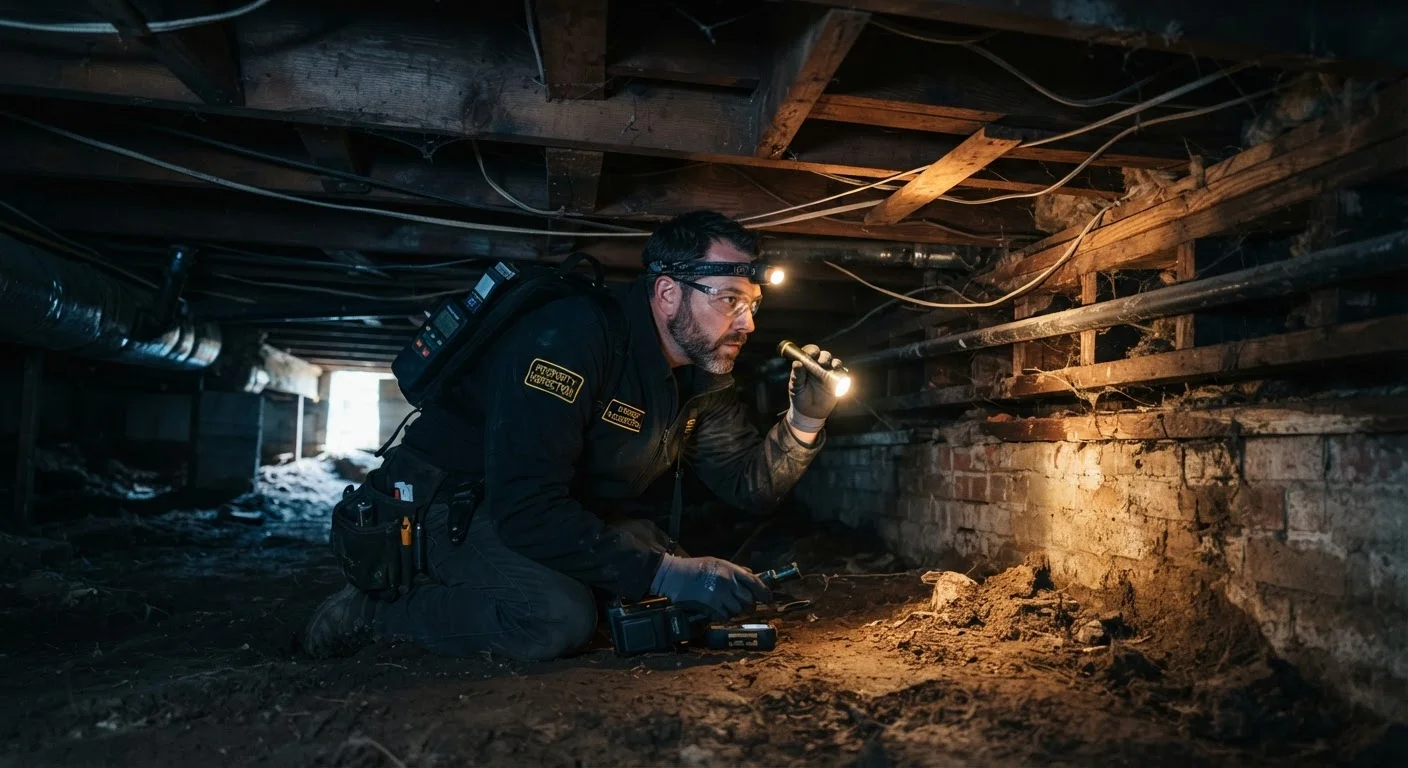
Crawl spaces are the single most commonly neglected area in homes that have them. Because they're difficult to access and unpleasant to enter, most owners simply don't look. Inspectors, by contrast, treat them as one of the most informative places in a house.
What they're checking for: standing or pooled water, signs of pest activity (wood-boring insects, rodents), deteriorating vapor barriers, damaged or missing insulation, and moisture staining or rot on floor joists. Any of these conditions - left unaddressed - can compromise the structural integrity of the floor system above.
A vapor barrier (usually a thick polyethylene sheet covering the soil) is one of the most important components in a crawl space. When it's torn, missing, or improperly overlapped, ground moisture rises freely into the framing. Pair that with inadequate ventilation and the conditions for wood rot and mold become ideal.
If you have crawl space access, a basic visual check once or twice a year - using a good flashlight and wearing a dust mask - is a reasonable starting point. For persistent moisture issues or signs of active decay, consult a licensed contractor. Our article on basement pre-renovation checks covers related moisture assessment steps worth understanding.
Before You Enter a Crawl Space
Always use a bright flashlight or headlamp and wear a dust mask or N95 respirator. Avoid disturbing insulation or any materials that may contain asbestos (common in homes built before the 1980s). If you see signs of active mold, standing water, or significant pest activity, stop and contact a licensed professional rather than continuing the inspection yourself.
Attic Ventilation and Roof Drainage
The attic is another space owners rarely visit between inspections - and one where problems develop on a timeline measured in seasons, not years. Two issues dominate: inadequate ventilation and poor roof drainage at key transition points.
Ventilation matters more than most owners realize. Without adequate airflow through soffit and ridge vents, heat and moisture build up. In summer, this superheats the roof deck and shortens shingle lifespan. In winter, warm air escaping from the living space melts roof snow unevenly, creating ice dams that force water under shingles. Our dedicated piece on how roof ventilation works explains the full impact in detail.
At the roof surface, inspectors pay particular attention to flashing - the metal strips sealing joints at chimneys, skylights, dormers, and valleys. Flashing fails gradually: the caulk dries out, the metal shifts, and water finds a path in. By the time a stain appears on a ceiling below, water may have been infiltrating for months. Warning signs of a serious roof issue are worth knowing before they become emergencies.
Gutters and downspouts extend this system to the ground. When they're clogged or improperly sloped, water backs up at the roofline and pools against the foundation. Proper drainage management is one of the highest-return maintenance habits a homeowner can build.
Electrical Panels, Exhaust Vents, and Sealing Gaps
Three additional areas that regularly surface in inspection reports - and are rarely on owners' radar - are the electrical panel, exhaust vent terminations, and air-sealing gaps.
Electrical panels should be evaluated by a licensed electrician if you notice signs of corrosion, scorching, double-tapped breakers (two wires on one breaker), or breakers that trip frequently. This is not a DIY inspection area - it's one where a qualified professional's eyes are essential for safety.
Exhaust vent terminations are the points where bathroom fans, dryer vents, and kitchen range hoods exit the building. These are routinely found disconnected in attics (exhausting moisture directly into insulation), blocked by pest screens clogged with lint, or improperly terminated too close to soffit intakes - pulling exhaust air right back into the attic. Checking that these ducts terminate cleanly to the exterior, with functional dampers, is a simple but valuable check.
Air-sealing gaps around recessed lights, plumbing penetrations, and attic hatches allow conditioned air to escape and moisture-laden air to enter wall and ceiling cavities. This drives both energy loss and moisture problems. Our explainer on energy efficiency upgrades addresses how air sealing interacts with insulation performance. Also see our piece on caulk versus weatherstripping for choosing the right seal in each location.
If you notice surface anomalies - staining, cracks, or odors - that you can't trace to a source, reading what your home is telling you can help decode the signals.