

Key Takeaways
- Bring all vaccination and medical records, even if your vet has them on file.
- Write down behavioral changes, new symptoms, and questions before your appointment.
- Annual exams cover more than vaccines - weight, dental health, and organ function are assessed too.
- Knowing what to expect reduces stress for both you and your dog.
- Preventive care caught early at annual visits is typically easier and less costly to address.
Summary
22 items · 20-40 minutes to prepare
Why Annual Checkups Deserve Real Preparation
A yearly wellness exam is one of the highest-value investments you can make in your dog's long-term health. Veterinarians use these appointments to catch subtle changes - in weight, coat condition, dental health, and organ function - that are easy to miss at home. But the visit works best when owners show up prepared.
Dogs age faster than humans. A single year can bring meaningful shifts in metabolism, joint health, or behavior that a physical exam can help identify early. Preparation helps your vet build an accurate, current picture of your dog's health rather than relying solely on what's observable in a 20-minute appointment.
This checklist walks you through everything to bring, the questions worth asking, and what the exam itself typically involves - so you leave with confidence, not unanswered questions. For cat owners, the approach differs somewhat; see our annual vet visit checklist for cats for a species-specific guide.
Documents and Records to Bring
Observations to Report
Questions to Prepare
Logistics and Comfort Preparation
What to Bring to the Appointment
Arriving organized signals to your vet that you're an engaged caregiver - and it gives them better clinical data to work with. Even if your clinic maintains electronic records, having your own copies prevents gaps when switching vets or visiting an emergency clinic.
Pet health record folder or app
Organizes vaccination history, lab results, and medication records in one accessible place for vet visits.
Fecal sample container
Collects a fresh stool sample for intestinal parasite screening at the annual exam.
Written question list
Ensures you don't forget important concerns to raise with your vet during the appointment.
High-value treats
Helps reward calm behavior on the exam table and makes the experience more positive for your dog.
Comfort item (blanket or toy)
Provides a familiar scent that can help reduce anxiety in a clinical environment.
If your dog is on any medications or supplements, bring the actual containers rather than relying on memory for dosages or product names. This includes heartworm preventives, flea and tick treatments, and any joint or digestive supplements. Maintaining a consistent daily routine for your dog also means you'll have a clearer baseline to report on - sleep patterns, appetite, and activity levels are all clinically relevant.
Don't Skip the Exam If Your Dog Seems Healthy
Many serious conditions - including early kidney disease, heart murmurs, and dental disease - show no obvious symptoms until they're well advanced. Annual physical exams allow vets to detect these issues before they become emergencies. A dog that appears healthy at home can still benefit significantly from a thorough professional assessment once a year.
Questions to Ask Your Vet
Many owners leave the exam room wishing they had asked more. Writing questions down beforehand - and bringing the list - is the single most effective way to avoid that regret. Vets expect and welcome prepared clients.
Consider what's changed since last year: Has your dog gained or lost weight? Started limping occasionally? Become more anxious during thunderstorms or around other dogs? Behavioral shifts are health data, and your vet needs that information. If you've noticed changes in coat quality or skin condition, those are worth raising too - home grooming sessions are a good time to spot such changes between visits.
Vaccine timing is another area where a direct conversation matters. Core vaccine schedules follow established guidelines, but your vet may adjust timing based on your dog's age, lifestyle, or health history. For a clearer overview of how vaccination schedules work, see our guide to the canine vaccination schedule.
Avoid Changing Medications Before the Visit
Do not adjust, stop, or start any medication or supplement in the days leading up to your appointment without first consulting your vet. Doing so can affect lab results and may make it harder for your vet to accurately assess your dog's current health status. Bring all current medications to the appointment so your vet can review them in context.
What Happens During a Typical Exam
Understanding the structure of a wellness exam helps reduce anxiety - for owners and dogs alike. Most annual exams follow a predictable sequence, though your vet may add or omit steps based on your dog's age and history.
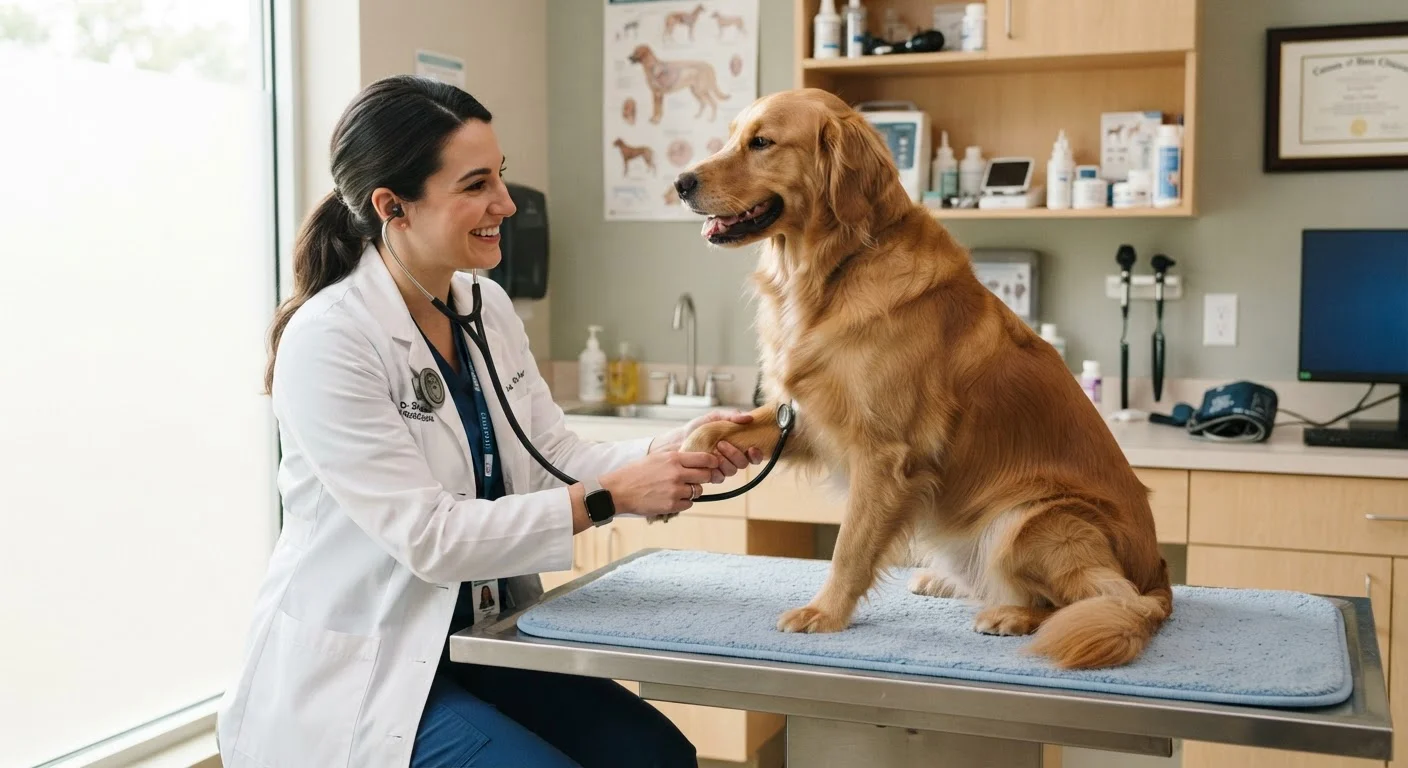
The physical exam typically includes assessment of body weight and condition score, eyes, ears, teeth and gums, lymph nodes, heart and lung sounds, abdominal palpation, skin and coat, and musculoskeletal function. For senior dogs (generally considered 7 years and older for most breeds), vets often recommend bloodwork and urinalysis to screen for early-stage kidney, liver, or thyroid issues that don't present visible symptoms until they're more advanced.
Parasite screening - checking a fecal sample for intestinal parasites - is commonly recommended annually, even for indoor dogs. Heartworm testing is typically done yearly as well, especially if your dog is on preventive medication, since testing confirms the current prevention protocol is working.
This article is for general informational purposes only and is not a substitute for professional veterinary advice. Always consult a licensed veterinarian for guidance specific to your dog's health needs.