

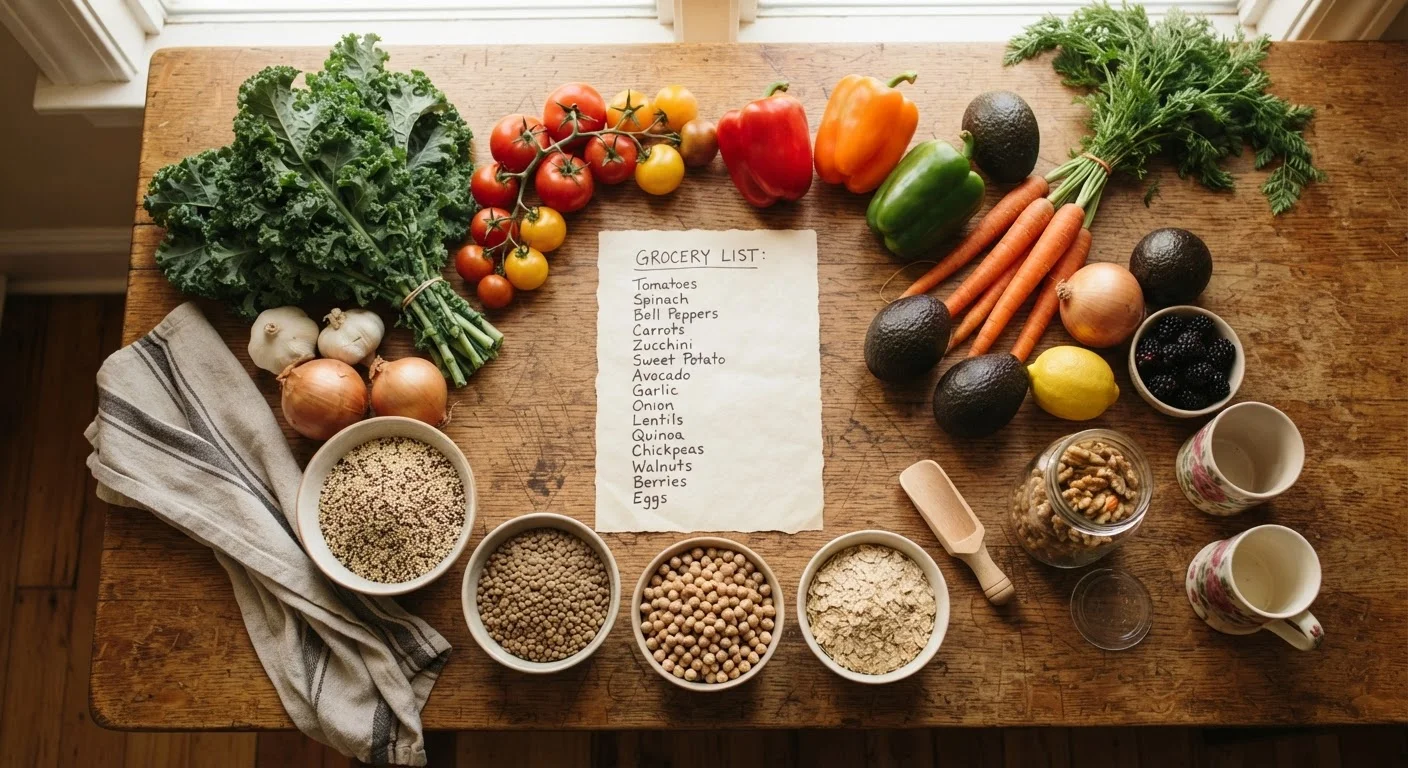
Key Takeaways
- A structured grocery list reduces impulse purchases and supports consistent, balanced eating patterns.
- Established dietary guidelines emphasize vegetables, fruits, whole grains, lean proteins, and healthy fats.
- Reading nutrition labels before shopping helps you compare products against dietary benchmarks.
- Planning around food groups-not individual nutrients-makes list-building simpler and more sustainable.
- Small, incremental changes to your shopping habits tend to produce more lasting results than overhauls.
Summary
22 items · 20-40 minutes
Why Your Grocery List Is a Nutrition Tool
What ends up in your cart largely determines what ends up on your plate. That connection makes the grocery list one of the most underrated instruments in everyday nutrition. Yet most people write lists reactively-based on what's running low-rather than proactively, with dietary goals in mind.
Established dietary frameworks, including the U.S. Dietary Guidelines, consistently point to the same broad priorities: plenty of vegetables and fruits, whole grains over refined ones, adequate protein from varied sources, and fats that come primarily from plant-based foods. Building a list around those pillars doesn't require nutritional expertise-it requires a structured approach.
This checklist walks you through that approach category by category. Use it before your weekly shop to make sure your cart reflects sound principles, not just habit. For help interpreting the numbers on packaging once you're in the aisle, see our guide on reading a nutrition label without getting lost.
Pre-Shopping Preparation
Vegetables & Fruits
Grains & Starches
Protein Sources
Fats & Oils
Beverages & Extras
Building the List: Practical Guidance by Food Group
The checklist above covers the structural decisions-now here's how to apply them in practice.
Avoid Building Your List Around Single Nutrients
It's tempting to chase specific nutrients-protein grams, omega-3s, or fiber counts-but this approach can lead to an imbalanced overall pattern. Dietary research consistently shows that whole food patterns, not isolated nutrients, are most predictive of long-term health outcomes. Build your list around food groups first; the nutrients follow naturally.
Produce first. Filling at least half your imaginary plate with vegetables and fruits is a core recommendation across virtually every major dietary framework. Prioritize variety over volume: different colors signal different phytonutrients, so rotating your choices across weeks matters more than buying large quantities of one item.
Grains: look for the word "whole." Whole-grain products list a whole grain-such as whole wheat, oats, or brown rice-as the first ingredient. The fiber in whole grains supports digestive health and helps regulate blood sugar response. Refined grains (white bread, white rice) aren't inherently harmful in moderation, but they offer less nutritional density per calorie.
Protein sources: broaden the category. Protein needs don't require meat at every meal. Legumes (beans, lentils, chickpeas), eggs, low-fat dairy, seafood, and tofu all count. Rotating protein sources diversifies the micronutrients you take in-seafood, for instance, provides omega-3 fatty acids that are harder to find in land-based proteins.
Fats: choose sources, not fear. Nuts, seeds, avocados, and olive oil provide unsaturated fats generally associated with cardiovascular health. Saturated fat-found mainly in fatty meats and full-fat dairy-is worth moderating rather than eliminating entirely, according to current guidance.
Watch for habit-driven additions. Certain shopping patterns can erode an otherwise solid diet without obvious warning signs. Our article on nutrition habits that quietly undermine a healthy diet identifies several worth reviewing before you shop.
U.S. Dietary Guidelines (dietaryguidelines.gov)
Provides the evidence-based framework for food group proportions and nutrient recommendations used throughout this checklist.
MyPlate Planning Tools (myplate.gov)
Offers free meal-planning worksheets and food group guides useful for structuring your weekly list.
Grocery list app or notepad
Keeps your categorized list organized by food group so you move efficiently through the store without backtracking.
This article is for general informational and educational purposes only and does not constitute medical or nutritional advice. Consult a qualified healthcare professional or registered dietitian for guidance tailored to your individual health needs.