

Key Takeaways
- Serving size is the foundation of the label - all other numbers are based on it.
- Percent Daily Value (%DV) tells you how much a nutrient contributes to a 2,000-calorie reference diet.
- Aim for higher %DV for fiber, vitamins, and minerals; lower %DV for sodium, saturated fat, and added sugars.
- Ingredients are listed by weight, so the first item is present in the largest amount.
- No single nutrient makes or breaks a food - context and overall diet matter most.
What you will need
Why the Label Exists - and What It's Actually Telling You
The Nutrition Facts label is a standardized panel required by the U.S. Food and Drug Administration (FDA) on most packaged foods. Its purpose is straightforward: to give consumers consistent, comparable information about what they're eating. Yet many shoppers scan the label quickly, fixate on one number - often calories - and move on.
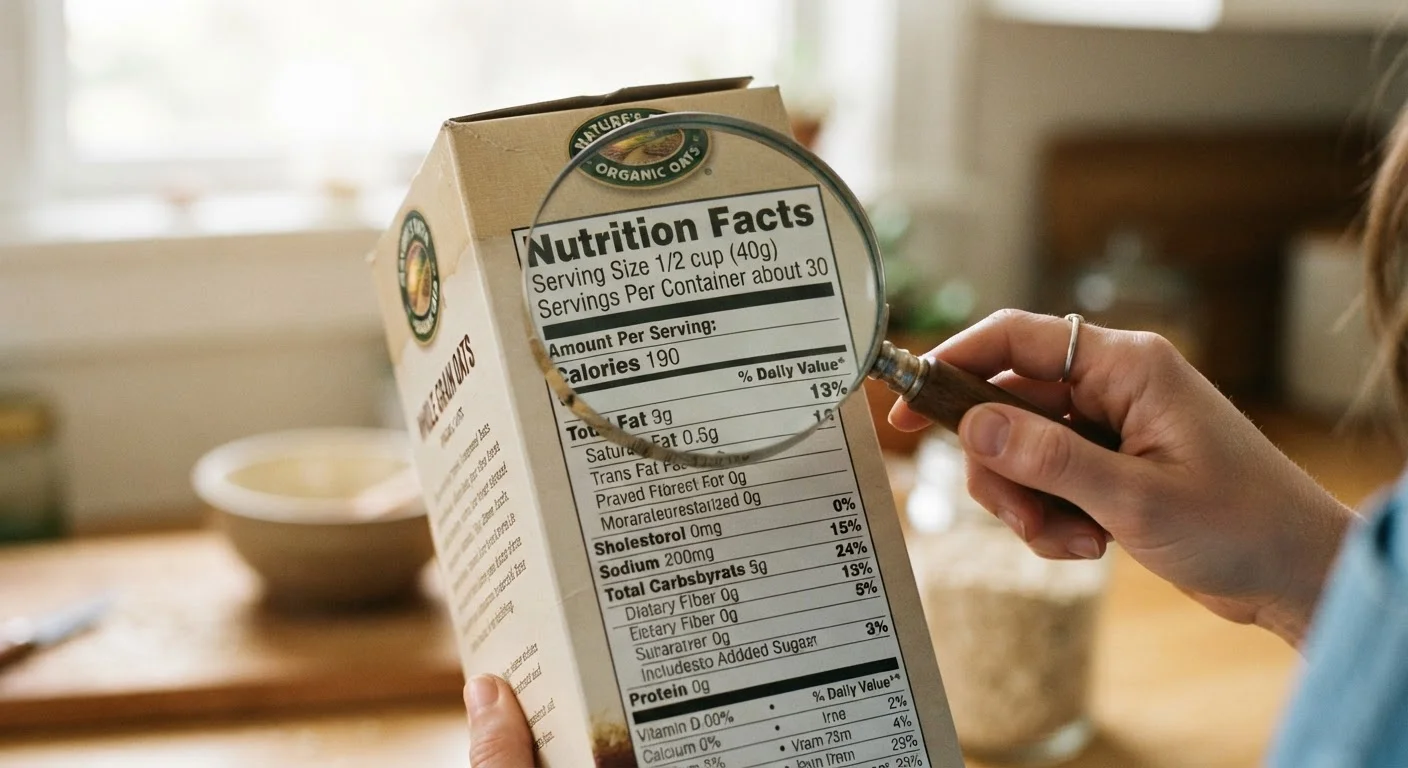
A more complete reading starts with recognizing that the label describes a specific quantity of food, not the whole package. Everything printed beneath the bold calorie count only makes sense once you know the serving size. If you eat twice the stated serving, you double every number on the label.
For a deeper look at how nutrition research informs these guidelines, see why nutrition studies can seem to contradict themselves.
Use %DV as a Quick Comparison Tool
Percent Daily Value is based on a 2,000-calorie reference diet, which won't match everyone's actual needs. Still, %DV is highly useful for comparing two products side by side. When evaluating fiber or calcium, a higher %DV generally indicates a more nutrient-dense option - regardless of your specific calorie target.
A Step-by-Step Walk Through the Label
Follow these steps each time you pick up a new packaged product. With a little practice, reading the full label takes under a minute.
What you will need
Locate and Read the Serving Size
Find the serving size at the very top of the label, listed in a common household measure (e.g., "2/3 cup") alongside a gram weight. Note the servings per container on the line directly above or below. If the package contains 2.5 servings and you eat the whole thing, multiply every nutrient value by 2.5.
Check the Calorie Count
Calories are displayed in a large, bold font immediately below the serving size. This number reflects energy per serving, not per package. Calories are a useful reference point, but they tell you nothing about nutrient quality on their own. For a fuller explanation of how energy balance works, see the limitations of calorie counting.
Scan the Nutrients to Limit
The FDA groups certain nutrients under a general guideline to keep intake moderate: saturated fat, sodium, and added sugars. These are listed with both a gram amount and a Percent Daily Value (%DV). A %DV of 5% or less is generally considered low; 20% or more is considered high, based on a 2,000-calorie reference diet.
Identify Nutrients to Seek Out
Below the nutrients to limit, you'll find nutrients that many Americans fall short on: dietary fiber, vitamin D, calcium, iron, and potassium. A higher %DV here generally supports a more nutrient-dense diet. For background on vitamins and minerals specifically, see our micronutrients guide.
Read the Ingredient List
The ingredient list appears below or beside the Nutrition Facts panel. Ingredients are ordered by weight - the first ingredient is present in the greatest quantity. A short ingredient list is not inherently better, but knowing what's present (and in what relative order) helps you understand what you're actually eating beyond the nutrient numbers.
Putting the Numbers in Context
The label is a tool, not a verdict. A food with 20% DV of sodium is not automatically unhealthy if everything else you eat that day is low in sodium. Equally, a food marketed as "low fat" may still be high in added sugars - a pattern worth watching for. Common nutrition myths often exploit selective reading of labels.
Two nutrients deserve special attention when comparing products:
- Added sugars appear as a separate line under total sugars. They represent sugars introduced during processing, not those naturally present in fruit or dairy. Added sugars appear under many names - the label aggregates all of them into one figure.
- Dietary fiber is listed under total carbohydrates. Most Americans consume well below recommended amounts. For more on why fiber matters and where to find it, see our fiber explainer.
Once you're comfortable reading labels consistently, you can use that skill to build a grocery list that reflects sound nutrition principles without overhauling your routine overnight.
Front-of-Package Claims Can Mislead
Terms like "low calorie," "light," or "reduced fat" have specific FDA definitions, but they can still highlight one positive while obscuring less favorable attributes. A "low-fat" product may compensate with added sugars. Always flip the package and read the full Nutrition Facts panel and ingredient list before forming a judgment.
This article is for general informational and educational purposes only and does not constitute medical or dietary advice. For guidance tailored to your individual health needs, consult a registered dietitian or qualified healthcare professional.