

Key Takeaways
- Most Americans consume only about half the fiber their bodies need each day.
- Fiber comes in two main forms - soluble and insoluble - each with distinct health roles.
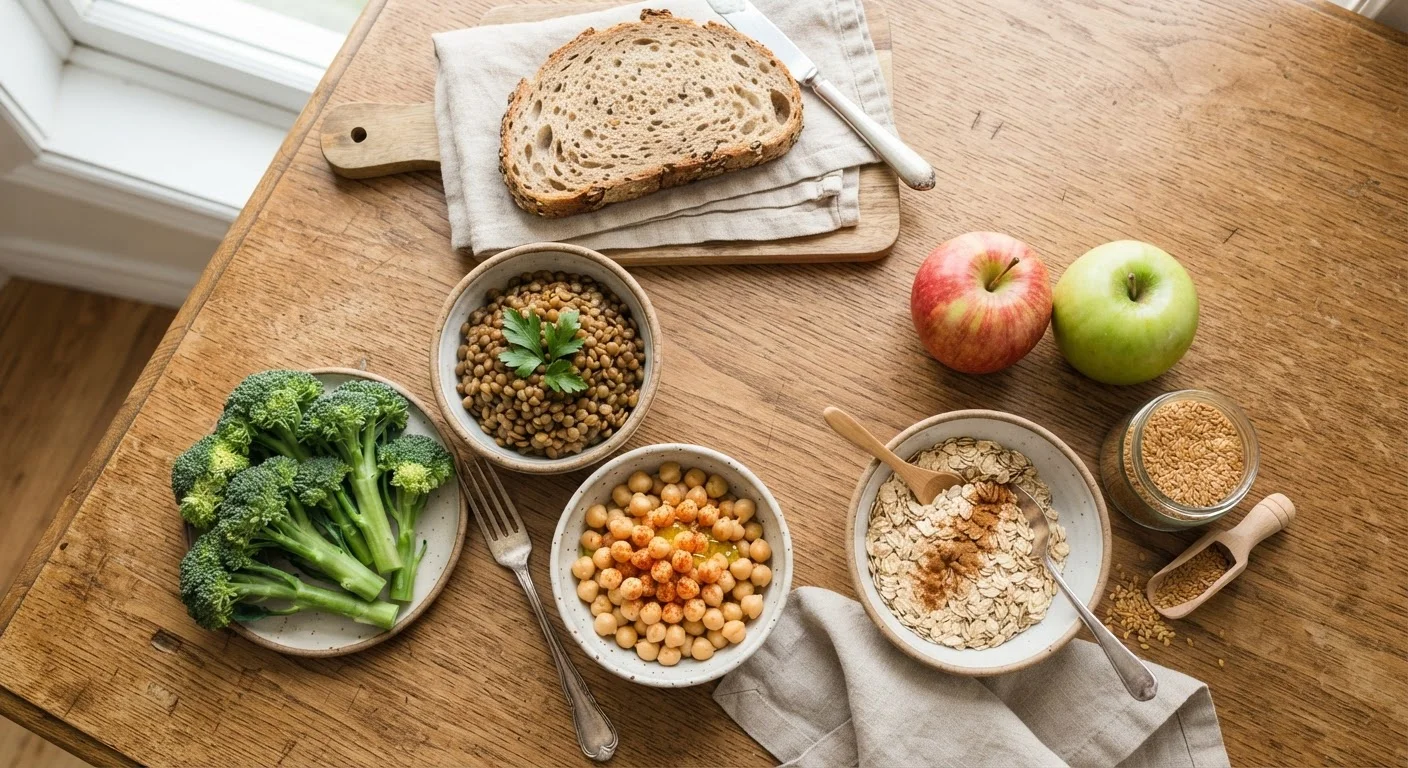
- Whole grains, legumes, vegetables, and fruits are the most reliable fiber sources.
- Gradually increasing fiber intake helps prevent digestive discomfort.
- Adequate hydration supports fiber's digestive benefits.
Dietary Fiber
Dietary fiber refers to the parts of plant foods that your body cannot fully digest or absorb. Unlike fats, proteins, and carbohydrates that break down and enter the bloodstream, fiber passes largely intact through the stomach, small intestine, and colon. It plays a key role in digestive health, blood sugar regulation, and cholesterol management.
Fiber is classified as either soluble (dissolves in water to form a gel-like substance) or insoluble (adds bulk to stool and does not dissolve). Both types serve distinct physiological functions and are found in varying proportions across plant foods.
The Fiber Gap: A Widespread but Fixable Problem
Despite decades of public health messaging about healthy eating, dietary fiber remains one of the most consistently under-consumed nutrients in the American diet. National nutrition data suggest the average American adult consumes roughly 15 grams of fiber per day - about half of what most guidelines recommend. This shortfall isn't a matter of willpower; it reflects the structure of a food supply that leans heavily on refined grains, processed snacks, and fast food, all of which strip out naturally occurring fiber.
Understanding fiber isn't just about digestive comfort. Research consistently links adequate fiber intake to a range of health markers, from blood sugar regulation and cardiovascular health to gut microbiome diversity. For readers trying to make sense of nutrition, fiber is one of the most evidence-supported areas in the field - and one where practical changes can have meaningful effects.
~15g
Average daily fiber intake for U.S. adults
National dietary survey data consistently show American adults consume roughly 15 grams per day - well below the 25-38 gram recommendations in federal dietary guidelines.
95%
Americans not meeting fiber recommendations
Research published in nutrition and dietetics literature has characterized fiber as one of the most widespread nutritional shortfalls in the U.S. population.
7-9g
Fiber per half-cup serving of most cooked legumes
Legumes such as lentils and black beans are among the most concentrated fiber sources in the food supply, according to USDA food composition data.
Two Types of Fiber, Two Distinct Roles
The distinction between soluble fiber and insoluble fiber matters because they behave differently in the body and support different functions.
Soluble fiber dissolves in water to form a viscous gel in the digestive tract. This gel slows the absorption of sugar, which helps moderate blood glucose levels after meals. It also binds to bile acids in the intestine, which prompts the liver to draw on circulating cholesterol to make more - a mechanism linked to modest reductions in LDL (low-density lipoprotein) cholesterol. Oats, barley, psyllium, apples, and legumes are particularly rich in soluble fiber.
Insoluble fiber does not dissolve in water. Instead, it adds bulk to stool and speeds transit through the colon, reducing the time potentially harmful compounds remain in contact with the intestinal lining. Whole wheat, bran, and most vegetables are good sources.
Most plant foods contain a mix of both types, which is one reason nutrition guidance emphasizes whole food sources over isolated supplements. When reading packaged food labels, the total fiber figure captures both - see our guide to reading a Nutrition Facts label for help interpreting those numbers.
“Fiber is the nutrient that most Americans need to pay far more attention to. It's not glamorous, but the evidence for its role in chronic disease prevention is among the most consistent in nutritional epidemiology.”
— Walter Willett, Professor of Epidemiology and Nutrition, Harvard T.H. Chan School of Public Health
Reliable Food Sources and How to Eat More
No single food provides all the fiber the body benefits from. A varied plant-forward diet is the most practical approach. The following categories consistently rank as high-fiber options:
- Legumes: Lentils, black beans, chickpeas, and kidney beans deliver 7-9 grams of fiber per half-cup cooked serving - among the highest of any food group.
- Whole grains: Oats, barley, quinoa, and 100% whole wheat bread offer 3-6 grams per serving and can anchor meals across the day.
- Vegetables: Broccoli, Brussels sprouts, carrots, and artichokes are notably fiber-dense. Most non-starchy vegetables contribute meaningfully to daily totals.
- Fruits: Berries, pears, apples (with skin), and avocados are among the higher-fiber fruit choices.
- Seeds and nuts: Chia seeds and flaxseeds provide an easy fiber boost - one tablespoon of chia seeds contains roughly 4 grams.
Increase Fiber Gradually to Avoid Discomfort
Adding large amounts of fiber all at once frequently causes bloating, gas, and cramping as gut bacteria adjust. A gradual increase over two to four weeks - adding one or two fiber-rich foods at a time - is generally better tolerated. Drinking adequate water throughout the day also helps fiber move smoothly through the digestive system. For more on how hydration and nutrition interact, see our explainer on water and digestion.
It's also worth recognizing habits that subtly work against fiber intake. Choosing white rice over brown, peeling vegetables, or relying heavily on processed convenience foods are patterns that quietly erode dietary quality - a topic explored further in our article on nutrition habits that undermine an otherwise healthy diet.
This article is for general informational and educational purposes only and is not a substitute for professional medical or dietary advice. Consult a qualified healthcare provider before making significant changes to your diet, especially if you have a medical condition.