

| FDA label requirement | "Added Sugars" must appear as a separate line on U.S. Nutrition Facts labels (FDA Nutrition Facts label update, effective 2020) |
| Daily Value for added sugars | 50 grams (based on a 2,000-calorie daily diet) (U.S. Food and Drug Administration) |
| Dietary Guidelines recommendation | Limit added sugars to less than 10% of total daily calories (Dietary Guidelines for Americans, 2020-2025) |
| Common sugar aliases | More than 60 alternative names appear on ingredient lists (University of California San Francisco SugarScience project) |
| Label ingredient order rule | Ingredients listed in descending order by weight in the product (U.S. FDA ingredient labeling regulations) |
Why Added Sugars Are Harder to Spot Than You Think
Most people know that soda and candy contain sugar. What's less obvious is that added sugars also turn up in pasta sauce, salad dressing, flavored yogurt, bread, and even some savory crackers. The challenge isn't just how much sugar is in a product - it's recognizing sugar when it's listed under an unfamiliar name.
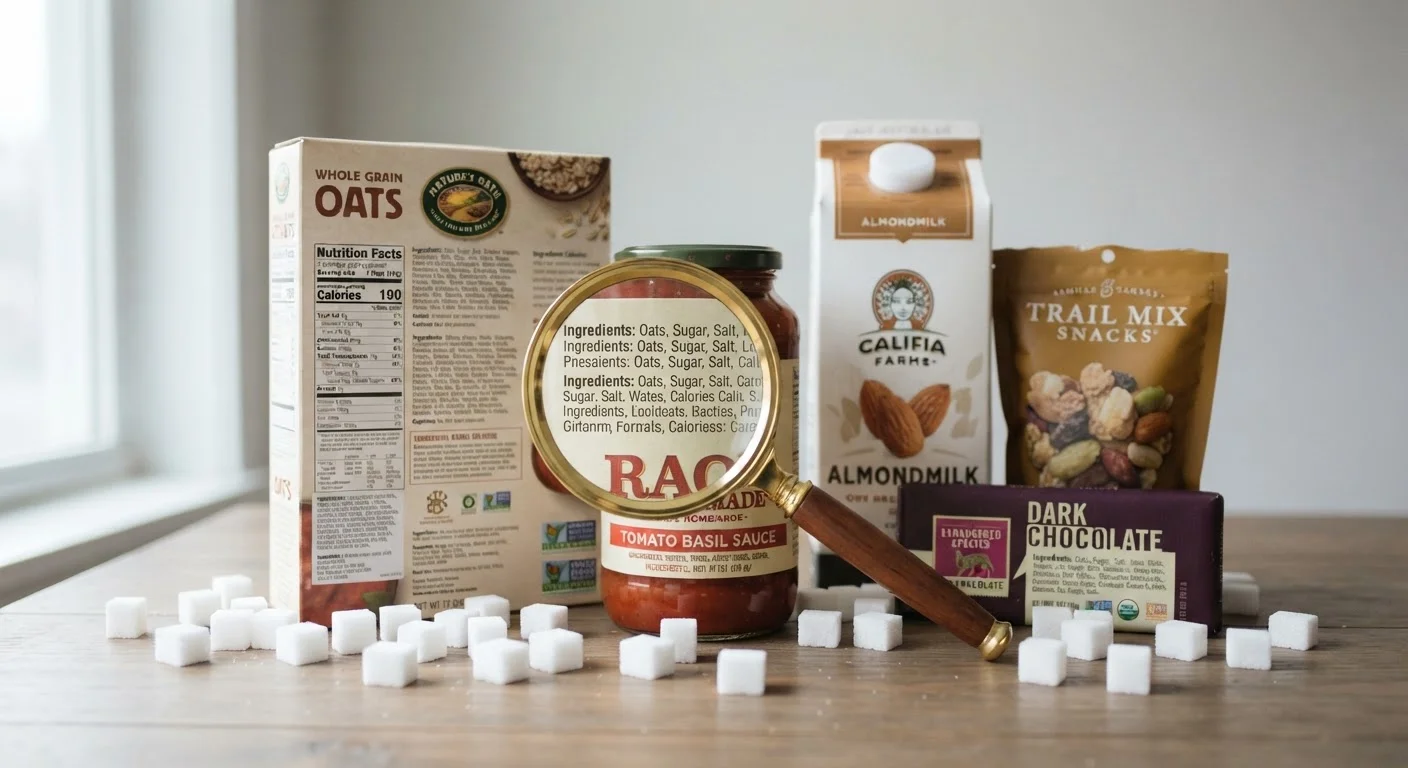
Food manufacturers use dozens of ingredient names that all describe added sugars. By FDA regulation, ingredients are listed in descending order by weight, so a manufacturer can use four or five different sugar sources to keep each one lower on the list - even if their combined amount is substantial. Understanding this tactic is the first step toward reading labels more critically.
Since 2020, the updated U.S. Nutrition Facts label has required a dedicated line for "Added Sugars," expressed in grams and as a percentage of the Daily Value. This makes comparison easier, but the ingredient list still matters when you want to know what kind of sweetener was used. For a full walkthrough of how to interpret every section of a nutrition label, see our guide to reading a Nutrition Facts label.
| FDA label requirement | "Added Sugars" must appear as a separate line on U.S. Nutrition Facts labels (FDA Nutrition Facts label update, effective 2020) |
| Daily Value for added sugars | 50 grams (based on a 2,000-calorie daily diet) (U.S. Food and Drug Administration) |
| Dietary Guidelines recommendation | Limit added sugars to less than 10% of total daily calories (Dietary Guidelines for Americans, 2020-2025) |
| Common sugar aliases | More than 60 alternative names appear on ingredient lists (University of California San Francisco SugarScience project) |
| Label ingredient order rule | Ingredients listed in descending order by weight in the product (U.S. FDA ingredient labeling regulations) |
A Practical Guide to Sugar Aliases
Added sugars appear in ingredient lists under a wide range of names. They generally fall into a few recognizable categories:
- Syrups: High-fructose corn syrup, corn syrup, rice syrup, malt syrup, agave nectar, maple syrup, golden syrup
- "-ose" sugars: Sucrose, fructose, glucose, dextrose, maltose, lactose (when added, not naturally occurring)
- "Natural" sweeteners: Honey, molasses, coconut sugar, date sugar, evaporated cane juice, fruit juice concentrate
- Less obvious names: Dextrin, maltodextrin (at high levels), barley malt extract, carob syrup, treacle
It's worth noting that terms like "natural" or "unrefined" don't mean a sweetener has fewer calories or a meaningfully different metabolic effect. From a nutritional standpoint, the body processes most added sugars similarly, regardless of their source or marketing label.
Added sugars
Sugars and syrups added to foods or beverages during processing or preparation, as opposed to sugars naturally present in whole fruits, vegetables, or dairy. The FDA requires these to be listed separately on the Nutrition Facts label.
High-fructose corn syrup (HFCS)
A liquid sweetener derived from corn starch, commonly used in processed foods and beverages. It contains varying ratios of fructose and glucose depending on the formulation.
Fruit juice concentrate
Juice from which most of the water has been removed. When added back to a product as a sweetener, it counts as an added sugar rather than a whole-fruit ingredient.
Daily Value (DV)
A reference amount set by the FDA used on Nutrition Facts labels to help consumers understand how a nutrient in a serving of food contributes to a total daily diet. For added sugars, the DV is 50 grams per day, based on a 2,000-calorie diet.
The Dietary Guidelines for Americans recommend limiting added sugars to less than 10% of total daily calories - a general population-level benchmark, not a personal prescription. Anyone with specific health conditions or dietary needs should discuss appropriate intake with a qualified healthcare provider.
Where Added Sugars Are Commonly Hiding
Awareness of which food categories tend to carry the most added sugar can make label-checking more efficient. Commonly overlooked sources include:
- Condiments and sauces: Ketchup, barbecue sauce, teriyaki sauce, and many salad dressings often list sugar or corn syrup among their first few ingredients.
- Flavored dairy and dairy alternatives: Flavored yogurts, chocolate milk, and many plant-based milks contain significant amounts of added sweeteners.
- Breakfast foods: Granola, instant oatmeal packets, cereals marketed as "whole grain" or "heart healthy," and flavored instant grits can all be high in added sugars.
- Breads and baked goods: Many commercially produced breads contain added sugar to improve texture and browning.
- Beverages beyond soda: Sweetened teas, sports drinks, vitamin waters, flavored coffees, and fruit "drinks" (distinct from 100% juice) are major sources.
None of these foods must be avoided entirely - context, portion size, and overall dietary pattern matter far more than any single ingredient. The goal of label literacy is informed choice, not elimination.
A Note on "Natural" vs. "Refined" Sugars
Honey, coconut sugar, and maple syrup are often marketed as healthier alternatives to white table sugar. While they may contain trace minerals, the differences in nutritional impact are generally small at typical serving amounts. Current dietary guidance focuses on total added sugar intake rather than distinguishing between refined and minimally processed sweeteners. If you have questions about specific sweeteners and your health, consult a registered dietitian or your healthcare provider.