

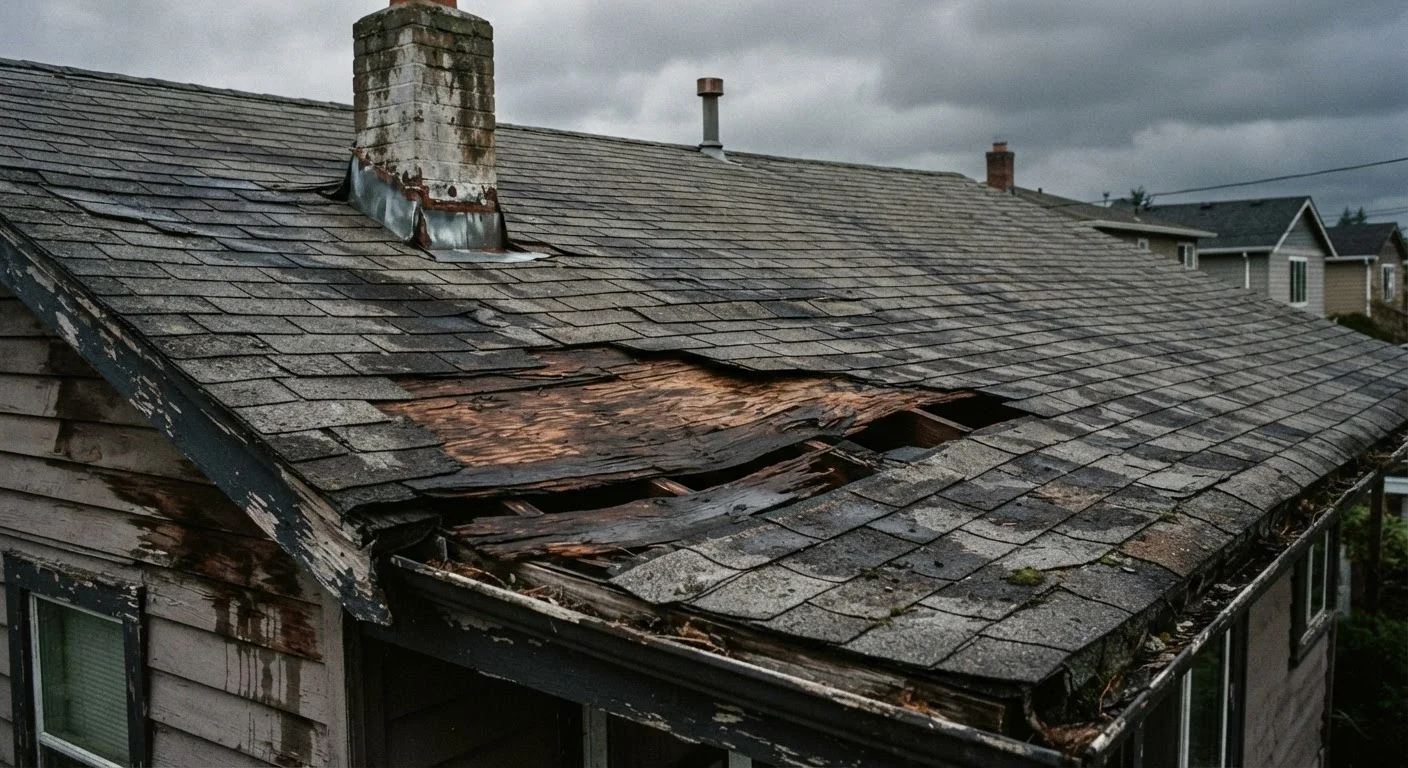
Why Timing Matters With Roof Damage
A single missing shingle after a windstorm might cost a couple hundred dollars to fix. Left unaddressed for a season, that same gap can allow water to infiltrate the underlayment, rot the decking, and compromise the structural framing beneath - turning a minor repair into a costly replacement. Knowing which symptoms indicate escalating urgency is one of the most practical skills a homeowner can develop.
This reference guide identifies the key warning signs that a roof problem has crossed the line from routine maintenance into urgent territory. If you notice any of these, contact a licensed roofing contractor for an inspection promptly.
High-Priority Warning Signs to Watch For
Interior Water Stains or Active Dripping
Brown or yellowish ceiling stains are often the first visible evidence of roof infiltration. Active dripping during or after rain is an emergency - water is already past multiple layers of protection and reaching your living space. Mold or a musty odor in an upstairs room or attic suggests prolonged moisture exposure, not a recent event.
Sagging or Depressed Roof Sections
A roofline should appear straight and even. Any visible sagging, dipping, or soft spots when viewed from the ground or the attic are serious structural red flags. Sagging typically indicates saturated or rotted roof decking, weakened rafters, or - in the worst cases - compromised load-bearing structure. This warrants immediate professional evaluation. Do not attempt to walk on a sagging roof section.
Daylight Visible Through the Attic
During a daytime attic inspection, if you can see pinpoints or streaks of light coming through the roof boards, water infiltration is almost certainly already occurring or imminent. Any gap large enough to admit light is large enough to admit rain, insects, and wind-driven debris.
Granule Loss Beyond Normal Aging
Asphalt shingles shed a small amount of granules throughout their lifespan. However, if you notice significant granule accumulation in gutters - resembling coarse sand - or bare, shiny patches on shingles visible from the ground, the shingles' protective layer is failing. Bare shingles deteriorate rapidly with UV and moisture exposure.
Flashing Damage Around Penetrations
Metal flashing seals the joints around chimneys, skylights, vents, and roof valleys. Lifted, cracked, or missing flashing is one of the most common entry points for water. Even well-maintained shingles cannot compensate for failed flashing. Check these areas visually after major storms. For more on commonly overlooked structural vulnerabilities, see what home inspectors check that owners often miss.
Roof Decking
The flat board layer (typically plywood or OSB) attached directly to the roof framing, onto which underlayment and shingles are installed. Rotted decking is a serious structural concern requiring professional repair.
Flashing
Thin strips of metal (usually galvanized steel or aluminum) installed at roof joints and penetrations to prevent water intrusion. Common locations include chimney bases, skylights, and roof valleys.
Underlayment
A water-resistant or waterproof barrier layer installed between the roof decking and the outer shingles. It provides a secondary line of defense against moisture infiltration.
Granule Loss
The shedding of the mineral granules embedded in asphalt shingles. Significant or accelerated granule loss exposes the asphalt layer to UV and moisture damage, reducing the shingle's protective life.
Roof Valley
The V-shaped channel formed where two sloping roof sections meet. Valleys direct large volumes of water and are particularly vulnerable to leaks if flashing or shingles are damaged.
What to Do If You Spot These Signs
Do not climb onto the roof yourself to assess structural damage - this poses a serious fall risk, particularly on wet, damaged, or steep surfaces. Instead, document what you observe from the ground or from inside the attic using a flashlight, and note when symptoms appeared or worsened.
Contact a licensed roofing contractor for an inspection. In many jurisdictions, certain repair scopes require permits; a qualified professional will advise you on local requirements. If active leaking is damaging interior surfaces or belongings, temporary tarping by a professional may be appropriate while permanent repairs are arranged.
Review your homeowner's insurance policy - many roof-damage scenarios may be covered depending on cause and policy terms. Coverage, exclusions, and claim procedures vary significantly by provider and region; consult your insurer or a licensed insurance agent before assuming what is or is not covered.
Addressing urgent roof symptoms quickly almost always costs less than allowing damage to compound. Regular inspections - ideally twice a year and after major storms - remain the most effective way to catch issues before they escalate.