

Key Takeaways
- Hairline cracks in drywall are usually cosmetic, but stair-step cracks in masonry often signal foundation movement.
- Brown ceiling stains almost always indicate a water intrusion source directly above - not simply at the stain's location.
- Musty odors point to hidden moisture and potential mold growth, even when no visible dampness is present.
- Sulfur or rotten-egg smells near gas lines require immediate evacuation and a call to your utility provider.
- Peeling paint on exterior trim is a leading indicator of bulk water or vapor infiltration behind the surface.
- Catching these signs early dramatically narrows the scope and cost of any required repair.
Home Symptom Reading
"Home symptom reading" is the practice of recognizing physical signs - cracks, stains, odors, or sounds - that a house produces when something is changing or failing beneath the surface. Just as a doctor reads symptoms to understand a patient's health, a homeowner can learn to interpret these signals before small problems escalate into expensive repairs. Most of these signs are not random; they follow patterns that point to specific causes.
Professionals distinguish between cosmetic defects (surface-only) and symptomatic defects (indicating an underlying system failure). Learning to tell the difference is the foundation of proactive home maintenance.
Cracks: Knowing the Difference Between Cosmetic and Structural
Not every crack deserves alarm, but no crack should be completely ignored. The key is understanding what a crack's location, shape, and width are telling you.
Vertical hairline cracks in drywall or plaster are the most common type homeowners encounter. They're typically caused by minor lumber shrinkage as a house settles - especially in newer construction - or by seasonal humidity swings that cause materials to expand and contract. These are cosmetic, and patching them is straightforward.
Diagonal cracks running at roughly 45-degree angles from door or window corners are worth monitoring. They often follow the path of least resistance in drywall tape and may indicate that the framing around an opening has shifted slightly. A single stable diagonal crack is usually not urgent; a growing one merits attention.
Stair-step cracks in brick or block masonry - following the mortar joints up and across in a staircase pattern - are a different matter. These frequently indicate differential foundation settlement, where one part of the foundation is moving at a different rate than another. This pattern, especially when accompanied by doors that stick or gaps between walls and ceilings, is a signal to consult a structural engineer rather than a handyman.
Horizontal cracks in basement or foundation walls are among the most serious signs a home can show. Horizontal cracking in poured concrete or block walls suggests lateral soil pressure is pushing inward - a condition that can worsen progressively and compromise the wall's load-bearing capacity. Do not treat this as a cosmetic issue.
Track Cracks Over Time Before Acting
Before patching any crack you're unsure about, mark both ends with a pencil and include the date. Photograph it for reference. Check again in 30 and 60 days. A crack that doesn't grow is almost always a cosmetic issue; one that progresses needs professional evaluation. Patching without monitoring can mask an active problem.
For a broader look at the areas where problems most often hide, see what inspectors check that owners often miss.
Stains: Tracing Water Back to Its Source
Water stains are deceptive because water travels. A brown ring on your living room ceiling may have originated from a nail hole in roofing, a gap around a pipe boot, or a slow leak in a second-floor bathroom - none of which are directly above the stain itself.
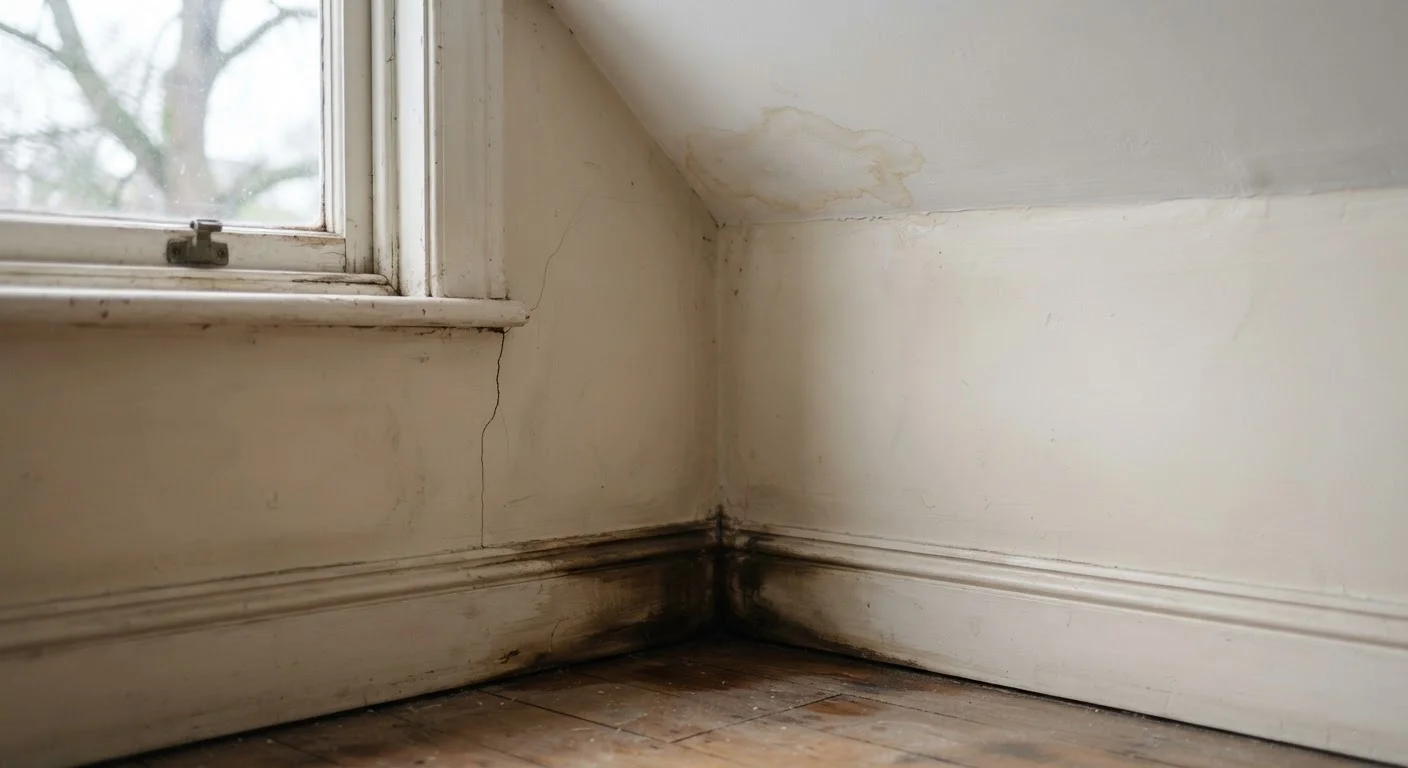
Yellow or brown ceiling stains with a defined ring typically mean water pooled there and then dried. The ring is mineral residue left behind. If the stain is soft or the drywall feels spongy to the touch, active moisture is still present. Investigate promptly: wet drywall deteriorates quickly and is a hospitable environment for mold growth.
Dark streaks running down interior walls, especially from window corners, point to failed caulking, deteriorated glazing compound, or gaps in flashing where the window frame meets the siding. Rain drives into these gaps under wind pressure and follows the framing downward, often appearing several feet below the actual entry point.
White chalky deposits - called efflorescence - on basement walls or concrete block indicate that water is moving through the masonry, carrying dissolved salts to the surface as it evaporates. Efflorescence itself isn't structurally dangerous, but it's reliable evidence of water infiltration that deserves correction before the freeze-thaw cycle causes spalling.
Stains on exterior trim, particularly around nail heads or at the bottom of siding boards, often precede rot. When paint peels in those locations, it signals that moisture is accumulating behind the surface. Left unaddressed, the underlying wood deteriorates, allowing water to reach the sheathing and framing.
Water Travels Far from Its Entry Point
When diagnosing a water stain, resist the assumption that the leak is directly above it. Water follows framing members, pipes, and insulation - sometimes traveling several feet horizontally before pooling and dripping. A thorough investigation traces the path upward and outward, not just straight up from the stain.
Odors: Your Nose as a Diagnostic Tool
Smell is one of the most underrated senses in home maintenance. Certain odors are so consistently linked to specific problems that experienced inspectors treat them as diagnostic data.
Musty or earthy odors - particularly in basements, crawl spaces, and bathrooms - almost always indicate biological growth driven by moisture. Mold and mildew produce volatile organic compounds (VOCs) that create that characteristic damp smell even before colonies become visible. If a space smells musty after being closed up for a few days, treat it as confirmation of a hidden moisture problem.
Sulfur or rotten-egg odors near gas appliances, the meter, or any gas line require immediate action. Natural gas suppliers add mercaptan specifically so leaks are detectable. Leave the house immediately, leave doors open as you exit, avoid operating any electrical switches, and call your utility provider's emergency line from outside. This is not a situation to investigate yourself.
Burning or electrical smells - often described as a hot plastic or singed dust odor - coming from outlets, switch plates, or the electrical panel are warning signs of overheating wiring or connections. This is a fire hazard. Stop using the affected circuit and have a licensed electrician assess it before resuming use.
Sewage odors inside the home typically indicate a dried P-trap (the U-shaped pipe under fixtures that holds water to block sewer gas) or a cracked sewer line. A dried trap is easy to fix - just run water through the fixture - but recurring sewage smells after doing so suggest a venting or line problem that a plumber should evaluate.
Reading these signals accurately is the first step toward managing your home proactively rather than reactively. For a deeper look at commonly overlooked maintenance checks, see spring maintenance checks that homeowners often skip. And if you're preparing to buy or have recently received a formal report, reading a home inspection report without feeling overwhelmed explains how to prioritize what you find.