

Key Takeaways
- Air sealing is typically more impactful than adding insulation in older homes.
- Insulation slows heat transfer; air sealing stops unwanted air exchange - both are necessary.
- Window upgrades matter most when existing windows are single-pane or significantly degraded.
- Upgrades interact as a system: sealing without ventilation can create indoor air quality problems.
- A home energy audit helps identify which upgrades will deliver the greatest real-world benefit.
Energy Efficiency Upgrades
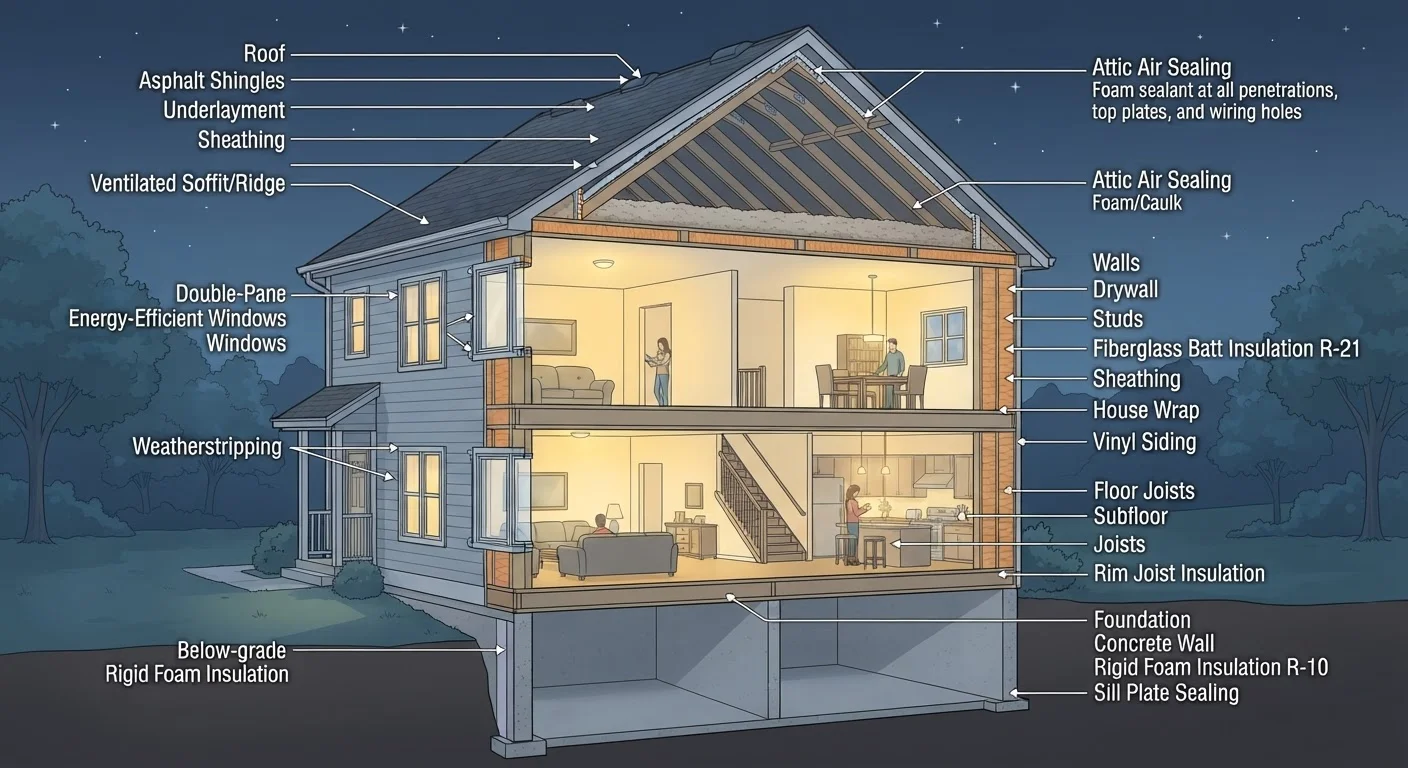
Energy efficiency upgrades are changes made to a home's structure, systems, or components that reduce the amount of energy needed to maintain comfortable indoor conditions. Unlike appliance swaps, the most impactful upgrades target the building envelope - the walls, roof, foundation, windows, and doors that separate conditioned space from outside air. When done correctly, these upgrades reduce heating and cooling loads rather than just running equipment more efficiently.
Building scientists often describe this as reducing a home's 'thermal load' - the total heat gained or lost through the envelope - before optimizing mechanical systems like HVAC.
Why the Building Envelope Is the Starting Point
Most homeowners think about energy efficiency in terms of equipment - a newer furnace, a smarter thermostat, LED bulbs. These matter, but they operate downstream of a more fundamental factor: how well the home's envelope contains conditioned air. The envelope is every surface between inside and outside - walls, roof assembly, foundation, windows, and doors.
A leaky, poorly insulated envelope forces heating and cooling equipment to run constantly to compensate for what's being lost. Upgrading equipment in that situation is like filling a bucket with a hole in it. Addressing the envelope first reduces the load on every system in the house. For ongoing home maintenance purposes, this is one of the highest-leverage areas an owner can focus on.
The three categories of envelope upgrades - air sealing, insulation, and windows - each work differently, and understanding the distinction helps homeowners make smarter decisions about where to start.
Air Sealing: Stopping Uncontrolled Air Movement
Air sealing addresses infiltration - the uncontrolled movement of outside air into the home and conditioned air out. In older American homes, this leakage is often substantial. Gaps around electrical outlets, plumbing penetrations, attic hatches, and the sill plate where the framing meets the foundation add up to what building scientists sometimes describe as the equivalent of a window left permanently open.
Common air sealing materials include caulk for stationary gaps, weatherstripping for moving components like doors and windows, and spray foam for larger irregular openings. The attic is often the most important area because warm air rises and exits through ceiling penetrations, pulling cold air in at lower levels through what's called the stack effect.
Start With an Energy Audit
Before spending on insulation or windows, consider scheduling a professional home energy audit. Auditors use blower door tests and thermal imaging to show exactly where air and heat are escaping - results that often surprise even experienced homeowners. Many utility companies offer subsidized or free audits; check with yours before paying full price.
One important caution: homes can be sealed too tightly without accounting for ventilation. If a home becomes very airtight, it needs a controlled mechanical ventilation strategy - such as an energy recovery ventilator (ERV) - to maintain air quality. See our guide to hidden weak points for related areas where uncontrolled moisture and air movement cause long-term damage.
Insulation: Slowing Heat Transfer Through Surfaces
While air sealing stops bulk air movement, insulation slows the conduction and radiation of heat through solid surfaces. These are distinct mechanisms, which is why both upgrades are necessary - insulation does not compensate for air leaks, and air sealing does not replace insulation.
Insulation is rated by R-value, which measures resistance to heat flow. Higher R-values mean more resistance. But the type of insulation and where it's installed matter as much as the number on the label. What homeowners often misunderstand about R-values is that a compressed batt loses effective R-value, and an uninsulated rim joist can undermine an otherwise well-insulated basement.
The attic is typically the highest-priority insulation location because heat moves most aggressively through the ceiling plane. Walls and basement assemblies follow, with priority depending on climate zone and existing conditions.
25-30%
Heat loss attributable to air infiltration in typical homes
According to the U.S. Department of Energy, air leakage accounts for a significant share of heating and cooling loss in many American homes.
Up to 15%
Heating and cooling savings from sealing and insulating
The U.S. EPA's ENERGY STAR program estimates that properly air sealing and insulating can reduce total heating and cooling costs by up to 15% on average.
2x-3x
Thermal performance improvement: single-pane to double-pane
Low-e double-pane windows can reduce heat transfer through glass by roughly half to two-thirds compared with standard single-pane units, according to window industry testing standards.
Windows: When Replacement Helps and When It Doesn't
Windows are the most visible efficiency upgrade and frequently the most over-estimated. Modern double- or triple-pane windows with low-emissivity (low-e) coatings are meaningfully better than single-pane glass - but the performance gap between a decent existing double-pane window and a new high-performance unit is much narrower than the gap between single-pane and double-pane.
For homes with original single-pane windows, replacement typically delivers noticeable comfort improvements, particularly near window surfaces in winter. For homes with intact double-pane windows that aren't broken-sealed or physically damaged, the return on full replacement is more modest. In those cases, air sealing around the window frame and checking weatherstripping often delivers a meaningful share of the benefit at a fraction of the cost.
Window performance is rated using U-factor (heat loss rate, lower is better) and Solar Heat Gain Coefficient (SHGC). The right SHGC depends on climate: homes in colder climates benefit from higher SHGC on south-facing windows to capture solar gain; those in hot climates generally want lower values. Also consider how attic ventilation interacts with solar heat gain in the broader building assembly.
How These Upgrades Work Together
The most common mistake homeowners make is treating these upgrades as independent line items rather than as an integrated system. Insulating an attic without sealing the ceiling plane first allows warm, moist air to migrate into the insulation - reducing its effectiveness and potentially causing condensation damage. Adding insulation without addressing HVAC filtration puts more demand on a system that may already be straining; see what happens when HVAC filters are neglected for context on how maintenance gaps compound.
The recommended sequence for most homes is: audit first, then air seal, then insulate, then evaluate mechanical systems, and finally consider window upgrades if still warranted. A professional energy audit - often using a blower door test that pressurizes the home to locate leaks - removes the guesswork and prioritizes spending based on actual conditions rather than assumptions.
Permits and Local Codes Apply
Significant envelope work - particularly spray foam in enclosed cavities, structural modifications, or changes to mechanical systems - may require building permits and inspections in your municipality. Requirements vary widely by location. Always confirm with your local building department before beginning work, and consider hiring licensed contractors for complex or hazardous tasks.
Permits and local code requirements vary. Work involving spray foam in enclosed cavities, structural changes, or HVAC modifications typically requires permits and inspections. Always verify requirements with your local building department before starting significant envelope work.