

Key Takeaways
- Most vegetables need at least 6 hours of direct sunlight daily to produce well.
- Soil quality is the single biggest factor in a vegetable garden's success - amend before you plant.
- Starting small (4×4 or 4×8 feet) makes a first garden manageable and less overwhelming.
- Knowing your frost dates is essential for timing both cool-season and warm-season crops correctly.
- Consistent watering and early weed control prevent most common first-year problems.
Start here
Choosing the Right Location
Next
Understanding and Preparing Your Soil
Then
Planning Your Garden Layout
When you're ready
Planting Schedules and Timing
Ongoing
Basic Ongoing Care
Choosing the Right Location
The single most important decision you'll make before touching a shovel is where to put your garden. Vegetables are sun-hungry plants, and light drives nearly everything - yield, flavor, and disease resistance.
Walk your yard on a clear day and note which areas receive the most unobstructed sunlight from morning through afternoon. Aim for a spot that gets at least 6 hours of direct sun, with 8 hours being ideal for most fruiting crops. Avoid spots close to large trees or structures that cast long shadows.
Proximity to a water source matters almost as much. Carrying heavy watering cans across the yard gets old fast - choose a location within easy reach of an outdoor spigot or where you can lay a garden hose without running across traffic areas.
Good drainage is equally important. Avoid low-lying spots where rainwater pools after a storm; standing water suffocates roots and invites rot. If your yard has drainage challenges or compacted native soil, consider starting with a raised bed. Our raised beds vs. in-ground planting guide walks through how to weigh those options.
Understanding and Preparing Your Soil
Healthy soil is the foundation of a productive vegetable garden. Before planting anything, it's worth understanding what you're working with.
Soil pH
A scale from 0 to 14 that measures how acidic or alkaline your soil is. Most vegetables grow best in slightly acidic to neutral soil, around pH 6.0 to 7.0.
Compost
Decomposed organic matter - kitchen scraps, leaves, plant trimmings - that enriches soil with nutrients and improves its texture for plant roots.
Frost date
The average calendar date of the last spring freeze or first fall freeze in your area. Used to time when it's safe to plant cold-sensitive crops.
Hardening off
The process of gradually introducing indoor-grown seedlings to outdoor conditions so they can adjust to wind, sun, and temperature changes without shock.
Days to maturity
The number of days a vegetable variety typically takes to go from planting (or transplanting) to its first harvestable crop, as listed on the seed packet.
Mulch
A layer of material - straw, wood chips, or shredded leaves - spread on the soil surface to conserve moisture, suppress weeds, and regulate soil temperature.
A basic soil test - available through most county cooperative extension offices - reveals your soil's pH and primary nutrient levels. Vegetables generally prefer a pH between 6.0 and 7.0. If your soil is too acidic, ground limestone can raise pH; if too alkaline, sulfur can lower it. Follow test recommendations rather than guessing.
Once you know your soil's baseline, improve its structure and fertility by working in 2 to 4 inches of compost before planting. Compost improves drainage in clay soils, increases water retention in sandy soils, and feeds the microbial life that makes nutrients available to plants. If you want to produce your own, our home composting guide covers everything from setup to harvest.
Use a garden fork or tiller to loosen soil to a depth of 10 to 12 inches before adding amendments. Avoid working soil when it's waterlogged - squeezing it into a ball that holds its shape is a sign it's too wet to till without damaging structure.
Planning Your Garden Layout
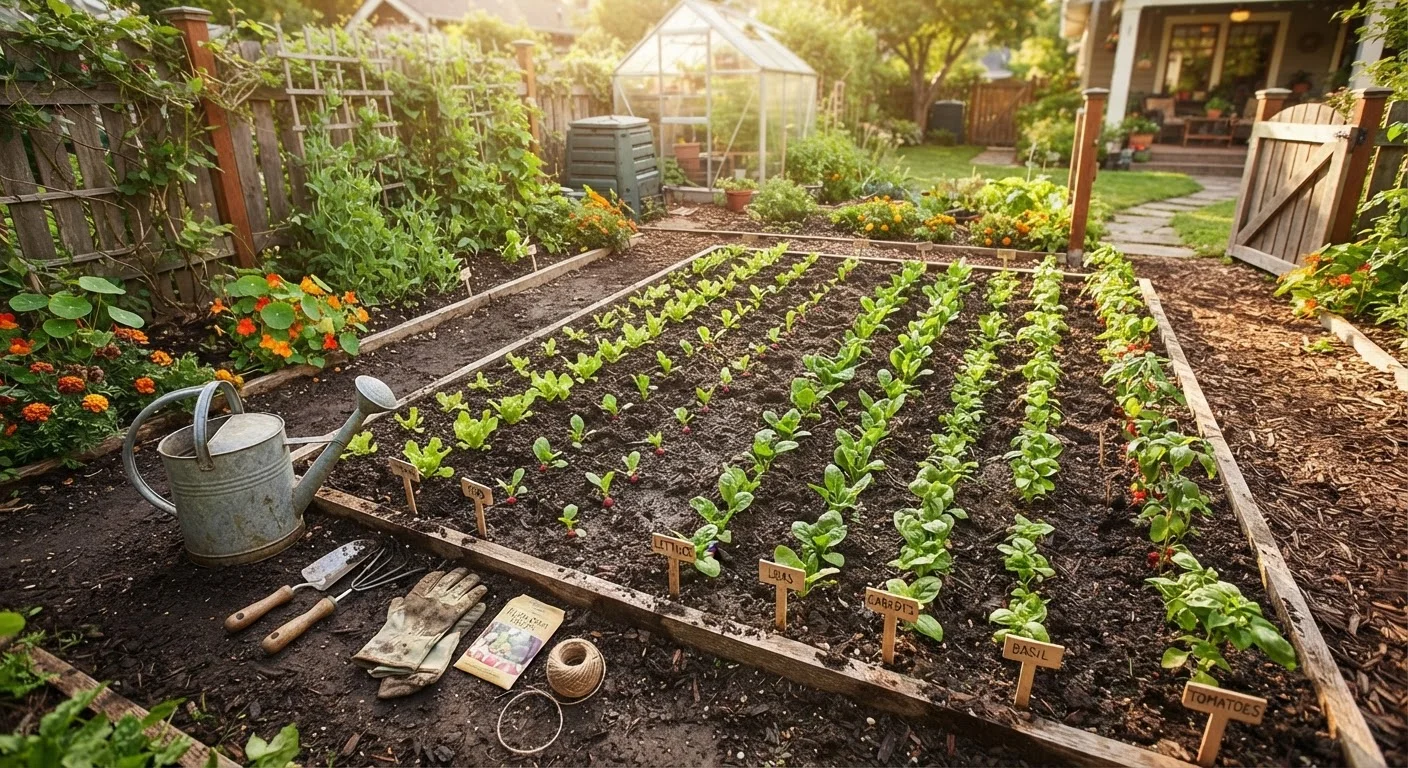
Resist the urge to plant every vegetable that excites you in your first season. A manageable plot - 4×4 or 4×8 feet - is easier to maintain, teaches you the fundamentals, and still produces a satisfying harvest.
Sketch your layout on paper before planting. Place tall plants like corn, staked tomatoes, or trellised beans on the north side of your plot so they don't shade shorter crops. Group plants with similar water and light needs together.
Think about what your household actually eats. A few tomato plants, a short row of beans, some lettuce, and a zucchini plant is a practical and productive starter combination. Zucchini in particular is famously productive - one or two plants is genuinely enough for most families.
Companion planting - positioning mutually beneficial plants near each other - can improve yields and naturally deter some pests. See our companion planting guide for evidence-backed pairings worth trying in your first garden.
If outdoor space is limited, container growing is a legitimate alternative for many crops. Our container gardening article covers what works well in pots.
Planting Schedules and Timing
Timing is everything in vegetable gardening. Planting too early in cold soil stunts growth; planting too late shortens the harvest window before frost returns.
Your last expected frost date is the key reference point. The USDA Plant Hardiness Zone Map and your local cooperative extension service can tell you this date for your specific area. Warm-season crops - tomatoes, peppers, cucumbers, squash - should go into the ground only after all frost risk has passed and soil has warmed to at least 60°F. Cool-season crops - lettuce, spinach, peas, broccoli - can be planted 4 to 6 weeks before that last frost date.
Keep a Simple Garden Journal
Note your planting dates, varieties, and observations about what thrived or struggled. Even a few lines per week creates an invaluable reference for planning next year's garden. Many experienced gardeners say this habit shortens the learning curve more than any other single practice.
Seed packets list days to maturity, which helps you work backward from your first fall frost date to determine the latest you can plant a given crop and still expect a harvest.
Starting transplants indoors gives slow-growing crops a head start. Tomatoes and peppers typically need 6 to 8 weeks of indoor growing before they're ready to move outside. Harden them off gradually - set them outdoors in a sheltered spot for increasing hours over 7 to 10 days before leaving them in the garden full time.
Basic Ongoing Care
Once your garden is planted, consistent attention in a few key areas makes the difference between a struggling patch and a productive one.
Watering: Aim for about one inch of water per week. Water deeply and less frequently rather than a little every day - deep watering encourages roots to grow down where moisture is more stable. Morning watering is preferable to evening, as wet foliage overnight promotes fungal disease.
Weeding: Weeds compete aggressively with vegetables for water and nutrients. Pull them when they're small, before they set seed. A shallow hoe used regularly - once or twice a week in active growing season - makes weeding far less burdensome than waiting for a major infestation.
Mulching: A 2- to 3-inch layer of straw, shredded leaves, or wood chips around plants suppresses weeds, retains soil moisture, and moderates soil temperature. Keep mulch a few inches away from plant stems to discourage rot.
Monitoring: Walk your garden every few days and look closely at leaves - both top and bottom. Catching pest damage or disease symptoms early makes them far easier to manage. Remove damaged leaves and dispose of them away from the garden rather than composting diseased material.
As your skills grow, you may want to explore more advanced topics. Our pruning fundamentals guide is a natural next step for anyone managing fruit-producing plants or shrubs alongside their vegetable beds.