

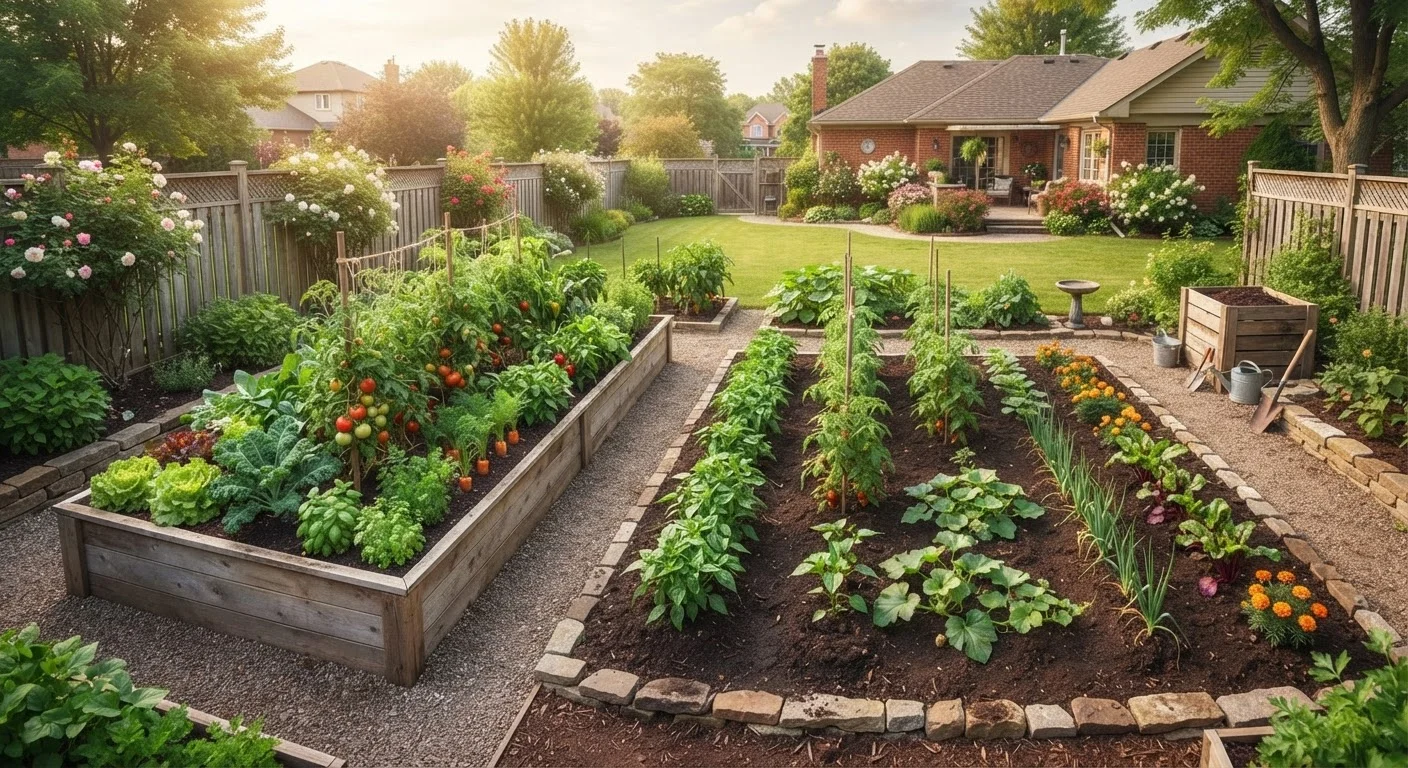
Key Takeaways
- Raised beds offer superior drainage, soil control, and easier weed management but require a higher upfront investment.
- In-ground planting is more cost-effective at scale and suits plants with deep or wide-spreading root systems.
- Soil quality is the single most important factor in deciding which method fits your yard.
- Raised beds warm up faster in spring, extending your growing season in cooler climates.
- In-ground gardens rely on existing conditions, making soil testing an essential first step.
- Either method can produce excellent results when matched to your site, budget, and gardening goals.
Option A
Raised Bed Gardening
The controlled, elevated approach for precision growing.
Best for: Gardeners dealing with poor native soil, drainage issues, or physical limitations who want greater growing control.
Option B
In-Ground Planting
The traditional, scalable method rooted in natural soil.
Best for: Gardeners with decent existing soil who want to grow large volumes of plants at lower upfront cost.
If your yard has clay-heavy, compacted, or contaminated soil
Raised Bed Gardening
Raised beds let you bypass problematic native soil entirely by filling with a customized growing mix, giving roots ideal conditions from day one.
If you want to grow large quantities of vegetables on a budget
In-Ground Planting
In-ground planting scales easily without the material costs of building and filling multiple raised beds, making it the more economical choice for larger plots.
If you have mobility challenges or limited bending ability
Raised Bed Gardening
The elevated height reduces the need to kneel or crouch, making maintenance tasks like weeding, planting, and harvesting significantly more accessible.
If you're growing deep-rooted crops like pumpkins, melons, or corn
In-Ground Planting
These crops spread widely and root deeply - conditions better accommodated by the unlimited depth and lateral space of an in-ground plot.
If you're a first-time gardener wanting predictable results
Raised Bed Gardening
Starting with a controlled soil environment removes many variables beginners struggle with, including drainage, fertility, and weed pressure.
Soil Control: The Core Advantage of Raised Beds
Perhaps the most decisive difference between raised beds and in-ground planting is the degree of control you have over your growing medium. With a raised bed, you fill the structure entirely with a blended mix - typically a combination of topsoil, compost, and an aerating material like perlite or coarse sand. That means you're not fighting what's already in the ground.
In-ground planting, by contrast, starts with whatever native soil your yard provides. In many American backyards, that means dealing with clay that drains poorly, sandy soil that dries out fast, or ground that's been compacted by foot traffic and construction. A soil test - available through most university cooperative extension programs - is essential before committing to in-ground gardening. It tells you your pH, nutrient levels, and texture so you can amend accordingly.
Raised beds also make it easier to maintain organic matter over time. Because the bed isn't walked on, the soil stays loose and well-structured season after season. In-ground gardeners must be more deliberate about adding compost and avoiding compaction along pathways.
If you're just getting started, our beginner's guide to starting a vegetable garden walks through soil preparation in detail for both approaches.
| Criterion | Raised Beds | In-Ground Planting |
|---|---|---|
| Upfront Cost | Higher (materials + soil purchase) | Lower (amend existing soil) |
| Soil Control | Full control over growing mix | Depends on native soil quality |
| Drainage | Excellent, consistent | Variable; may need amendment |
| Weed Pressure | Lower (contained environment) | Higher; requires active management |
| Spring Warmup Speed | Faster (earlier planting possible) | Slower to warm in spring |
| Scalability | Limited by cost and space | Easily expanded at low cost |
| Accessibility | Easier on knees and back | Requires kneeling or bending |
| Root Depth | Limited by bed depth (12-18 in.) | Unlimited natural depth |
Drainage, Warmth, and Seasonal Advantages
Drainage is where raised beds consistently outperform in-ground plots, particularly in regions with heavy rainfall or naturally dense soil. Because the growing medium is elevated and loosely structured, water moves through it more freely - reducing the waterlogged conditions that cause root rot and disease. For most vegetables, consistent moisture without standing water is the ideal.
Raised beds also warm up more quickly in early spring. The soil mass is exposed on multiple sides and smaller in volume, so it absorbs heat faster than the ground. This can translate to an earlier planting window - sometimes by two to three weeks depending on your climate - which matters in northern states with short growing seasons.
In-ground gardens, however, hold temperature more steadily in summer heat. The insulation provided by surrounding soil buffers plants from temperature extremes. For heat-sensitive crops in hot climates, this thermal stability can actually reduce stress on plants during peak summer months.
12-18 in.
Recommended raised bed depth for most vegetables
Most vegetable roots require at least 12 inches of loose growing medium; root crops like carrots benefit from 18 inches or more.
2-3 weeks
Earlier planting window in raised beds
Raised bed soil warms faster in spring due to exposed sides and lower soil volume, often allowing earlier transplanting in cooler climates.
6.0-7.0
Ideal soil pH for most vegetables
Most vegetables thrive in a slightly acidic to neutral pH range; a cooperative extension soil test can confirm whether your native or purchased soil falls within this range.
Watering strategy also differs between the two methods. Raised beds tend to dry out faster and may need more frequent irrigation. Many gardeners find drip irrigation particularly well-matched to raised beds - see our comparison of drip irrigation versus sprinkler systems for guidance on the right setup.
Cost, Maintenance, and Long-Term Practicality
Upfront cost is one of the clearest trade-offs in this comparison. Building a raised bed requires lumber, hardware cloth (for pest and gopher control), and a significant volume of purchased soil mix. A single 4-by-8-foot bed can cost anywhere from $50 to $200 or more depending on materials and local soil prices. Scaling to multiple beds adds up quickly.
In-ground planting has much lower entry costs. Clearing, tilling, and amending an existing plot primarily requires time and labor - often just a bag of compost and a soil test. For gardeners covering a large area, this difference is substantial.
Maintenance patterns also diverge over time. Raised beds typically require less weeding because weed seeds aren't introduced through native soil and the defined borders reduce encroachment. However, the soil mix will settle and decompose annually, requiring you to top off the bed with fresh compost each season to maintain optimal volume and fertility.
In-ground gardens require more consistent weed management, especially in early establishment. Mulching pathways and planting beds heavily is one of the most effective strategies - our guide on when and how to use mulch covers the right materials and depth for vegetable gardens. Wood-framed raised beds also have a finite lifespan; untreated cedar typically lasts 10 to 15 years before needing replacement.
For gardeners with very limited outdoor space, container gardening offers a third path worth exploring alongside these two methods.