

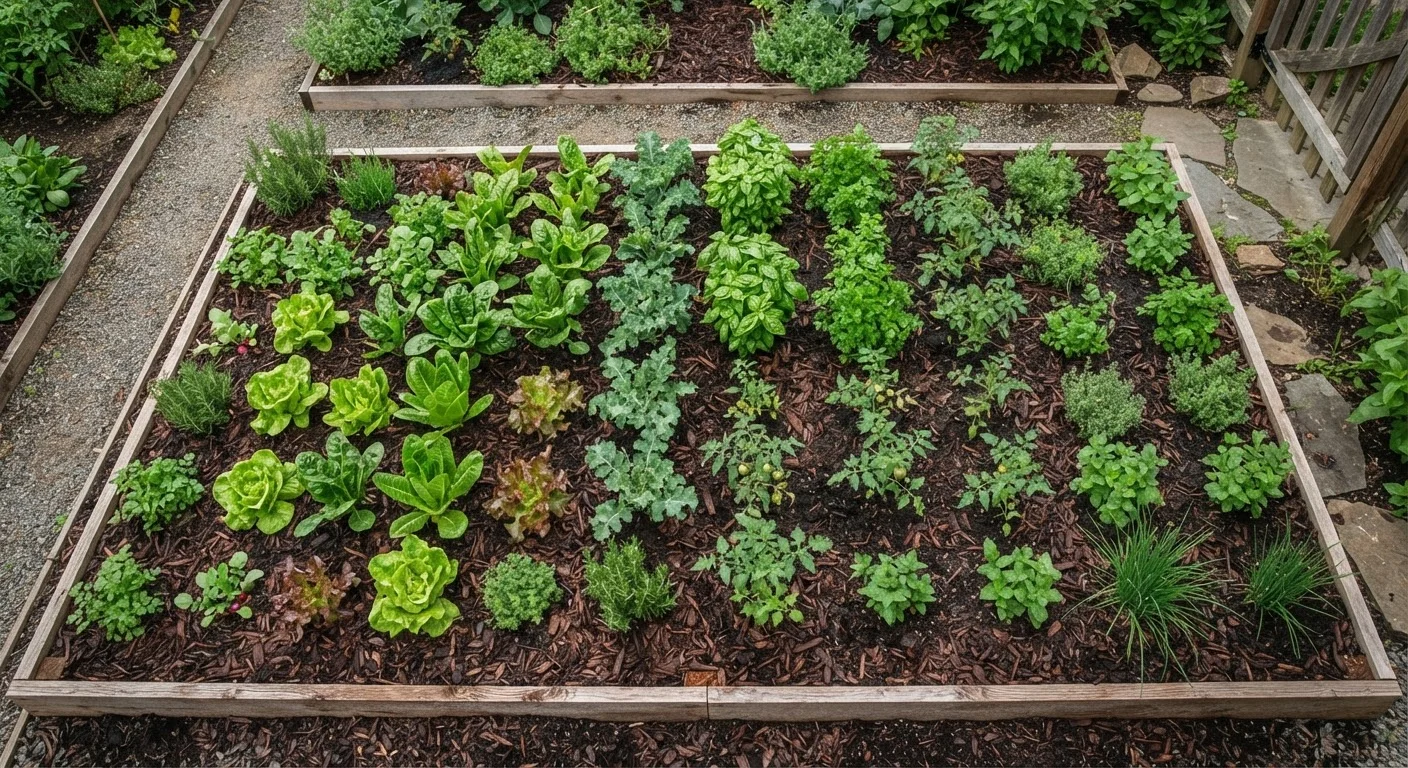
What Mulch Actually Does for Your Soil and Plants
Mulch is any material spread over the surface of soil to protect and improve it. That simple definition covers a wide range of benefits that compound over time: moisture retention, temperature regulation, weed suppression, and - in the case of organic materials - gradual soil enrichment as the mulch breaks down.
Bare soil loses moisture quickly, fluctuates dramatically in temperature, and invites weed seeds to germinate freely. A consistent mulch layer interrupts all three problems at once. It acts as insulation, keeping root zones cooler in summer and warmer in fall. It also slows evaporation, which means less frequent watering and more consistent conditions for plant roots.
Organic mulches go further by feeding soil biology. As wood chips, straw, or shredded leaves decompose, they contribute organic matter that improves structure, drainage, and nutrient cycling - essentially doing slow, ongoing work similar to compost. See our guide to composting at home for how to pair mulch with homemade compost for even stronger soil results.
Organic vs. Inorganic Mulch: Choosing the Right Type
The two broad categories of mulch each have distinct trade-offs, and the right choice depends on your goals, plant types, and how much maintenance you want to do.
Organic Mulches
- Wood chips and shredded bark - Long-lasting, widely available, and ideal for trees, shrubs, and perennial beds. Coarser chips decompose slowly; finer shreds break down faster and enrich soil more quickly.
- Straw - Light, affordable, and excellent for vegetable gardens. It decomposes within a season, adding organic matter without matting down.
- Shredded leaves - A free resource from your own yard. Leaves mat if left whole, so shredding is important. They decompose relatively quickly and are excellent for woodland garden beds.
- Compost - Used as a thin mulch layer, finished compost feeds soil directly. It doesn't suppress weeds as effectively as coarser mulches but excels as a soil amendment combined with other materials.
Inorganic Mulches
- Gravel and crushed stone - Permanent, low-maintenance, and ideal for drought-tolerant plants, rock gardens, or pathways. Does not improve soil but drains well and deters certain pests.
- Landscape fabric - Often used under gravel or stone. Suppresses weeds effectively when properly installed, though it degrades over years and can impede water infiltration if clogged.
- Rubber mulch - Made from recycled tires. Long-lasting and maintains color, but does not improve soil and raises concerns about leaching in some gardening communities.
If you're gardening with native plants, organic mulches like wood chips and shredded leaves closely mimic the natural leaf litter these plants evolved alongside, making them a natural fit.
Depth Guidelines and Common Mistakes
Getting mulch depth right matters as much as choosing the right type. Too little provides minimal benefit; too much can suffocate roots and create conditions for disease.
- 2-3 inches is the general target for most landscape beds, shrubs, and perennial plantings.
- 3-4 inches works for weed suppression in areas with heavy pressure or pathways between rows.
- No more than 4 inches in any situation - deeper layers restrict oxygen and water movement to roots.
Mistakes to Avoid
Volcano mulching - piling mulch up against tree trunks in a cone shape - is one of the most common and damaging practices in home landscapes. It traps moisture against bark, promotes rot, and can invite disease and pest activity. Always leave a gap of several inches between the mulch and any trunk or stem.
Also avoid using mulch made from diseased plant material, as this can spread pathogens back into the soil. When in doubt, source mulch from a reputable supplier or use material you've composted fully at high temperature.
For a fuller picture of seasonal yard tasks that include mulching as a critical step, see our fall yard prep checklist.
When to Apply Mulch: Seasonal Timing
Mulch can be applied in any season, but timing affects what it accomplishes and how well it performs.
Spring
The most common time to mulch. Apply after the soil has warmed slightly - mulching too early over cold soil can delay warming and slow root activity. Spring mulching suppresses the first flush of weeds and locks in moisture as temperatures climb.
Summer
A mid-season top-up can help in drought conditions, especially in vegetable gardens where straw or shredded leaves protect shallow roots and reduce watering needs. Check depth and refresh where material has settled or decomposed.
Fall
Fall mulching protects root zones from freeze-thaw cycles that can heave perennial roots out of the ground. Apply before hard frost sets in. This is also an ideal time to mulch newly planted trees and shrubs to help them establish through their first winter. Our full-year lawn and garden maintenance guide covers how mulching fits into each seasonal care cycle.
Winter
In mild climates, winter mulching continues to protect soil from erosion and compaction from rain. In colder regions, mulch applied in late fall remains in place and continues insulating roots through the coldest months.