

Key Takeaways
- A genuine discount is measured against a price the retailer actually charged, not a made-up reference number.
- Inflated 'original' prices are a common retail tactic used to exaggerate the size of a markdown.
- Price history tools can reveal whether a current 'deal' has been available at an equal or lower price before.
- Percentage-off labels can mislead when the base price has been manipulated upward.
- Comparing prices across multiple retailers is the most reliable way to validate a discount's real-world value.
Genuine Discount
A genuine discount is a price reduction from what a retailer actually, consistently charged for an item - not from an inflated or temporary 'original' price used to make the markdown look bigger. It reflects real savings relative to the item's true market value, not shelf math designed to manufacture the appearance of a deal.
Regulators in the U.S., including the FTC, have issued guidance on deceptive pricing: a 'former price' used as a reference must reflect a price at which the item was actually offered in good faith for a reasonable period of time.
Why the Word 'Discount' Doesn't Guarantee Savings
Retailers know that the perception of saving money drives purchases as much as the actual amount saved. That's why the mechanics of how a discount is presented matter just as much as the number itself. A tag that reads '50% off' triggers a psychological response - but whether you've actually saved anything depends entirely on what that percentage is calculated from.
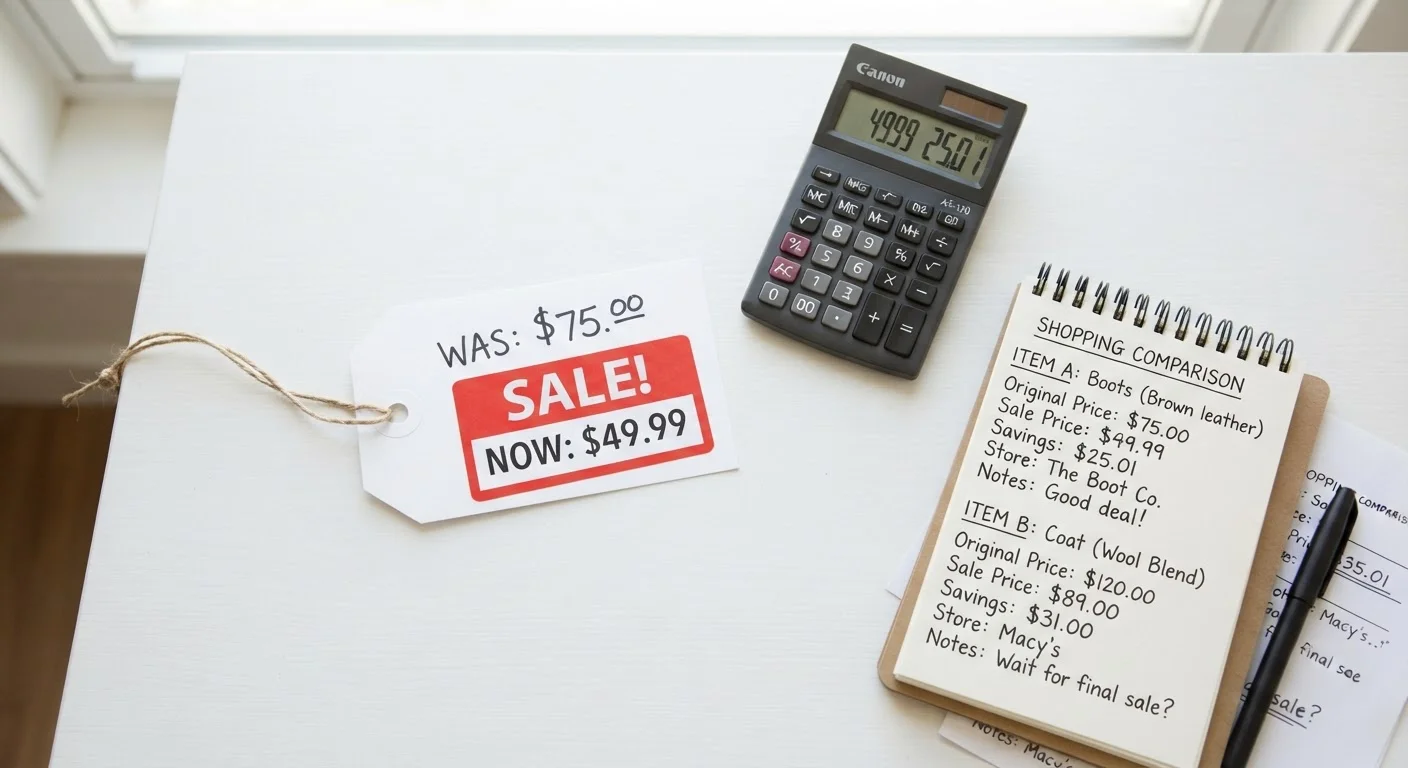
The reference price - often labeled 'original,' 'regular,' or 'compare at' - is the starting point for any discount claim. If that number is inflated, fictitious, or based on a price the item was briefly offered at before being marked down, the discount built on top of it is equally hollow. This is sometimes called reference price manipulation, and it's more common than most shoppers expect.
Understanding this mechanism is the first step toward evaluating any deal on its actual merits. For a broader foundation, see The Deal-Hunting Starter Playbook, which covers the habits and frameworks that underpin consistent savings.
FTC Guidelines on Reference Pricing
The Federal Trade Commission's Guides Against Deceptive Pricing state that a former price used as a basis for advertising savings must be one at which the product was offered to the public 'on a regular basis for a reasonably substantial period of time.' Retailers who use inflated or fictitious reference prices may be in violation of these guidelines, though enforcement is not automatic. If you believe you've encountered deceptive pricing, you can report it to the FTC at ReportFraud.ftc.gov.
The Three Components of a Real Discount
A genuine markdown has three identifiable parts working together:
- A legitimate baseline price. The 'original' or 'regular' price should reflect what the item was consistently sold for, not a temporary or rarely-used figure. A price held for a week before a sale isn't a credible reference point.
- A meaningful price reduction. The current price should be noticeably lower than what the item has typically sold for - both at this retailer and across the market. A 20% discount that brings the price in line with every competitor's everyday price isn't a deal; it's parity.
- An honest presentation. The discount should accurately describe the savings, not round up percentages or selectively choose the most favorable comparison point. Phrases like 'up to X% off' legally only require one item in a category to hit that ceiling.
When all three of these are present, you're looking at a genuine discount. When even one is missing, the deal deserves scrutiny. Discount Formats Decoded breaks down how different markdown structures - percentage off, BOGO, bundles - work and how to compare them fairly.
~87%
Products purchased on 'sale' in some categories
Research published in academic marketing journals has found that in some retail categories, the vast majority of purchases occur at a promoted or 'sale' price, suggesting the sale price is effectively the regular price.
2-4 weeks
Typical pre-event price inflation window
Consumer advocacy analyses of major shopping events have identified a common pattern of price increases in the weeks immediately preceding high-profile sale periods, which are then 'discounted' back during the event.
Up to 30%
Gap between MSRP and typical market price
Manufacturer's suggested retail prices frequently exceed actual selling prices by a significant margin in categories like electronics and bedding, making MSRP-based 'compare at' labels inherently inflated reference points.
How to Verify a Discount Before You Buy
The most practical tool available to shoppers is price history data. Services that track how a product's price has changed over time can show you immediately whether a 'sale' represents a genuine low or just this week's version of the standard price. If an item is 'on sale' at the same price it's been at for six of the last twelve months, that's the real price - the sale label is marketing, not math.
Price Tracking Tools: How They Work and When They're Worth Using explains how these tools collect and display price history so you can read that data accurately.
Beyond price history, cross-retailer comparison is your second line of defense. If a product is listed at a 'sale' price of $89 at one store but routinely sells for $79 at others, the discount is illusory. The market price, not the retailer's reference price, is your real anchor. For a deeper look at why the same item can carry dramatically different prices, Why Identical Products Can Have Wildly Different Prices is worth a read.
Check Price History Before Any Major Purchase
Before acting on a sale price for any item over $30-$50, look up its price history. Many browser extensions and comparison sites provide 30-180 day price graphs for major product categories. If the 'sale' price has been the normal price for months, that's your real baseline - not the crossed-out figure above it.
Red Flags That Suggest a Deal Isn't Genuine
Certain patterns appear repeatedly in manipulated pricing. Train yourself to recognize them:
- 'Compare at' tags without context. This phrase often signals that the comparison is to a manufacturer's suggested retail price (MSRP) or a competitor's price - not the retailer's own selling history. MSRP is routinely higher than what products actually sell for in the market.
- Perpetual sales. If an item is always 'on sale,' the sale price is the real price. Retailers sometimes maintain permanent markdowns to create an ongoing sense of urgency.
- Prices that rise before major shopping events. Some products are quietly marked up in the weeks before high-profile sales periods, then 'discounted' back to where they were. Price history data exposes this pattern clearly.
- Bundle pricing that obscures individual value. Grouping items into a bundle at a 'discount' can make it difficult to assess whether any individual item is actually cheaper than it would be purchased separately.
Rebate offers carry their own layer of complexity - what looks like an upfront discount often comes with submission requirements and rejection risks. Reading the Fine Print on Rebates and Mail-In Offers covers what to watch for.