

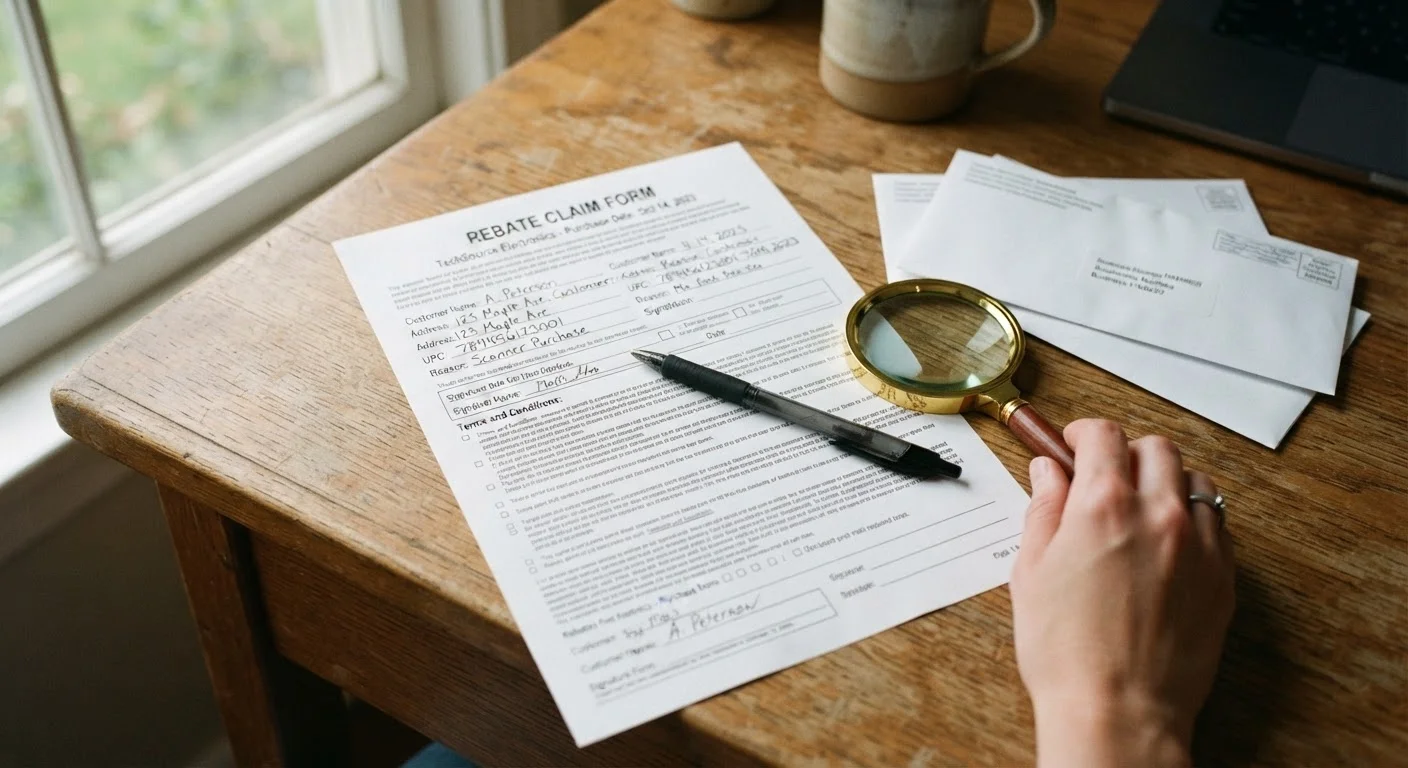
Key Takeaways
- Rebates are not automatic discounts - you must meet specific eligibility and submission requirements to collect.
- Submission windows are often shorter than shoppers expect, sometimes as few as 15 or 30 days after purchase.
- Missing a single required document or field is enough to get a rebate rejected without appeal.
- The advertised rebate amount may be taxable income, reducing your actual net savings.
- Tracking your submission and keeping copies of everything significantly reduces the risk of losing your rebate.
What you will need
Why Rebates Are Designed to Be Complicated
A rebate is a partial refund issued by a manufacturer or retailer after you've completed a purchase and submitted a qualifying claim. Unlike an instant discount applied at checkout, a rebate puts money back in your pocket only if you follow through - correctly, on time, and with the right documentation.
That structure is deliberate. Industry research has consistently found that a substantial portion of rebates are never redeemed, either because consumers forget, miss deadlines, or make errors on forms. This redemption gap allows sellers to advertise a lower effective price while paying out far less than the full promotional amount. Understanding this dynamic is the first step to actually collecting what was promised.
For context on how rebates compare to other savings mechanisms, see how coupons and cashback programs differ structurally - the mechanics matter when you're deciding how to budget your purchase.
What you will need
How to Read and Submit a Rebate Offer Without Getting Rejected
Most rebate rejections are preventable. The steps below walk you through evaluating an offer before you buy, gathering documentation, and submitting a claim that's built to succeed.
Read the full offer terms before purchasing
Locate the complete rebate terms - not just the promotional headline. Look for the eligible product list (specific SKUs or model numbers may be required), the purchase window (the dates during which your purchase must occur), the submission deadline, and any household or purchase-quantity limits. If the terms aren't posted where the offer is advertised, ask a store associate or find them on the manufacturer's website before you buy.
Verify product eligibility at the SKU level
Rebate offers frequently apply to specific model numbers, package sizes, or retail channels - not a general product category. Confirm that the exact item in your cart matches the eligible SKU listed in the terms. A bundle, a different color variant, or a unit purchased from an excluded retailer can disqualify your claim entirely even if the product looks identical.
Keep your original receipt and all packaging
Most rebate submissions require proof of purchase in the form of an original store receipt showing the purchase date and price, plus the UPC barcode cut from the physical product packaging. Do not discard the box until your rebate is confirmed paid. If your receipt is digital, save it to a cloud folder immediately. For the barcode, keep the entire panel rather than just the barcode strip - some forms require surrounding product text as well.
Complete the submission form accurately and completely
Whether submitting online or by mail, fill in every required field exactly as the form requests. Name and address must match the payment method you intend to use. If the form asks for a serial number, find it on the device itself rather than the box, as these can differ. Incomplete forms are one of the leading causes of outright rejection - issuers are not required to contact you for missing information.
Submit before the deadline and log your confirmation
Mark the submission deadline on your calendar the day you make the purchase. For mail-in offers, the postmark date is typically what counts - not the date the envelope arrives. Use certified mail with tracking for any submission over $25 in rebate value. For online submissions, save the confirmation screen or email. Note the expected processing time and the date by which you should follow up if you haven't received a status update.
Check Whether the Rebate Amount Is Taxable
In the United States, manufacturer rebates are generally treated as a reduction in purchase price and are not taxable income for most consumers. However, rebates on business purchases or high-value promotional offers can sometimes be treated differently. If your rebate is substantial, consult a tax professional to confirm how it should be reported, especially if you're purchasing as a sole proprietor or small business.
What to Do If Your Rebate Is Rejected or Delayed
Even carefully submitted claims can be denied. If that happens, don't treat the rejection as final. First, review the denial reason provided - many issuers are required to specify why a claim was rejected. Common causes include a missing UPC barcode, a form submitted outside the window, or a duplicate claim if the same household submitted twice.
If the denial appears to be an error, contact the rebate fulfillment center directly with your submission copies as evidence. Keep a record of every call, including date, representative name, and what was discussed. If you purchased the item using a credit card that offers purchase protection, check whether that benefit covers rebate disputes.
Also be aware that a slow response isn't necessarily a rejection. Rebate processing times can legally stretch to 8-12 weeks for some offers. Issuers are typically required to notify you of a status by a published deadline - check the original terms for that date.
For broader context on how sellers' policies signal their trustworthiness, what a retailer's return policy reveals about seller confidence is worth reading alongside this guide.
Be Skeptical of Third-Party Rebate Processors
Some rebate programs are administered by third-party fulfillment companies rather than the manufacturer or retailer directly. If you're asked to submit personal financial information beyond a mailing address - such as bank account details or a Social Security number - for a standard product rebate, treat this as a red flag. Legitimate rebate programs typically pay by check or prepaid card and don't require sensitive financial data. See common fine print traps in retail offers for related consumer protection guidance.