

Key Takeaways
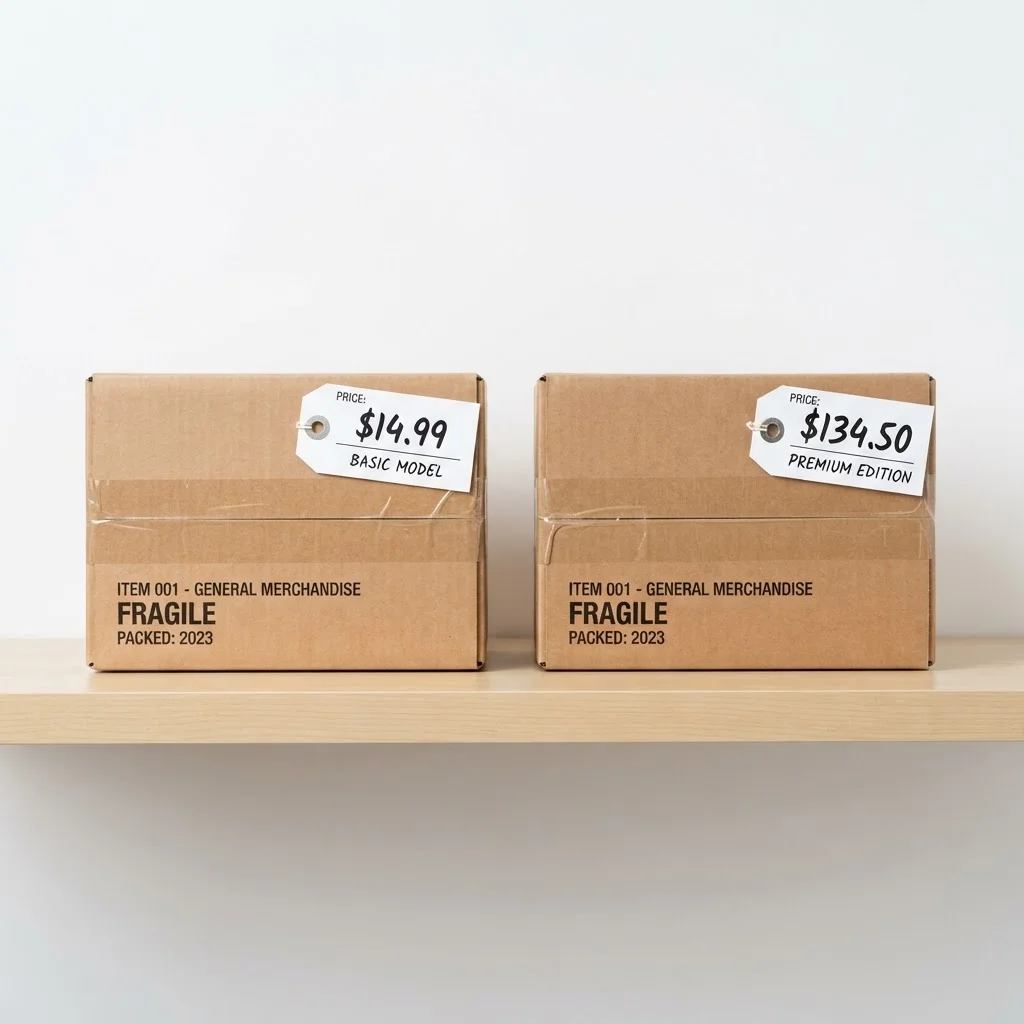
- The same physical product can carry different prices due to sourcing, retailer overhead, and channel strategy - not just greed.
- Retail markup varies widely; a premium price doesn't automatically signal better quality.
- Where a product is sold affects its price as much as what the product is.
- Marketing costs, brand licensing, and packaging differences are often baked into the price.
- A lower price isn't always a better deal once you factor in returns policies, warranties, and shipping.
Price Dispersion
Price dispersion is the phenomenon where identical or near-identical products sell at significantly different prices across different sellers, channels, or markets. It exists because sellers have varying costs, strategies, and customer bases - meaning the "right" price depends heavily on context, not just the product itself.
In economics, price dispersion persists even in competitive markets due to search costs, information asymmetries, and differentiated service offerings layered around a commodity product.
The Core Reason: Sellers Are Not Just Selling a Product
When you see the same blender listed for $45 on one site and $89 at a local retailer, the instinct is to assume someone is being ripped off. But pricing rarely works that simply. What you're paying for at any given seller includes far more than the object itself - it includes the entire system built around delivering that object to you.
Retailers absorb different costs: rent, staffing, logistics, customer service, and return processing. A neighborhood appliance store carries higher overhead than a warehouse-style online seller, and those costs flow into the price tag. The product inside the box may be identical; the business selling it is not.
This also applies to marketing spend. A brand that invests heavily in advertising passes a portion of that cost to the consumer. A store-brand or lesser-known equivalent product sitting next to it on the shelf may offer the same specs at a lower price precisely because it skipped the ad budget.
Check What the Price Actually Includes
Before assuming a lower price is the better deal, confirm what's bundled in: shipping fees, return window length, warranty coverage, and seller reliability all affect the true value. A marginally higher price from a seller with a clear return policy and domestic customer support can easily be worth the difference.
Sourcing, Volume, and the Supply Chain Gap
Not all retailers buy products at the same cost. Large-volume retailers negotiate lower wholesale prices and pass some of those savings along. Smaller sellers buying in lower quantities pay more per unit and have less room to discount. This is a structural difference in supply chain economics - not a reflection of the product's quality or your relationship with either seller.
Private label and white-label manufacturing adds another layer. Many products are made in the same facility for multiple brands. A manufacturer might produce a nearly identical item for a premium brand, a mid-tier retailer, and a budget label simultaneously. What changes is the packaging, the brand licensing fee, and the distribution channel - not the underlying item. Learning how to compare similar products side by side can help you spot when two listings are effectively the same thing.
Up to 30%
Typical retail markup range on consumer goods
Retail margins on everyday consumer products commonly range from 20-50%, varying by category and channel - meaning the same item can legitimately carry very different sticker prices depending on where it's sold.
Significant majority
Products made by same manufacturer under different brands
Industry analysts widely note that private-label and white-label manufacturing is common across consumer electronics, home goods, and apparel - the same factory often supplies multiple competing brands.
Channel Strategy and Pricing Psychology
Where a product is sold shapes what it costs. Specialty retailers position themselves as curated sources and price accordingly. Marketplace sellers compete aggressively on price to win search rankings. Department stores use anchor pricing - setting a high "regular" price so that a sale price feels compelling. Each approach serves a business logic, and none of them are primarily about the product.
Pricing psychology plays a significant role too. Research in behavioral economics consistently shows that consumers associate higher prices with higher quality - even when the products are identical. Sellers in premium channels leverage this. That's worth keeping in mind the next time a price gap makes you wonder whether the cheaper option is somehow inferior. For a closer look at how markdowns get constructed, read about the anatomy of a genuine discount.
Timing also matters. The same item may be priced differently depending on the time of year, demand cycles, and each retailer's inventory position. Flash sale models and everyday low pricing reflect fundamentally different strategies - and knowing which one a seller uses helps you judge whether the price you're seeing is actually competitive.
What This Means for Smarter Shopping
Understanding why prices differ gives you a more useful lens than simply hunting for the lowest number. The relevant question isn't "which price is cheapest" but "what am I actually getting for this price" - including after-sale support, return flexibility, and how confidently you can verify what you're buying.
A price gap signals a difference in the business model around the product, not necessarily in the product. Sometimes that difference matters to you (faster shipping, a generous return window, local support); sometimes it doesn't. Knowing which factors are relevant to your situation is what separates an informed purchase from one you regret. Reading product listings carefully is one practical step toward making that call with confidence.