

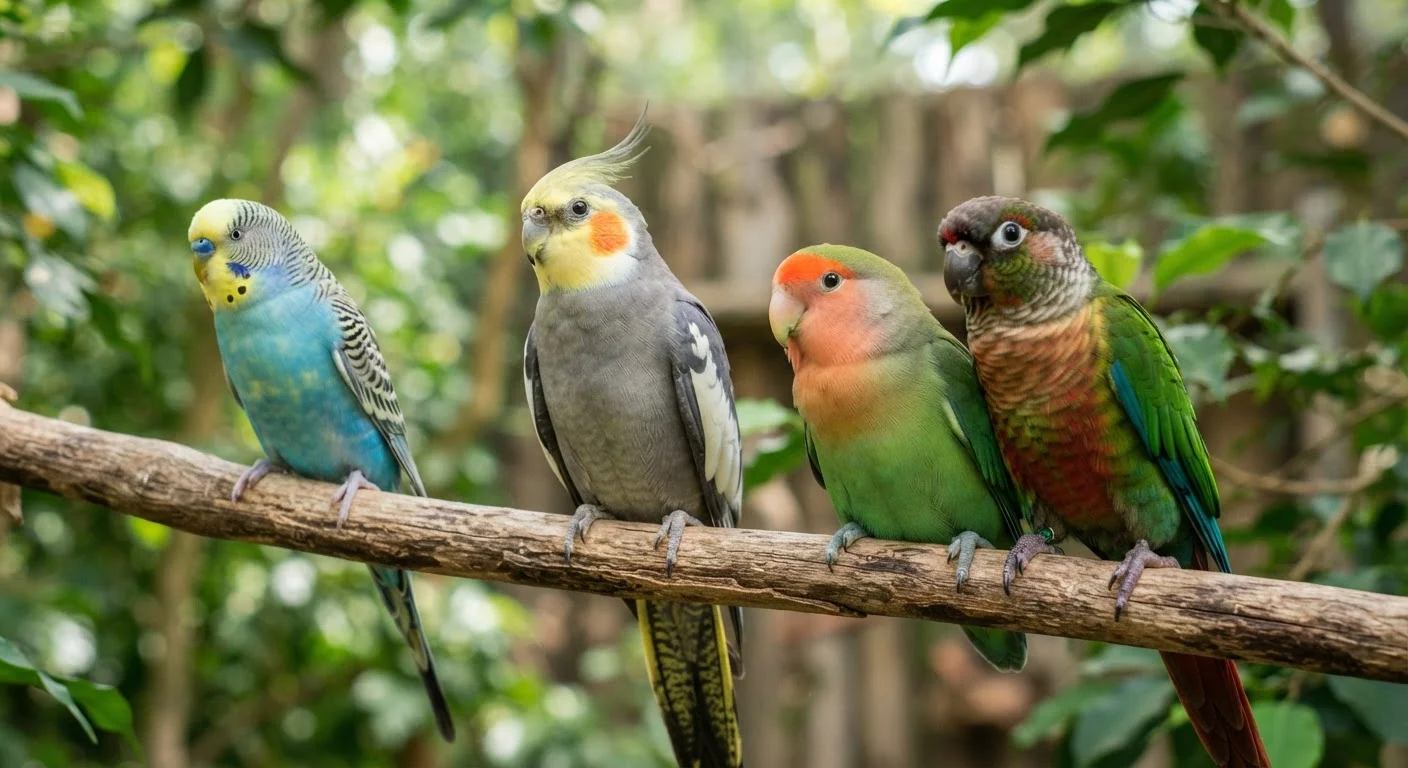
Why Temperament Should Drive Your Species Choice
Choosing a pet bird based on appearance alone is one of the most common mistakes prospective owners make. A bird's species shapes nearly everything about daily life with it - how loud it is at 7 a.m., how much handling it craves, whether it bonds to one person or welcomes the whole family, and how quickly it may develop behavioral problems if its needs go unmet. Boredom and under-stimulation are leading drivers of feather-destructive behavior and excessive screaming, so matching species to lifestyle matters enormously. See our guide to keeping pet birds mentally stimulated for enrichment strategies once you've made your choice.
The profiles below summarize the behavioral tendencies most reliably observed across healthy, well-socialized individuals of each species. Individual variation always exists, and early handling history plays a significant role. Use this reference as a starting framework, not a guarantee.
Species Profiles at a Glance
Budgerigar (Budgie)
Budgies are among the most beginner-friendly pet birds available. They are social, relatively quiet compared to larger parrots, and can learn to mimic words with patient training. They do best with daily interaction and ideally a companion bird if the owner works long hours. Noise level is low to moderate - chirping rather than screaming. Lifespan typically runs 7-12 years with good care.
Cockatiel
Cockatiels rank as one of the most affectionate small parrots. They whistle readily, can learn short tunes, and often bond closely with a primary caretaker. Males tend to vocalize more than females. They are sensitive to changes in routine and can become clingy if over-bonded without also being taught independent play. Noise level is moderate. Lifespan averages 15-20 years, sometimes longer.
Lovebird
Despite their name, lovebirds are not always easy-going. They are bold, territorial, and highly energetic. Hand-raised individuals can be affectionate with their primary person but may be nippy with others. Pairs kept together often bond exclusively to each other, reducing human tameness. Noise level is moderate, with sharp, frequent calls. Lifespan is roughly 10-15 years.
Parrotlet
Parrotlets pack a large-parrot personality into a tiny body. They are confident, curious, and can be assertive - even aggressive - if not consistently socialized. They suit experienced owners who can provide structured interaction daily. Noise level is relatively low, making them apartment-friendly. Lifespan is approximately 15-20 years.
Green-Cheeked Conure
Green-cheeked conures are playful and cuddly but require substantial daily attention. They are less loud than most conure species, though they do produce sharp contact calls. They thrive with puzzle toys and foraging activities. Without adequate stimulation, they can develop repetitive behaviors. Lifespan ranges from 15-25 years. For a broader look at how long a commitment bird ownership involves, see our small pet lifespan reference.
Pionus Parrot
Pionus parrots are calm, quiet, and less demanding than many medium-sized parrots. They are independent enough to entertain themselves for periods but still enjoy daily social time. They suit owners who want a parrot that is manageable without constant engagement. Noise level is low to moderate. Lifespan is typically 25-40 years, making them a significant long-term commitment.
Before acquiring any bird, complete the habitat and supply preparations outlined in our pre-arrival checklist for small pets. Avian-specific veterinary care should also be identified in advance, as not all general vets treat birds.
Matching Temperament to Your Household
Noise tolerance, available daily time, and household composition are the three factors most predictive of long-term owner satisfaction. Households with young children generally do better with forgiving species like budgies or cockatiels. Quiet apartments call for parrotlets or Pionus parrots. First-time bird owners should approach lovebirds and conures with realistic expectations about the daily commitment involved.
Newly adopted birds - especially those rehomed as adults - may display fearful or withdrawn behavior that does not reflect the species norm. Gradual trust-building is essential. Our guide to socializing a shy or fearful small animal covers step-by-step techniques applicable to birds of any species. For a comprehensive overview of care across the full ownership arc, see our complete small pet care guide.
This article provides general educational information about pet bird behavior and is not a substitute for advice from a qualified avian veterinarian or certified animal behaviorist. Individual birds vary significantly based on genetics, early handling, and environment.