

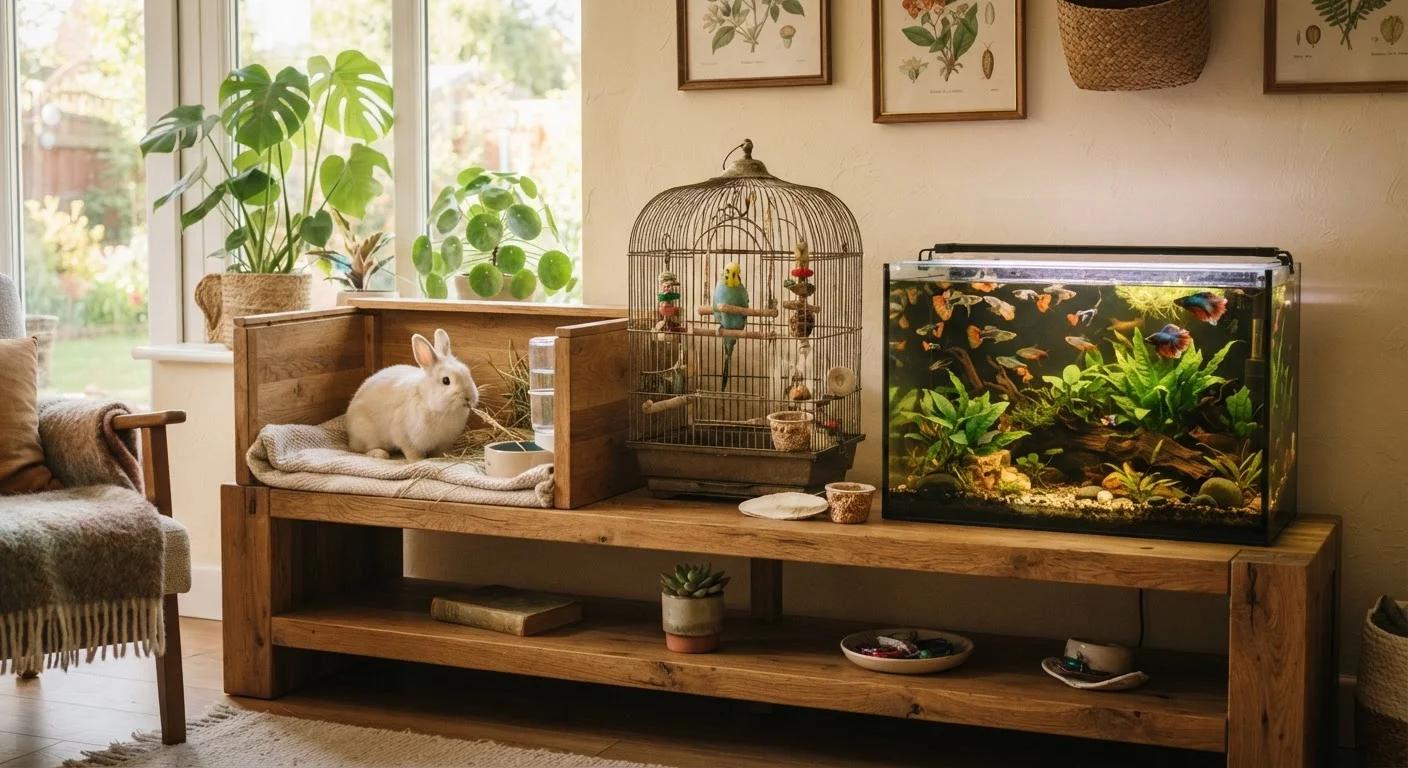
Key Takeaways
- Every small pet species has distinct habitat, diet, and social needs - research before you commit.
- Enclosure size, temperature, and enrichment are as important as food and water.
- Many small animals are prey species and show illness subtly; regular observation is essential.
- Not all veterinarians treat exotic or small animals - find a qualified provider before you need one.
- Long-term costs often exceed initial setup expenses significantly.
Choosing the Right Small Pet for Your Lifestyle
Small pets span an enormous range of species - rabbits, guinea pigs, hamsters, gerbils, birds (from budgies to cockatiels), freshwater and saltwater fish, reptiles like leopard geckos, and even rats. Each comes with a distinct set of needs, lifespans, and temperaments. Making an honest assessment of your time, budget, and living situation before you choose is the foundation of responsible ownership.
Consider lifespan seriously. A rabbit can live 8-12 years; a parrot may outlive you. Fish require consistent water chemistry maintenance; reptiles depend on precise lighting and temperature gradients. If you rent or live with family members, confirm that your chosen species is allowed and that no one in the household has allergies.
If you're weighing small pets against dogs or cats, our puppy ownership guide and first cat guide illustrate how different the time and training demands can be.
Before choosing a species, observe one in person at a shelter or rescue if possible - temperament varies widely even within the same species, and an experienced handler can help you find a good match.
Personality differences between individual animals of the same species are significant and can determine whether a pet thrives in your household long-term.
Weigh small mammals like rabbits and guinea pigs weekly using a kitchen scale and log the results - subtle weight loss is often the earliest detectable sign of illness in prey species.
Because prey animals conceal illness instinctively, objective measurements like body weight catch problems that behavioral observation alone can miss.
Setting Up the Ideal Habitat
Habitat setup is where many first-time owners underinvest. A properly sized, species-appropriate enclosure directly affects physical health and psychological wellbeing.
- Rabbits and guinea pigs need far more floor space than most starter cages provide. A minimum of 8 square feet of enclosure plus daily exercise time outside it is a widely cited baseline among rabbit welfare organizations.
- Hamsters are active and require wheels (solid-surface, not wire rungs) and deep bedding for burrowing - at least 6 inches is commonly recommended.
- Birds need cages wide enough to spread their wings fully, horizontal bar spacing appropriate to their size, and perches of varying diameters to support foot health.
- Fish require correctly cycled aquariums before any fish are introduced - the nitrogen cycle establishes beneficial bacteria that process waste and prevent toxic ammonia buildup.
- Reptiles depend on thermal gradients (warm and cool zones) and, for most species, UVB lighting to synthesize vitamin D3.
Regardless of species, place enclosures away from direct sunlight, drafts, and loud appliances. Stable ambient temperature reduces stress and illness risk.
Nutrition and Feeding Fundamentals
Diet mistakes are among the most common causes of preventable illness in small pets. Generalizing across species leads to dangerous errors - what is safe for one animal can be harmful to another.
Rabbits and guinea pigs require unlimited fresh grass hay (timothy or orchard grass) as the dietary foundation - it supports gut motility and dental wear. Guinea pigs, unlike most mammals, cannot synthesize vitamin C and need fresh leafy greens or appropriate supplementation daily.
Hamsters and gerbils are omnivores that do well on high-quality commercial seed-and-pellet mixes supplemented with small amounts of fresh vegetables. Avoid high-sugar fruits in large quantities.
Birds benefit from a varied diet combining species-appropriate pellets, fresh vegetables, and limited fruit. Seeds alone are nutritionally incomplete for most parrot species.
Fish feeding depends entirely on species - carnivores, herbivores, and omnivores coexist in the hobby, and overfeeding is one of the leading causes of poor water quality and fish death.
Introduce New Foods Gradually
When adding fresh foods to any small pet's diet, introduce one item at a time in small quantities and monitor for digestive upset over 24-48 hours. Sudden dietary changes can cause gastrointestinal distress, which is particularly dangerous in rabbits. Remove any uneaten fresh food promptly to prevent spoilage.
Always research toxic foods for your specific species. Common human foods - avocado, onion, chocolate, and grapes - are harmful to a wide range of small animals. Consult a veterinarian before introducing new foods.
Health Monitoring and Veterinary Care
Small animals are prey species by nature, which means they instinctively mask signs of illness until they are severely compromised. Attentive daily observation is your most important diagnostic tool.
Know your pet's baseline: normal breathing rate, activity level, droppings consistency, eating and drinking habits, and coat or feather condition. Any deviation - lethargy, reduced appetite, abnormal droppings, labored breathing, or sudden weight loss - warrants prompt veterinary attention.
Locate an Exotic Vet Before You Need One
Finding a veterinarian experienced with your specific species is a critical step that should happen before you bring your pet home, not after an emergency arises. Call local clinics in advance and confirm they treat your species. Emergency exotic vet care is significantly harder to access than routine care, and delays in treatment for small animals can be life-threatening.
Find an exotic animal veterinarian or one experienced with your specific species before you bring your pet home. Not all general practice vets are trained to treat rabbits, birds, reptiles, or fish. Emergency situations require immediate access to someone qualified - don't wait until there's a crisis to locate a provider.
~6.7M
Small animal pets in U.S. households
According to the American Pet Products Association's National Pet Owners Survey, millions of U.S. households include small animals such as rabbits, hamsters, and guinea pigs.
8-12 years
Average rabbit lifespan with proper care
Veterinary sources including the House Rabbit Society note that well-cared-for domestic rabbits commonly live 8 to 12 years - a longer commitment than many owners anticipate.
Routine wellness exams - typically once or twice a year - allow a vet to catch issues early, confirm appropriate weight, and advise on dental health (a significant concern in rabbits and guinea pigs). Dental problems in prey species are frequently underdiagnosed at home.
This article provides general educational information only and is not a substitute for professional veterinary advice. Always consult a licensed veterinarian for any health concerns about your pet.
Handling, Socialization, and Enrichment
Many small pets are social animals that suffer from boredom and under-stimulation. However, socialization must be approached on the animal's terms, not forced interaction.
Rabbits and guinea pigs are highly social and often thrive in same-species pairs - but introductions must be done carefully and gradually. Hamsters, by contrast, are largely solitary and may fight if housed together. Rats are gregarious and generally do best in same-sex groups.
Birds require daily mental engagement - foraging toys, puzzle feeders, and out-of-cage time are not optional extras but behavioral necessities for most parrot species. A bored bird may develop feather-destructive behavior, which is difficult to reverse.
When handling any small animal, allow them to approach you rather than reaching in and grabbing. Short, positive sessions build trust over time. Children should always be supervised, as small animals can be injured by rough or unsteady handling.
Enrichment - tunnels, hides, varied textures, and novel objects - reduces stress and supports cognitive health across virtually all small pet species.
Long-Term Ownership: Costs, Commitment, and Planning
The purchase price of a small pet is rarely the significant cost - ongoing expenses accumulate quickly. Bedding, food, enclosure cleaning supplies, annual veterinary visits, and emergency care all add up. Our article on the overlooked costs of small pet ownership breaks these down in detail.
Plan for the full lifespan of your pet. If you travel frequently, identify trusted pet-sitters familiar with your species - this is harder to find for exotic animals than for dogs or cats. If you have children, consider how ownership responsibilities will shift as they grow older.
Spaying or neutering is recommended for rabbits and some other small mammals by many veterinary professionals - it reduces certain health risks and, in rabbits, can significantly improve temperament. Discuss timing and appropriateness with your vet.
Small pet ownership is deeply rewarding when built on realistic expectations and genuine preparation. The animals featured in this guide may be compact in size, but their needs - physical, social, and emotional - are no less real than those of a dog or cat. For a broader comparison of companion animal commitments, see our resources on dog care and cat care.