

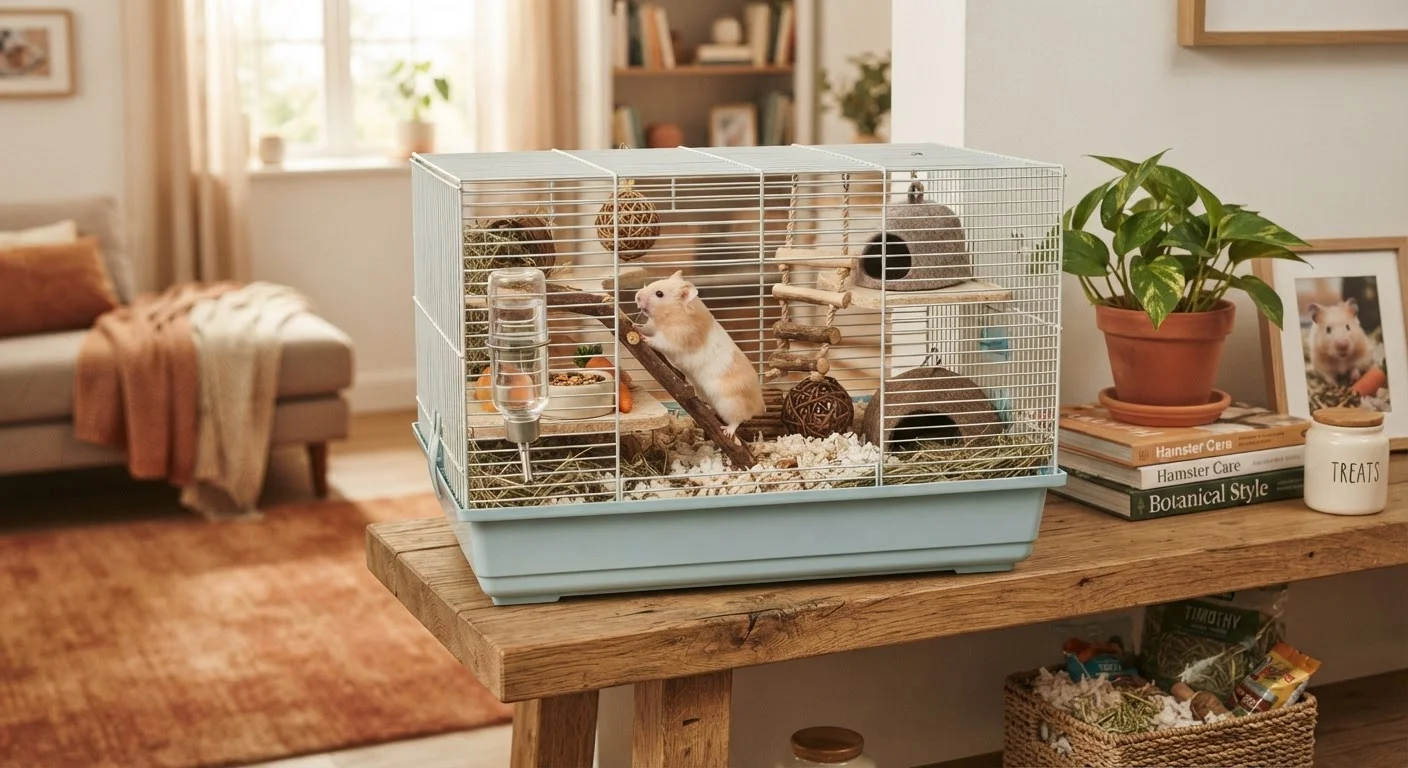
Key Takeaways
- Habitat setup should be fully complete at least 24 hours before your new pet arrives.
- Small pets have species-specific environmental needs - one-size-fits-all setups can cause stress or harm.
- Finding an exotic or small-animal vet before pickup day is a critical step many owners skip.
- Household hazards like drafts, toxic plants, and other pets require proactive management.
- Stocking the right species-appropriate food and enrichment supplies in advance reduces early-day stress.
Summary
22 items · 45-90 minutes
Why Preparation Matters More for Small Pets
Small and specialty pets - rabbits, guinea pigs, hamsters, gerbils, birds, reptiles, and others - have physiological and behavioral needs that differ significantly from cats and dogs. Their stress tolerance is often lower, their environmental requirements more precise, and their ability to mask illness far greater. Arriving home to an incomplete or incorrect setup can cause acute stress that compromises immune function and sets back the settling-in process by weeks.
Unlike bringing home a puppy, where early socialization carries a lot of the adaptation work, small pets rely almost entirely on a well-prepared environment to feel safe. This checklist is designed to help you address every layer of that preparation - from habitat and food to home safety and emergency planning - before your new animal walks through the door.
For a broader picture of what ongoing small pet ownership involves, our complete small pet care guide covers habitat, diet, health monitoring, and long-term care in depth.
Cedar and Pine Bedding Can Harm Small Mammals
Cedar and untreated pine shavings release aromatic oils (phenols) that can irritate the respiratory tracts and livers of small mammals such as rabbits, guinea pigs, hamsters, and rats. Choose paper-based or aspen bedding instead, and verify material safety with your vet for your specific species.
Exotic Vets Are Not Always Easy to Find
General practice veterinarians may not be equipped to treat rabbits, birds, reptiles, or other exotic small animals. Searching for a qualified exotic or small-animal vet after a health crisis has begun puts your pet at serious risk. Identify and contact a suitable vet before your animal comes home.
What You'll Need Before You Start
Gathering supplies ahead of time prevents last-minute substitutions that may not be species-safe. Use the tool list below as your shopping reference, then cross-reference each item against your specific species' care requirements - what works for a hamster may be inappropriate or even dangerous for a rabbit or a bearded dragon.
Species-Appropriate Enclosure
Provides a secure, correctly sized living space that meets your pet's behavioral and environmental needs.
Food & Water Dispensing Equipment
Delivers fresh food and water in a format safe and accessible for your specific species.
Substrate or Bedding Material
Lines the enclosure floor to support natural burrowing, absorb waste, and maintain hygiene.
Temperature & Lighting Equipment
Regulates heat and light cycles required by reptiles, birds, and other species with specific environmental demands.
Travel/Transport Carrier
Safely transports your pet from pickup to home and to veterinary appointments.
Enrichment Items
Reduces stress and boredom by giving your pet appropriate mental and physical stimulation from arrival onward.
It's also worth thinking through the recurring and unexpected costs of small pet ownership before committing, so that supplies and vet care remain sustainable long-term.
The Preparation Checklist
Work through each group below in order. Aim to have the habitat fully assembled and functioning at least 24 hours before pickup - this allows temperatures to stabilize, bedding to settle, and you to catch any equipment problems before they affect your pet.
Research & Planning
Habitat Setup
Food, Water & Enrichment
Home Safety & Pet-Proofing
Supplies & Emergency Readiness
Small Pets Often Hide Illness Until It's Serious
Many small animals are prey species that instinctively conceal signs of pain or sickness. By the time visible symptoms appear, a condition may already be advanced. Scheduling a wellness exam within the first two weeks of bringing your pet home - and learning your species' subtle warning signs - is one of the most protective steps you can take. See our related guide on recognizing hidden illness in small pets for what to watch for.
Setting Your Pet Up for a Calm First Week
Once your small pet arrives, resist the urge to handle them extensively right away. Most species need 48-72 hours to acclimate to sounds, smells, and the rhythms of your household before they are comfortable with direct interaction. Place the carrier near the enclosure and allow the animal to enter the habitat at their own pace whenever possible.
Keep the environment consistent during the first week: maintain stable temperatures, feed at regular intervals, and minimize sudden loud noises or vibrations near the habitat. Small animals orient to routine quickly, and predictability reduces cortisol levels - measurably so in prey species like rabbits and guinea pigs, according to animal behavior research.
Schedule that first veterinary wellness visit within two weeks of arrival. A qualified exotic-animal vet can establish a baseline health record, flag any congenital or transport-related issues, and advise on species-specific nutrition or husbandry adjustments for your specific living situation. Building that relationship early means you have a trusted resource ready when questions arise - and with small pets, they will.
This article provides general educational information for prospective small pet owners and is not a substitute for species-specific guidance from a qualified veterinarian or exotic animal specialist. Always consult a professional for health, dietary, or husbandry concerns specific to your animal.