

Key Takeaways
- Shy small animals need quiet, low-pressure introductions before any handling begins.
- Scent familiarization is a powerful first step for rabbits, guinea pigs, and rodents.
- Short, frequent sessions are more effective than long, infrequent interactions.
- Fear responses like freezing, hiding, or vocalizing are normal and should be respected.
- Progress timelines vary widely by species, individual history, and prior handling experience.
What you will need
Why Small Animals Are Often Fearful
Rabbits, guinea pigs, hamsters, birds, and other small pets are prey species by nature. Their survival instincts are finely tuned to detect and avoid perceived threats - and in the home environment, that threat is often you, at least initially. A newly adopted animal has no reference point for whether a human hand means safety or danger.
Prior handling history matters significantly. A pet raised in a crowded rescue, a commercial breeding facility, or a retail environment may have had little positive human contact. Even species-typical shyness varies widely: some individual guinea pigs warm up within days, while others need months of patient work. The social differences between guinea pigs and rabbits can also affect your approach.
Understanding that fear is a normal, wired-in response - not stubbornness or a character flaw - is the first step toward addressing it effectively. The process described here is grounded in habituation and counter-conditioning: gradually reducing the fear response by pairing your presence with neutral and then positive experiences.
Read Your Pet's Body Language First
Flattened ears, teeth chattering, puffed feathers, or rigid stillness are all signs your pet is over threshold. When you notice these signals, calmly move away and end the session without any fuss. Ending the session on the pet's terms teaches it that expressing discomfort actually works - which builds, rather than breaks, trust over time.
Step-by-Step: Building Trust at Your Pet's Pace
What you will need
Species-appropriate treats
Used as positive reinforcement to associate your presence with pleasant experiences.
Soft, non-slip mat or towel
Provides secure footing during out-of-habitat time, reducing anxiety from slipping.
Small cloth or worn T-shirt
Placed near or inside the habitat so your pet can acclimate to your scent safely.
Give your pet a full adjustment period before any interaction
When a small animal first arrives, its stress response is likely elevated. Allow at least 48 to 72 hours of undisturbed settling time before attempting any contact. During this window, minimize loud noises, sudden movements, and foot traffic near the habitat. Keep the environment dim and calm.
Introduce your scent before your hands
Place a small cloth that carries your scent - such as a worn sleeve or a piece of fabric you've held for several minutes - just outside or inside the habitat entrance. Let your pet investigate on its own terms. This is especially effective for rabbits, guinea pigs, gerbils, and hamsters, whose primary sense is smell.
Begin low-key presence sessions
Sit quietly near the habitat for 5-10 minutes each day without attempting to touch or pick up your pet. Read aloud softly, or simply remain still. Your goal is for your pet to learn that your presence does not signal danger. Many small animals, including birds, will begin to approach the enclosure edges out of curiosity within days to weeks.
Offer treats from an open, stationary hand
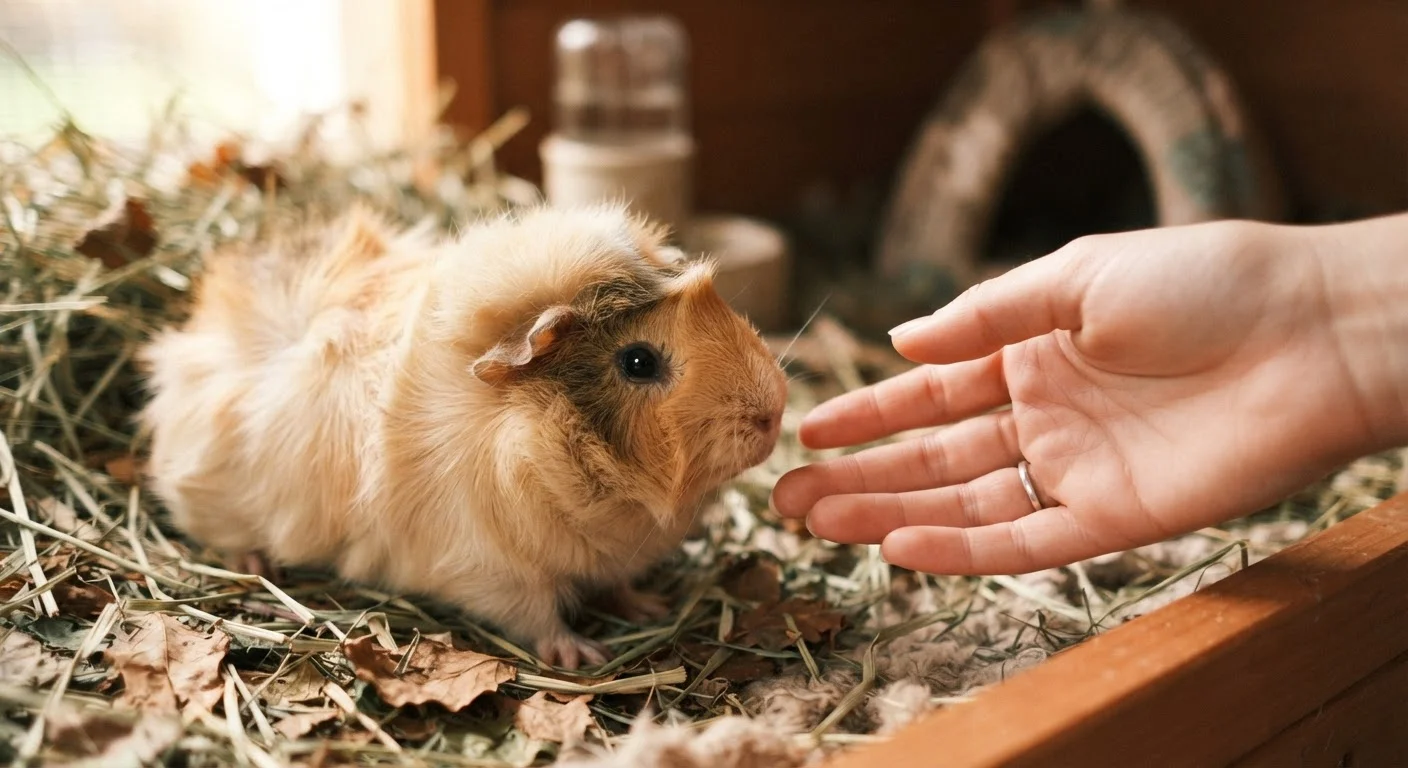
Once your pet moves willingly toward the enclosure wall near you, begin placing a treat on your open, flat palm just inside the habitat opening. Do not reach toward your pet - let it come to you. Keep your hand still and your gaze soft (avoid direct eye contact with prey species, which can be perceived as threatening).
Progress to gentle, supported handling
Only once your pet is consistently approaching your hand for treats should you attempt brief handling. Scoop - do not grab - supporting the animal's full body weight from below. Keep initial hold sessions under 60 seconds. Gradually extend duration only as your pet shows relaxed body language: smooth, slow breathing, and no attempts to flee or freeze.
Maintain a consistent daily routine
Small animals are creatures of habit. Interacting at the same time each day - ideally when the species is naturally more active, such as dawn and dusk for many rodents - reinforces that your visits are predictable and safe. Consistency is one of the most underestimated socialization tools available.
This process is not linear. You may need to spend extra time on steps 2 or 3 before moving forward, and that is completely normal. For context on how this patience-first approach compares to socializing other species, see our guide on socializing an adult dog who missed early exposure.
When Progress Stalls and What to Do
Persistent Fear May Signal a Health Issue
If your small animal shows extreme fear responses - such as self-injury, refusal to eat, or prolonged hiding - that do not improve with patient socialization efforts over several weeks, consult an exotic animal veterinarian. Pain, illness, and sensory impairments can all present as fear or aggression. A veterinary evaluation can rule out medical causes before behavioral work continues.
If socialization progress plateaus, revisit the basics: reduce session length, return to treat-offering without handling, and check whether environmental stressors - such as nearby pets, excessive noise, or an inadequately sized habitat - may be sustaining background anxiety. A rabbit, for example, that can smell a cat nearby may never fully relax regardless of handling technique. Our rabbit housing guide covers how environment directly affects stress levels.
For birds, under-stimulation can compound fearfulness. Providing appropriate enrichment alongside socialization can improve outcomes - explore strategies for keeping pet birds mentally stimulated as a complement to this work.
This article is for general informational purposes only and does not constitute veterinary advice. Always consult a qualified exotic animal veterinarian if you have concerns about your pet's health or behavior.