

Key Takeaways
- Boredom is a primary driver of feather-destructive behavior, screaming, and aggression in pet birds.
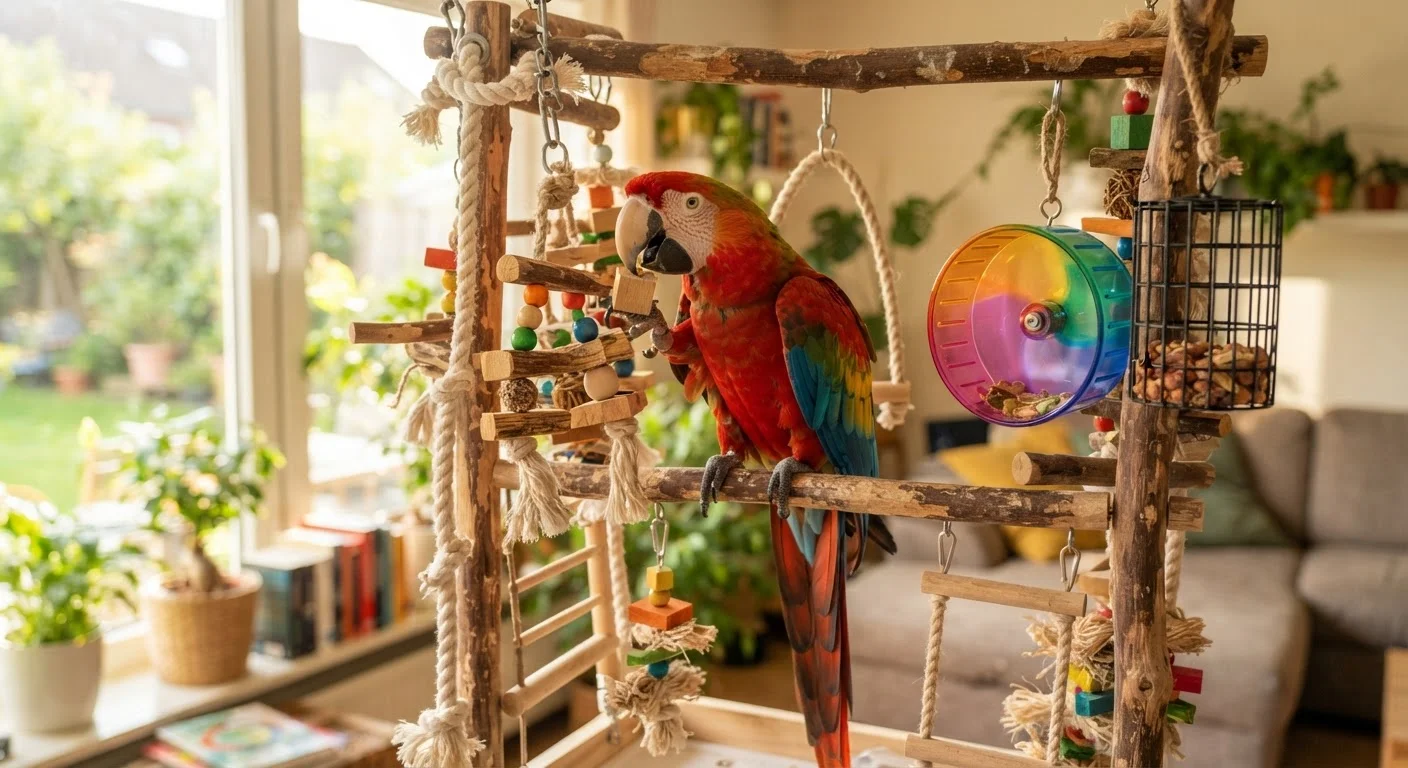
- Foraging activities that mimic wild food-seeking behavior are among the most effective enrichment tools available.
- Rotating toys regularly prevents habituation and keeps birds genuinely engaged with their environment.
- Social interaction and out-of-cage time are irreplaceable components of a bird's daily mental health routine.
- Species-specific needs vary widely - a cockatiel's enrichment requirements differ significantly from a macaw's.
Why Mental Stimulation Is Non-Negotiable for Pet Birds
In the wild, most parrot species spend the majority of their waking hours foraging, navigating complex social hierarchies, and problem-solving environmental challenges. A captive bird living in a static cage with a food dish and a single mirror faces a stark contrast to that cognitive reality. Avian behavioral researchers consistently identify under-stimulation as a root cause of repetitive, compulsive, and destructive behaviors - including feather plucking, excessive vocalization, and stereotypies (repetitive, purposeless movements).
This isn't a character flaw in the bird. It's a predictable response to an environment that fails to meet species-typical needs. The good news: targeted enrichment strategies can dramatically improve a bird's quality of life and reduce problem behaviors. For a broader foundation on keeping small and specialty pets thriving, see our comprehensive small pet care guide.
Introduce foraging opportunities at every meal
Wild birds spend up to six hours a day searching for food. Presenting meals in ways that require effort - hiding food inside paper wraps, packing pellets into cardboard tubes, or scattering seeds across a foraging tray - engages the same cognitive circuits. This single change can reduce boredom-driven behaviors more effectively than adding toys alone.
Rotate toys on a weekly schedule
Birds habituate quickly to static environments. A toy that received enthusiastic investigation on day one may be completely ignored by day seven. Rotation reintroduces familiar items as novel stimuli, sustaining curiosity without requiring constant new purchases.
Offer species-appropriate puzzle feeders
Puzzle feeders engage problem-solving behaviors linked to executive function in birds. Research on psittacines (parrots and their relatives) demonstrates that animals given cognitively demanding tasks show lower rates of stereotypic behavior and appear more motivated and content.
Prioritize daily out-of-cage time in a safe, supervised space
Cage confinement, even in a well-enriched cage, limits a bird's movement and sensory input. Out-of-cage time allows exploration of new textures, heights, and social proximity - experiences that cannot be replicated inside a cage.
Use auditory and visual enrichment intentionally
Birds are highly sensitive to auditory environments. Nature soundscapes, species-appropriate music, or even the ambient sounds of household activity provide meaningful sensory input. Placing the cage in a socially active part of the home (while avoiding direct drafts and kitchen fumes) supports this.
Teach new behaviors and tricks using positive reinforcement
Training sessions function as structured cognitive exercise. They build the human-bird bond, increase a bird's tolerance for handling, and provide goal-directed mental engagement. Even five to ten minutes of training per day produces measurable behavioral benefits.
Core Enrichment Practices Every Bird Owner Should Know
The practices below are grounded in avian behavior science and adaptable to species ranging from budgerigars to African greys. No single strategy works in isolation - the most effective enrichment plans combine foraging, novelty, social engagement, and sensory variety.
Building a Routine That Supports Long-Term Wellbeing
Enrichment should be woven into daily routines rather than offered as occasional extras. A consistent schedule - predictable feeding times, structured out-of-cage periods, and regular introduction of novel stimuli - gives birds the cognitive framework they need to feel secure while remaining mentally active.
Pay close attention to your bird's body language. Signs of positive engagement include active foraging, exploratory behavior, and relaxed feather posture. Signs of chronic stress - prolonged feather ruffling, repetitive pacing, self-isolation, or plucking - warrant a reassessment of the enrichment plan and a consultation with an avian-experienced veterinarian. If your bird is newly adopted and shows fearful behavior, the techniques for socializing shy small animals offer a practical starting framework.
Enrichment Needs Vary by Species
A budgerigar, a cockatiel, and a large macaw each have significantly different cognitive capacities, social needs, and manipulation abilities. Enrichment tools appropriate for one species may be unsafe or ineffective for another. Always research species-specific behavioral needs, and consult an avian veterinarian or certified parrot behavior consultant when designing an enrichment plan for a large or highly intelligent bird.
Mental enrichment and social stimulation also complement how you think about other companion animals. Our resources on enriching an indoor cat's life explore parallel principles that may inform your multi-pet household approach.
This article is for general informational purposes only and is not a substitute for advice from a qualified avian veterinarian. If your bird shows signs of illness, injury, or significant behavioral change, consult a licensed veterinary professional.