

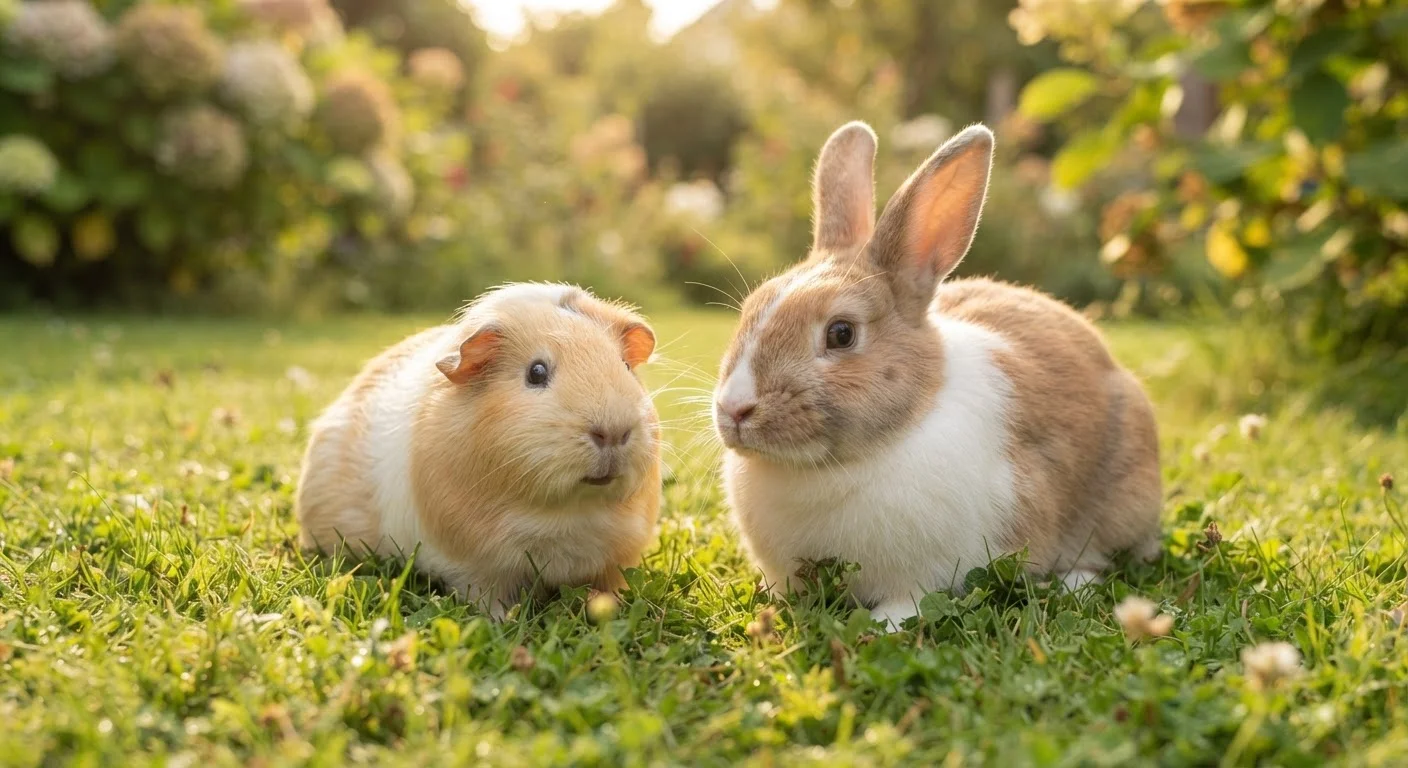
Key Takeaways
- Guinea pigs are highly social and generally do better in same-sex pairs, while rabbits can thrive alone with sufficient human interaction.
- Rabbits require significantly more living space and daily exercise time outside their enclosure than guinea pigs.
- Both animals need hay as the foundation of their diet, but rabbits have more complex nutritional needs to manage.
- Guinea pigs have a lifespan of roughly 4-7 years; rabbits commonly live 8-12 years - a major commitment difference.
- Neither animal is truly low-maintenance, but guinea pigs generally demand less advanced husbandry knowledge.
- Both species require veterinary care from an exotic or small animal specialist, which can be harder to find than general dog-and-cat vets.
Option A
Guinea Pig
The social, vocal, and low-maintenance companion.
Best for: Families or individuals who want an interactive small pet that thrives on companionship and predictable daily routines.
Option B
Rabbit
The curious, energetic, and space-hungry small pet.
Best for: Households with room to spare and owners willing to invest time in enrichment, training, and a more complex diet.
If you want a first small pet for a child aged 8 or older
Guinea Pig
Guinea pigs are sturdier, less prone to injury when handled, and more forgiving for new owners learning proper small-animal care.
If you have ample indoor space and enjoy training animal behavior
Rabbit
Rabbits can be litter-trained, learn simple commands, and offer a richer interactive experience for engaged owners with room to provide free-roam time.
If you want a pet you can keep in pairs without complex introductions
Guinea Pig
Same-sex guinea pig pairs bond more predictably than rabbits, which require careful, gradual bonding that can take weeks and may not always succeed.
If you're prepared for a long-term commitment of a decade or more
Rabbit
Well-cared-for rabbits regularly live 10 years or longer, making them rewarding companions for owners ready for that responsibility.
If you live in a smaller apartment with limited floor space
Guinea Pig
Guinea pigs need less square footage and don't require the extended free-roam exercise sessions that healthy rabbits depend on daily.
Social Needs and Temperament
One of the clearest distinctions between guinea pigs and rabbits is how they relate to companions - both animal and human.
Guinea pigs are highly gregarious. In the wild they live in herds, and in captivity, keeping at least two same-sex guinea pigs together is widely recommended by small animal veterinarians. A solitary guinea pig can become withdrawn and stressed. They communicate through a rich vocabulary of sounds - purring, wheeking, and chutting - which many owners find endearing and easy to read. Guinea pigs tend to be calm when handled regularly from a young age, rarely biting unless frightened.
Rabbits are also social but more individually variable. Some bond deeply with their human family and seek out attention; others remain more independent. Rabbits use body language heavily - thumping, binkying (joyful leaping), and flopping - and reading these cues takes practice. They can be successfully kept solo if given consistent human interaction, but many rabbit welfare organizations recommend keeping bonded pairs. Bonding two rabbits, however, requires a careful, gradual introduction process that can take weeks. For guidance on building trust with a newly adopted small animal, see our article on socializing a shy or fearful small animal.
| Criterion | Guinea Pig | Rabbit |
|---|---|---|
| Typical lifespan | 4-7 years | 8-12 years |
| Social housing | Pairs strongly recommended | Can be solo with human interaction |
| Minimum enclosure size (single animal) | ~7-8 sq ft for a pair | Larger; plus daily free-roam required |
| Special dietary need | Daily Vitamin C from food | Strict hay-dominant diet; limited pellets |
| Handling tolerance | Generally calm; good for beginners | Variable; can injure if dropped |
| Trainability | Limited | Can be litter-trained; learns routines |
| Noise level | Vocal (wheeking, purring) | Mostly quiet; communicates via body language |
| Beginner-friendliness | More forgiving for new owners | Moderate to high husbandry demands |
Space, Housing, and Exercise Requirements
Space requirements are often underestimated for both animals, but rabbits set a significantly higher bar.
Guinea pigs need a minimum of 7-8 square feet of enclosure space for a pair, with more always better. C&C (cube and coroplast) cages are popular because they can be customized and expanded. Guinea pigs do enjoy floor time outside their enclosure but don't strictly require the same volume of exercise as rabbits.
Rabbits need substantially more room. A single rabbit's enclosure should be large enough for the animal to take at least three consecutive hops and stand fully upright on its hind legs. Beyond the enclosure, rabbits require several hours of safe, supervised free-roam time daily to prevent obesity and behavioral problems. Rabbit-proofing a room - covering cables, blocking furniture gaps - is a serious undertaking. For a detailed breakdown of what healthy rabbit housing actually looks like, see our guide on rabbit housing requirements.
8-12 yrs
Average rabbit lifespan in captivity
According to the House Rabbit Society, well-cared-for domestic rabbits commonly live into their early teens.
4-7 yrs
Average guinea pig lifespan
The American Veterinary Medical Association cites 4-7 years as a typical lifespan range for domestically kept guinea pigs.
80%+
Of diet that should be hay
Veterinary guidance consistently holds that unlimited grass hay should form the vast majority of both rabbits' and guinea pigs' daily food intake.
Diet and Nutrition
Both species are herbivores and require unlimited grass hay - timothy hay for adults - as the core of their diet. This is non-negotiable for healthy digestion and dental wear in both animals.
Beyond hay, the diets diverge in complexity. Guinea pigs cannot synthesize their own Vitamin C, making fresh vegetables rich in Vitamin C (like bell pepper and leafy greens) an essential daily supplement - not optional. Commercial guinea pig pellets are typically Vitamin C-fortified, but fresh produce remains important.
Rabbits do not have the same Vitamin C requirement but have their own nutritional nuances. Pellets should be limited for adult rabbits; fresh leafy greens are important, and certain foods that seem harmless are actually inappropriate. Our article on common myths about feeding pet rabbits is worth reading before bringing a rabbit home.
Lifespan, Health, and Veterinary Care
Lifespan is a practical consideration that shapes the full scope of ownership commitment. Guinea pigs typically live 4-7 years; rabbits commonly reach 8-12 years, with some living longer. This difference is significant - a rabbit adopted by a college student may still need care a decade later.
Both animals are prey species that instinctively hide illness, making routine observation and regular veterinary check-ups essential. Common health concerns for guinea pigs include respiratory infections, dental problems, and vitamin C deficiency. Rabbits are susceptible to gastrointestinal stasis (a potentially life-threatening slowdown of the digestive tract), dental malocclusion, and urinary issues.
Critically, both animals require a veterinarian with exotic or small mammal experience - not every general practice treats them. Finding a qualified vet before an emergency is strongly advised. For a broader view of how long various small pets live and what affects their wellbeing, see our overview of small pet lifespans.
This article is for general informational purposes only and does not constitute veterinary advice. Always consult a qualified exotic or small animal veterinarian for guidance specific to your pet's health and care needs.