

Key Takeaways
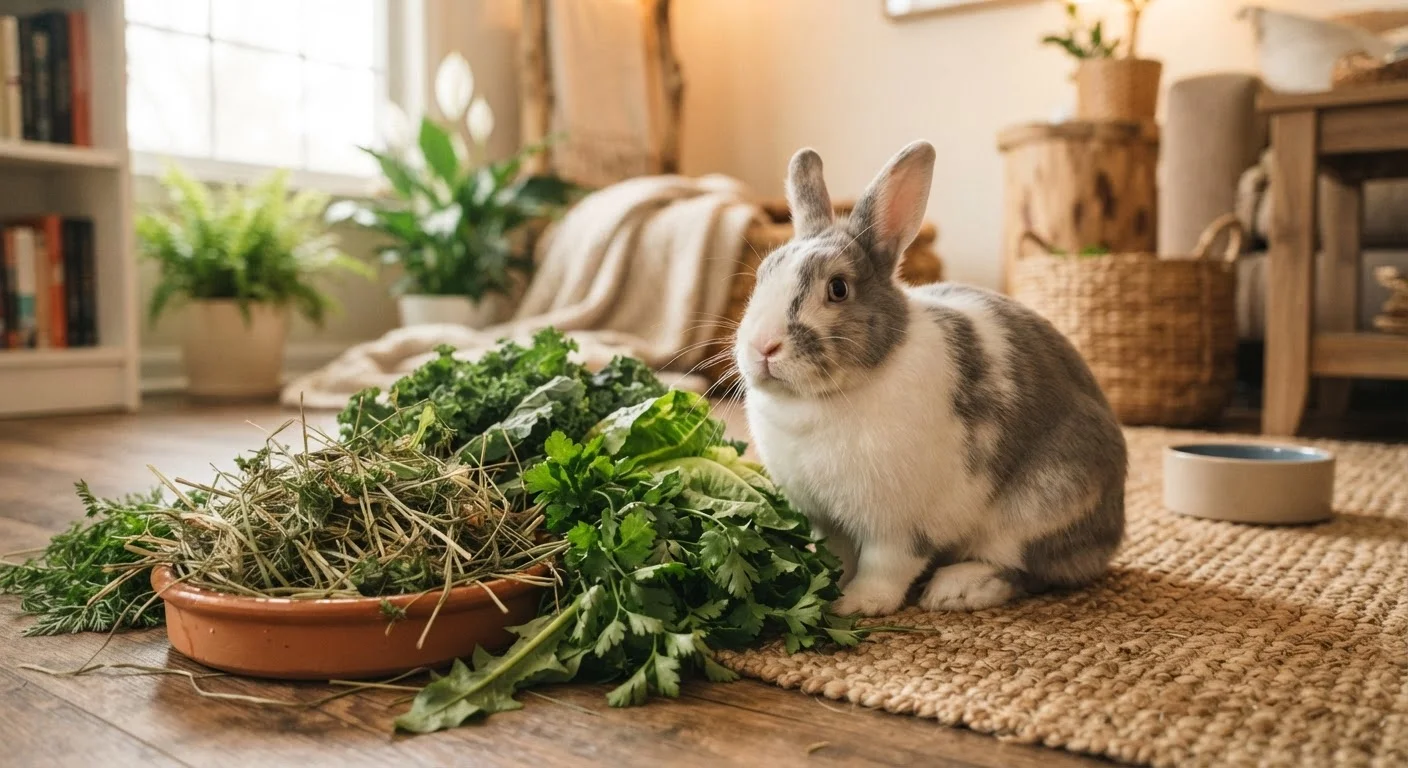
- Unlimited grass hay should form the foundation of every pet rabbit's daily diet.
- Carrots are high in sugar and should be offered only as an occasional small treat.
- Iceberg lettuce offers almost no nutrition and can cause digestive upset in rabbits.
- Rabbits require cecotropes - a type of soft dropping - as a critical nutritional source.
- A rabbit's digestive system is sensitive; sudden diet changes can cause serious health problems.
Why Rabbit Nutrition Myths Persist
Pet rabbits are among the most misunderstood small animals in American homes. Much of what people believe about feeding them comes from cartoons, casual observation, or outdated pet store advice - not from veterinary or behavioral science. The consequences of these misconceptions are real: digestive disease, dental problems, and obesity are among the most common preventable health issues seen in pet rabbits. Whether you're a first-time owner or reconsidering habits you've had for years, understanding what rabbits actually need to eat is one of the most impactful things you can do for their wellbeing. If you're still deciding whether a rabbit is right for your household, our comparison of guinea pigs and rabbits can help you evaluate the commitment involved.
Myth
Carrots are a rabbit's natural staple food and can be fed freely every day.
Fact
Carrots are high in sugar and should be treated as an occasional small treat, not a dietary foundation.
The image of a rabbit happily munching a whole carrot is deeply embedded in popular culture, but it does not reflect a rabbit's actual nutritional needs. In the wild, rabbits eat grasses, leafy plants, and herbs - not root vegetables. Carrots contain relatively high levels of natural sugars that can disrupt a rabbit's delicate gut flora, contribute to weight gain, and over time may promote dental disease. A small slice of carrot a few times per week is a reasonable treat; a daily carrot is not appropriate nutrition.
Myth
Iceberg lettuce is a safe, hydrating leafy green that rabbits can eat in large amounts.
Fact
Iceberg lettuce is nearly devoid of nutrients and contains lactucarium, a compound that can cause loose stools and digestive distress.
While dark leafy greens like romaine lettuce, cilantro, and leafy herbs can be healthy additions to a rabbit's diet in moderation, iceberg lettuce is not a good choice. It is composed almost entirely of water, offers minimal vitamins or fiber, and contains lactucarium - a milky chemical that in larger quantities has a mild sedative effect and can cause diarrhea in rabbits. Owners looking to provide variety should choose fiber-rich dark greens instead and introduce any new green slowly to avoid digestive upset.
Myth
Rabbits should not eat their own droppings - it's unhygienic and means something is wrong.
Fact
Cecotropes are a nutritionally essential soft dropping that rabbits must consume directly from their bodies as part of normal digestion.
Rabbits produce two types of droppings: the hard, round fecal pellets owners recognize, and soft, grape-like clusters called cecotropes. Cecotropes are produced in the cecum and are packed with protein, B vitamins, and beneficial bacteria. Rabbits consume them directly from their hindquarters, typically overnight or in the early morning. This behavior is completely normal and necessary. A rabbit that is prevented from reaching its cecotropes - due to obesity, arthritis, or an overly restrictive diet - can develop nutritional deficiencies.
Myth
Pellets alone provide complete nutrition, so hay is optional or just a bedding material.
Fact
Hay is the single most important component of a rabbit's diet, essential for gut motility, dental wear, and fiber intake.
Rabbits have continuously growing teeth and a digestive system that requires a near-constant input of long-strand fiber to function properly. Grass hay - particularly timothy hay for adult rabbits - provides the abrasive chewing action that wears teeth evenly and prevents overgrowth (a condition called malocclusion). It also keeps the gastrointestinal tract moving, reducing the risk of life-threatening GI stasis. Pellets, while a useful supplement, are calorie-dense and fiber-poor relative to hay; they should complement hay, not replace it. For a broader view of rabbit care beyond diet, see our guide to rabbit housing and environment.
Myth
Wild rabbits eat fruit regularly, so domestic rabbits can have fruit as a frequent treat.
Fact
Wild rabbits rarely encounter fruit, and domestic rabbits should receive it only in very small, infrequent amounts due to high sugar content.
Fruit is not a natural staple for wild rabbits - most species primarily consume grasses and herbaceous plants. Domestic rabbits have the same basic digestive architecture and are not well-equipped to process large amounts of simple sugars. Small pieces of fruit like apple (without seeds, which are toxic), strawberry, or blueberry can be offered sparingly as an enrichment treat - think a piece the size of a thumbnail, once or twice a week at most. Regular fruit feeding can contribute to obesity, soft cecotropes, and imbalanced gut bacteria.
What a Healthy Rabbit Diet Actually Looks Like
Once the myths are cleared away, the framework for rabbit nutrition is straightforward. The majority of a rabbit's daily intake - roughly 80 to 90 percent - should be unlimited, fresh grass hay. Timothy hay is the standard recommendation for adult rabbits; younger rabbits under seven months can have alfalfa hay, which is higher in protein and calcium to support growth.
80-90%
Proportion of diet that should be grass hay
Rabbit welfare organizations and exotic animal veterinarians consistently recommend that hay make up the vast majority of a pet rabbit's daily food intake.
~1 tbsp
Appropriate daily pellet amount per 6 lbs body weight
Many rabbit care guidelines suggest limiting pellets to roughly one tablespoon per six pounds of body weight per day to prevent obesity.
Beyond hay, a small daily portion of high-fiber, uniform pellets and a measured variety of rabbit-safe leafy greens rounds out the diet. Fresh water must always be available. Any dietary change should be introduced gradually over one to two weeks to allow the gut microbiome to adjust. For a comprehensive overview of rabbit care from habitat to health, the small pet care guide for first-time owners is a helpful resource.
GI Stasis Is a Medical Emergency
Gastrointestinal stasis - when a rabbit's gut slows or stops moving - is life-threatening and often triggered by inadequate hay intake, insufficient hydration, or sudden dietary changes. Signs include a decrease in droppings, loss of appetite, and lethargy. If you observe these symptoms, contact a rabbit-savvy veterinarian immediately rather than waiting to see if the rabbit improves on its own.
If you are ever uncertain whether a specific food is safe for your rabbit, consult a veterinarian with experience in exotic or small animal medicine before offering it. Rabbits differ fundamentally from cats and dogs in their digestive physiology - an approach that works for one species can be harmful to another.
Avoid Muesli-Style Rabbit Mixes
Commercially sold 'muesli' or mixed-grain rabbit feeds allow rabbits to selectively eat the high-sugar, high-starch pieces while leaving the nutritionally valuable pellets behind. Veterinary organizations including the Royal Society for the Prevention of Cruelty to Animals (RSPCA) have flagged these mixes as contributing to obesity and dental disease. Stick to uniform, high-fiber pellets offered in small, measured quantities alongside unlimited hay.
This article is for general informational purposes only and does not constitute veterinary advice. Always consult a qualified veterinarian for guidance specific to your pet's health and dietary needs.