

| UL Founded | 1894, Chicago, IL (Underwriters Laboratories corporate history) |
| ENERGY STAR Administered By | U.S. EPA and Dept. of Energy (energystar.gov) |
| CE Mark - Verification Type | Often manufacturer self-declared (European Commission guidance) |
| RoHS Restricted Substances | 10 substances including lead and mercury (EU RoHS Directive 2011/65/EU, as amended) |
| FCC Mark - Required For | All RF-emitting devices sold in the U.S. (FCC equipment authorization rules) |
Why Certification Marks Matter
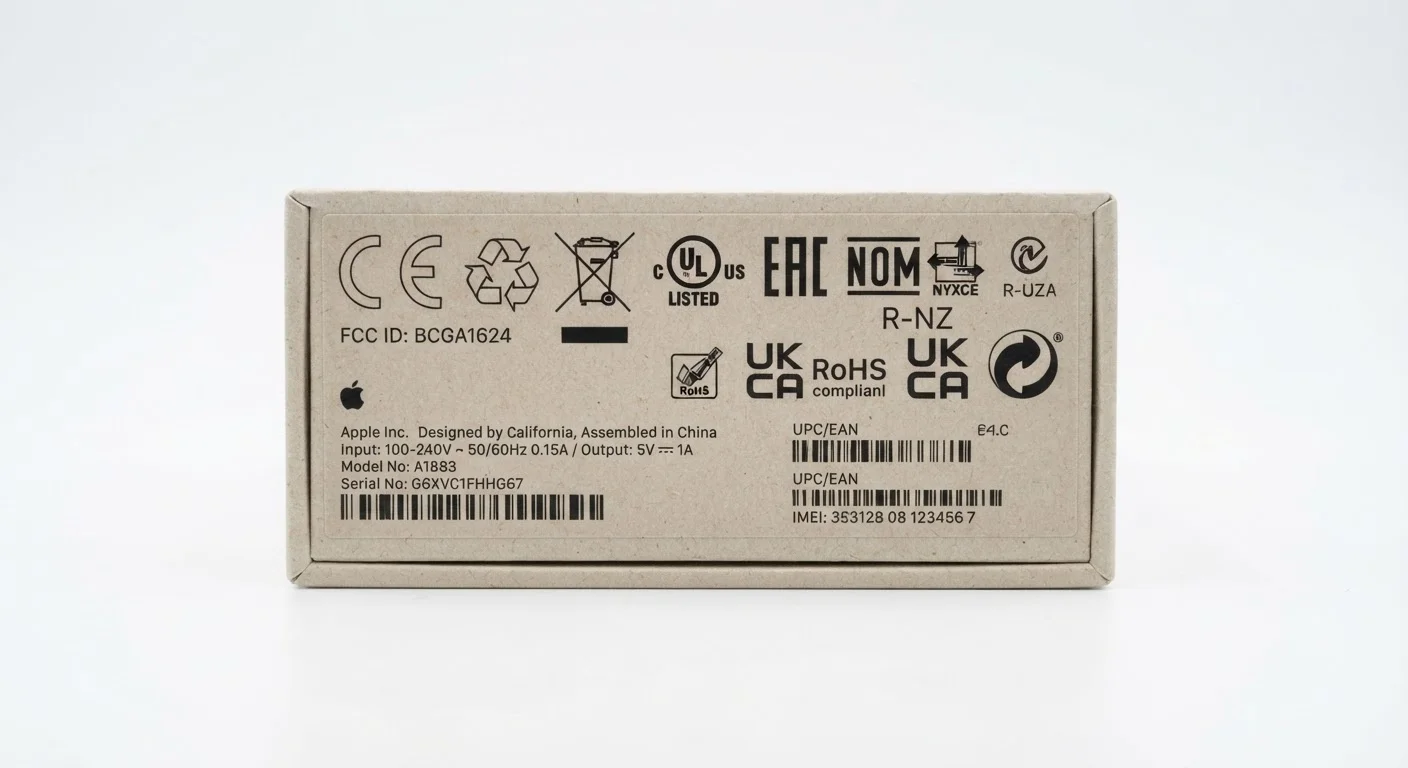
Walk through any store or scroll a product listing and you'll spot a cluster of small logos stamped on the packaging - UL, CE, ENERGY STAR, RoHS, FCC. Most shoppers glance past them. That's a missed opportunity, because these marks are among the most reliable signals available when you're trying to judge whether a product is safe, energy-efficient, or legally permitted to be sold in a given market.
Certification marks are not marketing badges that any company can print. They're issued by standards bodies, government agencies, or accredited third-party testing labs after a product meets specific, documented requirements. Understanding the difference between a meaningful certification and a self-declared claim can help you research smarter and reduce buyer's remorse. For a broader look at what product listings are really communicating, see our product listing decoder.
| UL Founded | 1894, Chicago, IL (Underwriters Laboratories corporate history) |
| ENERGY STAR Administered By | U.S. EPA and Dept. of Energy (energystar.gov) |
| CE Mark - Verification Type | Often manufacturer self-declared (European Commission guidance) |
| RoHS Restricted Substances | 10 substances including lead and mercury (EU RoHS Directive 2011/65/EU, as amended) |
| FCC Mark - Required For | All RF-emitting devices sold in the U.S. (FCC equipment authorization rules) |
Common Certification Marks Decoded
The marks below appear most frequently on consumer electronics, appliances, and general merchandise sold in the United States.
UL (Underwriters Laboratories)
UL is a U.S.-based safety certification organization. A UL mark means a product has been tested against established safety standards for risks such as fire, electric shock, and overheating. There are several UL marks - look for UL Listed (product tested as a whole unit) versus UL Recognized (a component tested for use inside a larger product). UL is a third-party tester, not a government agency, but its standards are widely referenced in U.S. building and safety codes.
FCC (Federal Communications Commission)
In the U.S., any device that emits radio frequency energy must be authorized by the FCC before it can be sold legally. The FCC mark means the device meets limits for radio frequency interference and, for intentional transmitters like Wi-Fi routers, that it operates within licensed bands. This is a government-mandated requirement, not optional.
ENERGY STAR
Administered jointly by the U.S. Environmental Protection Agency and the Department of Energy, ENERGY STAR certifies that appliances, electronics, and building products meet specific energy-efficiency thresholds. Products must be tested by EPA-recognized laboratories. The mark can meaningfully indicate lower operating costs over time, though actual savings depend on individual usage patterns.
CE Mark
CE stands for Conformité Européenne (European Conformity). It signals that a product meets European Union health, safety, and environmental requirements. In the U.S. market, CE is relevant primarily when a product is also sold in Europe - it does not substitute for U.S. safety certifications. Importantly, CE marking is often self-declared by the manufacturer rather than verified by an independent lab, so it carries less independent weight than a third-party mark like UL.
RoHS
RoHS (Restriction of Hazardous Substances) is an EU directive limiting certain toxic materials - including lead, mercury, and cadmium - in electronic equipment. A RoHS-compliant label indicates the product was manufactured without exceeding those substance thresholds. It's particularly relevant when disposing of electronics responsibly.
Third-party certification
Testing and verification performed by an independent organization that has no commercial stake in whether the product passes or fails. UL is a common example in the U.S.
Self-declaration
A manufacturer's own statement that its product meets a standard, without independent lab verification. CE marking operates this way for many product categories.
Standards body
An organization that develops and publishes documented technical requirements - such as safety thresholds or energy limits - that certifications are measured against.
RoHS compliance
A declaration that an electronic product does not exceed maximum concentration limits for specific hazardous substances, as defined by EU directive 2011/65/EU.
FCC authorization
U.S. government approval confirming that a radio-frequency-emitting device meets interference and operational rules set by the Federal Communications Commission.
Red Flags and Limits of Certification Marks
Certifications are useful reference points, but they have real limits you should understand.
- Counterfeit marks exist. Fraudulent UL and CE logos appear on products sold through some third-party online marketplaces. If a deal looks implausible, verify the product through the certifying body's official online database before relying on the mark.
- Certification scope is narrow. A UL listing covers specific safety risks - it doesn't mean a product is high quality, durable, or worth the price. Think of it as a floor, not a ceiling.
- Self-declaration is not independent testing. Some marks, including CE for many product categories, allow manufacturers to declare conformity without an outside lab verifying the claim.
- Certifications can lapse or be misapplied. A product model may be listed, but an unlisted variation or a counterfeit batch may carry the same mark illegitimately.
For context on how manufacturers emphasize (and omit) information more broadly, our spec sheet myths guide is a useful companion. And if you're researching a vehicle purchase, the same principles about certified claims apply - understanding what CPO certification actually covers is worth a read. For the full picture on shopping safely, see our consumer awareness guide.