

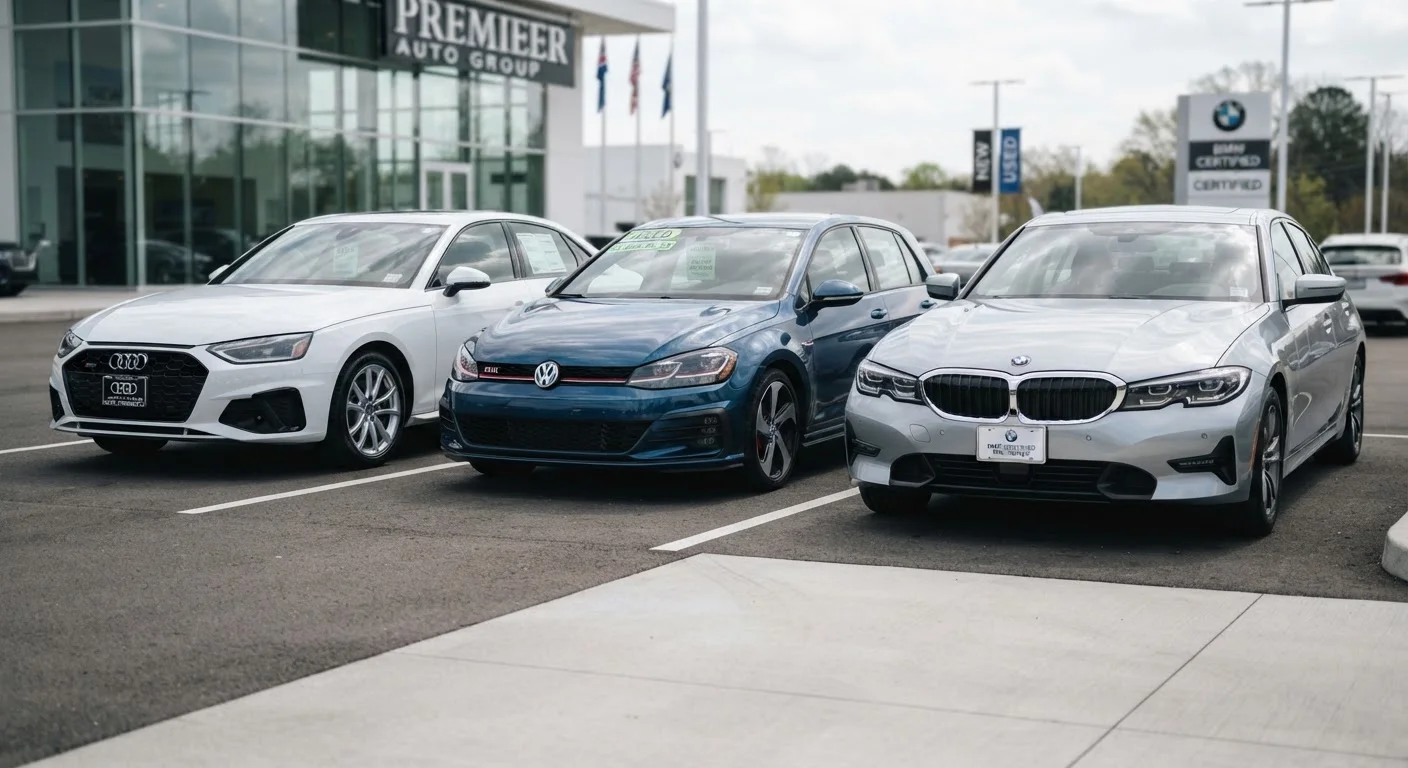
Key Takeaways
- New cars carry the full manufacturer warranty but depreciate sharply in the first year of ownership.
- Used cars offer the lowest entry prices but come with greater variability in condition, history, and remaining life.
- CPO vehicles occupy a middle ground - inspected and warrantied, but priced higher than standard used cars.
- CPO programs vary by manufacturer; always read the specific inspection checklist and warranty terms.
- Vehicle history reports and independent inspections remain valuable regardless of the category you're considering.
- The right choice depends on your budget, risk tolerance, and how long you plan to keep the vehicle.
New, Used, and Certified Pre-Owned (CPO)
These three terms describe the condition and history of a vehicle at the point of sale, and each category carries a distinct set of warranties, price expectations, and buyer protections. A new car has never been titled to a private owner. A used car has been previously owned, with varying condition and history. A certified pre-owned vehicle is a used car that has passed a manufacturer- or dealer-defined inspection process and typically comes with an extended warranty.
The term 'certified pre-owned' is not universally standardized - each automaker defines its own CPO criteria, inspection checklist, and warranty terms, so the label alone does not guarantee identical coverage across brands.
What 'New' Actually Means at the Dealership
A new car is one that has never been sold to or titled by a private owner. It comes directly from the manufacturer through a franchised dealership and has zero prior ownership history. That sounds straightforward, but a few nuances are worth knowing.
Dealer demo vehicles - cars used for test drives - may have accumulated several hundred to a few thousand miles, yet can still legally be sold as new in many states if they haven't been titled. Similarly, vehicles that sat on a lot for an extended period may have aged tires or a drained battery despite technically being new. Always check the build date on the door jamb sticker.
The primary advantages of buying new are the full manufacturer warranty, the certainty of no prior accident or ownership history, and access to the latest safety technology. The significant tradeoff is cost: new vehicles carry the highest purchase price and experience their steepest depreciation in the first one to two years. For readers building out a broader understanding of the buying process, the full car-buying journey guide covers how new-car purchases fit into each stage from research through delivery.
Check the Build Date, Not Just the Model Year
A new car's model year and its actual build date can differ by many months. A vehicle built early in a production run and sitting unsold on a lot may have older tires and a partially discharged battery. Look at the manufacturer's sticker on the driver-side door jamb - it shows the month and year the car was actually assembled, which matters for warranty start dates and component freshness.
What 'Used' Covers - and Why the Range Is So Wide
A used vehicle is any car that has been previously titled to an owner other than a dealership. That category spans an enormous range: a two-year-old car with 18,000 miles and a clean history sits in the same legal category as a ten-year-old car with 130,000 miles and three prior owners.
Most used cars are sold as-is, meaning no warranty protection transfers to the buyer. If something breaks after the sale, the cost falls entirely on the new owner unless the vehicle has remaining factory warranty mileage still attached to it - a detail worth verifying before signing anything.
The lower price point is the main draw. Used vehicles allow buyers to sidestep the steepest depreciation curve and often access higher trim levels or more features for the same budget. The tradeoff is variability: without thorough due diligence, buyers take on unknown repair risk. A vehicle history report is a baseline step, not a complete solution - it won't capture every mechanical issue. An independent pre-purchase inspection by a qualified mechanic adds a meaningful layer of protection. Our used-car inspection walkthrough outlines the mechanical, cosmetic, and documentation checks worth doing before committing.
15-25%
Typical new-car value loss in year one
Industry analysts consistently estimate new vehicles depreciate steeply in their first year, though the exact figure varies by make, model, and market demand.
~40%
Share of U.S. auto sales that are used vehicles
Used vehicles have historically represented a large majority of total U.S. vehicle sales volume, reflecting the broad demand across price points.
Varies widely
CPO warranty terms by manufacturer
Powertrain warranty lengths under manufacturer CPO programs range from as few as 1 year to as many as 7 years depending on the brand and program specifics.
What Certified Pre-Owned Really Means - and What It Doesn't
Certified pre-owned (CPO) is a designation applied to used vehicles that have met a defined set of criteria - typically a multi-point inspection, maximum age and mileage thresholds, and a clean title requirement - and that come backed by an extended warranty.
The critical point: CPO programs are not standardized across the industry. Each manufacturer sets its own rules. One brand's CPO program might cover 172 inspection points, offer a 6-year/100,000-mile powertrain warranty, and include roadside assistance. Another's might have a shorter checklist and a more limited warranty term. The word 'certified' on its own tells you relatively little without reading the actual program documentation.
Manufacturer-backed CPO programs - offered exclusively through franchised dealerships - are generally more robust than in-house 'certified' programs offered by independent used-car dealers, which are not backed by the original manufacturer. If certification is a factor in your decision, ask specifically whether the program is manufacturer-sponsored and request the full inspection checklist and warranty contract in writing.
For unfamiliar terminology that comes up during the CPO buying process, the car buying glossary provides plain-language definitions of the terms dealers commonly use.
How to Think About the Decision
No single category is universally the right answer. The decision depends on your financial situation, how long you intend to keep the vehicle, your tolerance for repair risk, and what the used-car market looks like for the specific model you're considering.
A few questions worth working through: How important is warranty coverage to you? Are you comfortable absorbing potential repair costs in exchange for a lower purchase price? Does the CPO premium on a specific vehicle reflect genuine added value - a strong warranty and a thorough inspection - or is it mostly a marketing label?
It's also worth factoring in ongoing ownership costs. A newer vehicle may require less near-term maintenance but carries higher insurance and financing costs. An older used car may cost less upfront but more to maintain. The car insurance hub and the car maintenance hub are useful references for estimating those downstream costs before you commit to a purchase category.
Whatever you choose, approach the transaction with documentation in hand. Whether you're buying from a dealership or a private seller, the protections available to you differ significantly - a distinction covered in depth in the dealership vs. private seller comparison.