

Key Takeaways
- Set a firm total budget - including taxes, insurance, and ownership costs - before you shop.
- Research reliability, safety ratings, and total cost of ownership before visiting any lot.
- Separating the negotiation for the vehicle price from your trade-in and financing gives you more control.
- Always read the full finance and sales contract before signing - additions can be declined.
- Arrange insurance before driving off the lot; a lapse in coverage is a legal and financial risk.
Set Your Budget Before You Browse
The car-buying process begins well before you visit any dealership or browse listings. The single most important first step is determining what you can realistically afford - not just the monthly payment, but the full cost of ownership.
Start by identifying how much you can put toward a down payment, then estimate a monthly ceiling that accounts for the loan payment, fuel, insurance, registration fees, and routine maintenance. A commonly cited guideline is that total transportation costs should stay below 15-20% of your monthly take-home pay, though the right number depends on your personal financial situation.
Also decide early whether you're looking at new or used vehicles. New cars carry a full manufacturer warranty but depreciate quickly in the first few years. Used vehicles typically cost less upfront but may require closer scrutiny of condition and history. First-time buyers often overlook how quickly fees, taxes, and add-ons can push a vehicle beyond their original budget.
Calculate the True Monthly Cost Early
Before falling in love with a specific vehicle, run a full monthly cost estimate: estimated loan payment, insurance quote, average fuel cost, and a small buffer for maintenance. Many buyers find a vehicle fits their payment but strains their overall budget once all costs are combined. Getting these numbers in writing before you shop keeps expectations grounded.
Research Vehicles That Fit Your Needs
Once you have a budget, narrow your search by listing your must-haves: seating capacity, cargo space, fuel type, towing capability, or specific safety features. Use this list to identify a shortlist of vehicle types or segments - not specific models yet.
From there, dig into reliability data, owner satisfaction surveys, and safety ratings from organizations like the National Highway Traffic Safety Administration (NHTSA) and the Insurance Institute for Highway Safety (IIHS). Also research the total cost of ownership, which includes projected insurance costs, fuel economy, and historically common repair expenses for that model. Our guide on what to research before a test drive covers this in depth.
~95 days
Average car-shopping timeline before purchase
Cox Automotive research has consistently found that most car buyers spend roughly three months researching before committing to a vehicle.
61%
Buyers who arrange financing at the dealership
According to industry surveys, a majority of new-vehicle buyers accept dealer-arranged financing rather than bringing a pre-approved loan offer.
If unfamiliar terms start appearing - invoice price, MSRP, APR, certified pre-owned - the Car Buying Glossary provides plain-language definitions for the terms you'll encounter throughout this process.
Choose Where to Buy
Your purchase source affects the price, protections, and paperwork involved. Franchised dealerships selling new vehicles are bound by manufacturer standards, typically offer certified pre-owned programs, and handle financing and title transfer in one location. Private-party sales often yield lower prices but come with fewer consumer protections - there is no implied warranty and title issues fall on the buyer to resolve.
A detailed comparison of the trade-offs is covered in our article on buying from a dealership vs. a private seller. Whichever route you choose, verify the seller's title is clean using a vehicle history report tied to the VIN (Vehicle Identification Number).
Test Drive and Inspect
A test drive is not optional. Drive the vehicle in conditions that reflect your actual use: highway speeds, stop-and-go traffic, and parking maneuvers. Note visibility, brake feel, steering response, and any unusual noises. If you're buying used, request a pre-purchase inspection by an independent, licensed mechanic - this typically costs $100-$200 and can surface issues that photos and seller disclosures miss.
During the inspection phase, also verify that the VIN on the dashboard matches the title, and confirm no open safety recalls exist using NHTSA's free online lookup tool.
Schedule your test drive during daylight and, if possible, in light rain - you'll evaluate visibility, wiper performance, and road noise under realistic conditions.
A test drive in a controlled parking lot rarely reveals the issues buyers notice most in daily use; varied conditions expose handling and NVH (noise, vibration, harshness) characteristics more reliably.
Before you sit down to negotiate, write down your target out-the-door price - taxes, title, and fees included - and anchor every conversation to that number rather than monthly payments.
Focusing on monthly payments allows the loan term to be extended in ways that significantly increase total cost; the out-the-door figure keeps the actual purchase price transparent.
Negotiate Price and Financing
Treat the vehicle price, your trade-in value, and your financing as three separate negotiations - not a single bundled deal. Dealers sometimes adjust one figure to obscure movement in another. Know the vehicle's market value using reference pricing resources before you enter any discussion.
If you're financing through a lender, get pre-approved for a loan before visiting the dealership. Pre-approval gives you a rate benchmark and removes pressure to accept dealer financing terms without comparison. Understand the difference between the interest rate (APR) and the total amount financed, and calculate what you'll actually pay over the full loan term - not just the monthly figure.
On trade-ins, research your vehicle's estimated value independently before disclosing it to the dealer. Present it as a separate transaction once the out-the-door price on the new vehicle is agreed upon.
Review the Paperwork and Close
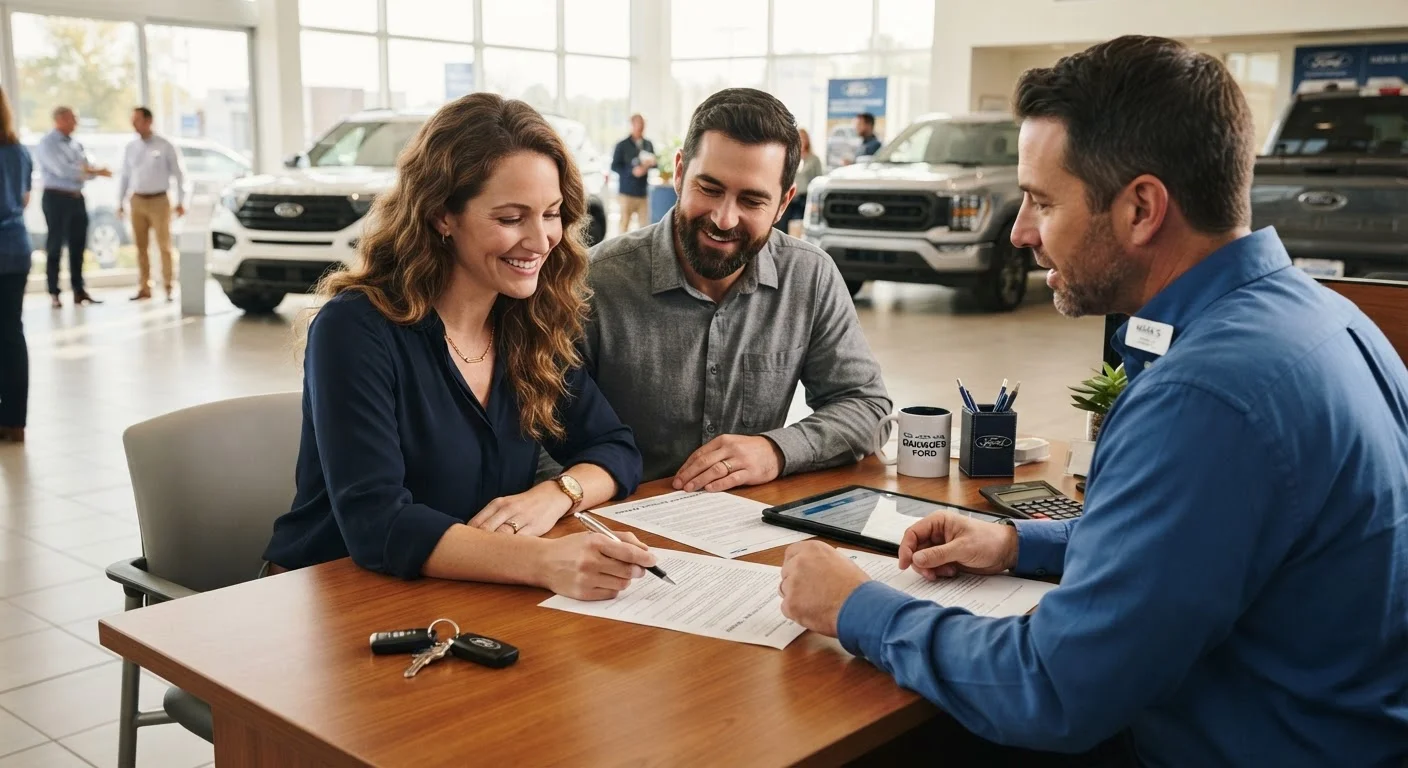
The finance and insurance (F&I) office is where many buyers encounter add-on products: extended warranties, paint protection, GAP insurance (which covers the difference between what you owe and what the vehicle is worth if it's totaled), and credit insurance. None of these are mandatory unless specifically required by your lender. Take time to evaluate each item on its own merits - and request an itemized breakdown of every charge on the contract before signing.
Read the full contract carefully. Confirm that the agreed purchase price, interest rate, loan term, and any included warranties match exactly what was discussed. Errors or unauthorized additions do occasionally appear, and you have the right to request corrections before signing.
Never Sign Under Pressure or Time Pressure
No reputable transaction requires you to sign a contract the same day or lose the deal. If you feel rushed or confused by any document, ask for time to review it - or take a copy to review outside the dealership. Signing without fully understanding the terms is one of the most common and costly mistakes buyers make.
Once all documents are signed and funds are confirmed, you'll receive the keys and the vehicle title - or, if you financed, the lender will typically hold the title until the loan is paid off.
After the Purchase: Insurance and Maintenance
You are legally required to have minimum liability insurance in place before driving off the lot in every U.S. state. If you're financing, the lender will also require comprehensive and collision coverage. Arrange your policy before the purchase date - do not assume your existing insurer automatically extends coverage instantly, though many do offer a short grace period. Confirm the specifics with your insurer in advance. Our hub on car insurance explains coverage types and how to evaluate your options.
After you take ownership, establish a maintenance schedule based on the manufacturer's recommendations in the owner's manual - not just the oil-change sticker on your windshield. Keeping up with scheduled service protects the vehicle's reliability and resale value. Explore our car maintenance resources for practical, ongoing guidance.
This article is for general informational and educational purposes only. It does not constitute financial, legal, or insurance advice. Financing terms, insurance requirements, and regulatory details vary by state and individual circumstances. Consult a licensed financial adviser or insurance professional for guidance specific to your situation.