

Key Takeaways
- Most car batteries last three to five years, but warning signs often appear well before complete failure.
- Slow engine cranking, dimming lights, and electrical glitches are among the earliest indicators of battery decline.
- Extreme temperatures, frequent short trips, and parasitic drains accelerate battery wear significantly.
- A load test performed by a mechanic or auto parts shop can accurately measure remaining battery capacity.
- Replacing a failing battery proactively is far less disruptive than an unexpected no-start situation.
Why Battery Warnings Matter Before the Problem Gets Worse
A dead car battery rarely happens without warning. The trouble is that the early signals are easy to dismiss - a slightly sluggish start here, a flickering dashboard light there - until one morning the car simply won't turn over. Understanding what your vehicle is telling you in the weeks or months before that point can save you from a roadside breakdown, a towing bill, or a missed appointment.
Car batteries are lead-acid devices that convert chemical energy into electrical current. Over time, internal plates corrode, electrolyte levels drop, and the battery's ability to hold a charge diminishes. Most batteries are rated for roughly three to five years of service, though driving habits, climate, and electrical demand all influence that window considerably. If your vehicle has logged significant mileage, it's worth reading our guide to maintenance changes after 100,000 miles, which covers how older vehicles require closer attention to components like the battery.
Below are seven signs that your battery may be on its way out - and what each one actually means.
Slow or labored engine cranking
When you turn the ignition and the engine takes noticeably longer to fire than usual - often described as a sluggish or grinding sound - the battery is struggling to deliver adequate current to the starter motor. This is frequently the very first symptom drivers notice. Cold mornings can amplify the effect, since low temperatures reduce the battery's chemical reaction rate and thickened engine oil increases the load. If slow cranking happens consistently, it warrants a battery check rather than a wait-and-see approach.
A sluggish start on a normal morning is rarely just a cold-weather fluke - it often signals a battery under real stress.
Dimming headlights or interior lights
A healthy battery supplies consistent voltage to all vehicle systems. When capacity drops, the electrical output becomes unsteady, and lights are often the first place that shows up. You may notice headlights that appear dimmer than usual at idle, or interior dome lights that seem less bright. Some drivers observe that lights brighten slightly when the engine revs - a sign the alternator is compensating for a battery that can no longer hold a stable charge on its own.
Lights that dim at idle but brighten at higher RPMs suggest the alternator is masking a battery that can't hold its own.
Electrical accessories behaving erratically
Modern vehicles rely on stable voltage for dozens of electronic systems - power windows, infotainment screens, heated seats, and backup cameras among them. A weakening battery can cause these to respond slowly, reset unexpectedly, or malfunction without explanation. If your radio loses presets after every drive, or your power windows move sluggishly, the battery is a logical first suspect before chasing more complex electrical faults.
Unexplained resets and sluggish accessories are often electrical symptoms of a battery problem, not a software glitch.
Visible corrosion on battery terminals
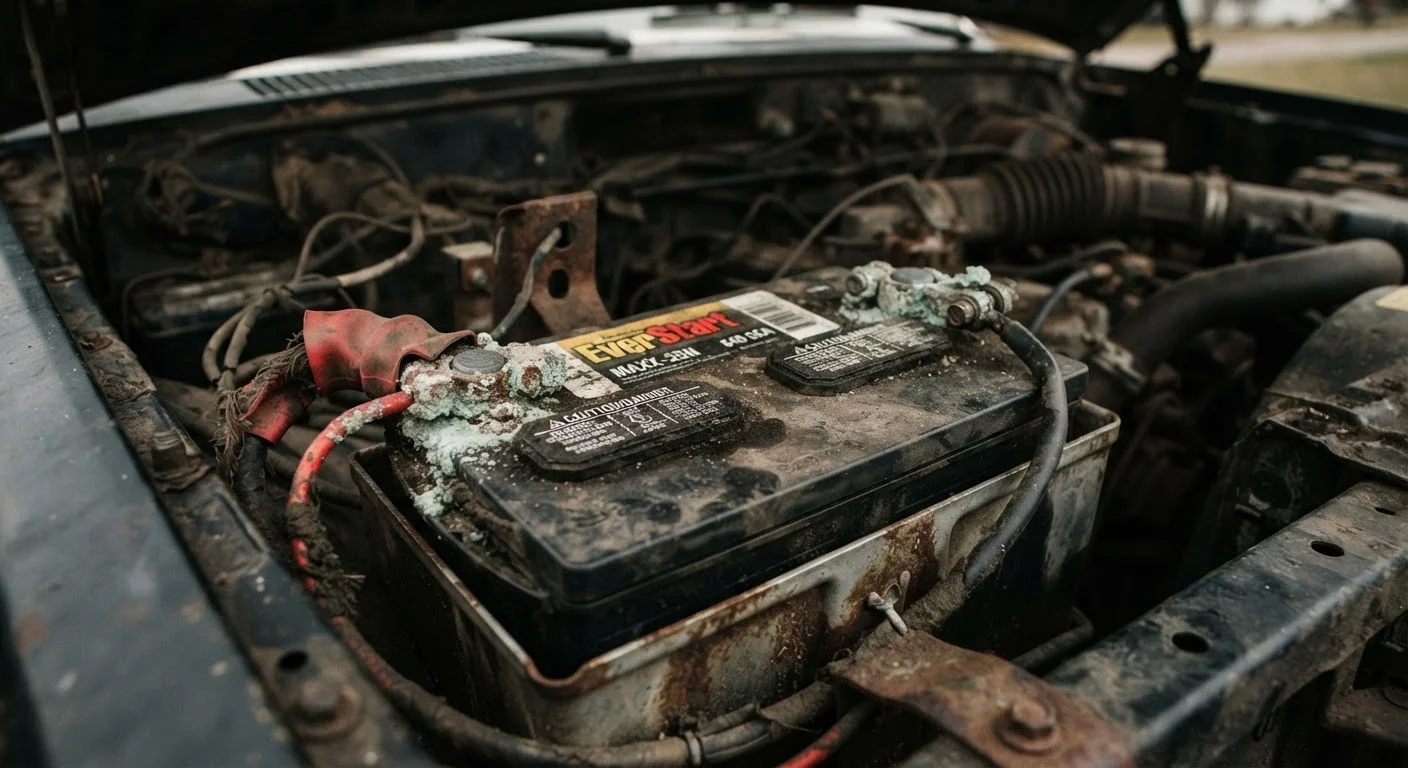
Inspect the two metal posts on top of your battery. A white, blue, or greenish powdery crust around those terminals is a sign of chemical off-gassing and oxidation. Moderate terminal corrosion can sometimes be cleaned and doesn't automatically mean the battery is at end-of-life - but heavy buildup impedes current flow and is frequently associated with an older or overworked battery. Corrosion paired with other symptoms on this list makes a strong case for professional evaluation.
Heavy terminal corrosion restricts current flow and often accompanies a battery that is already past its reliable service window.
The battery warning light illuminates
Most vehicles have a dedicated battery warning light - typically shaped like a small battery icon - on the instrument cluster. When it lights up, it generally indicates the charging system is not maintaining the battery at an adequate voltage level. This could mean the battery itself is failing, or it could point to the alternator or voltage regulator. Either way, the light warrants prompt attention from a mechanic, since driving on an undercharged battery risks a no-start situation or damage to sensitive electronics.
The battery warning light signals a charging system problem that needs diagnosis, not a light you can safely ignore for long.
Frequent need for jump-starts
Needing a jump-start once after leaving your lights on overnight is understandable. Needing one repeatedly under normal driving conditions is a clear indicator that the battery can no longer hold a charge adequately. Each jump-start cycle stresses an already compromised battery further. If you find yourself keeping jumper cables within easy reach as a regular practice, the battery has likely reached the end of its reliable service life and should be load-tested and assessed for replacement.
Repeated jump-starts under normal conditions mean the battery can no longer reliably hold a charge between drives.
The battery is three or more years old
Age alone is a meaningful risk factor. Even a battery showing no obvious symptoms is operating on borrowed time once it passes the three-year mark, and most manufacturers consider five years to be the outer boundary of reliable performance. If you don't know your battery's age, a date code is typically stamped on a label affixed to the battery casing. Drivers in hot climates should note that high ambient temperatures accelerate internal degradation, sometimes cutting expected battery life by a year or more compared to moderate climates.
A battery older than three years deserves a proactive load test, even if no other warning signs have appeared yet.
What to Do When You Spot the Signs
Identifying multiple warning signs at once is the clearest signal that battery replacement should be scheduled soon rather than later. A qualified mechanic or auto parts retailer can perform a load test - a procedure that measures how well the battery delivers current under realistic demand - giving you a concrete picture of remaining capacity rather than guesswork.
Get a Load Test Before Winter
Battery failures spike in cold weather because low temperatures reduce the electrochemical output that allows a battery to start an engine. Having a load test performed in the fall - before temperatures drop - gives you the opportunity to replace a marginal battery on your schedule rather than in an emergency. Many auto parts retailers offer this test at no charge.
Keep in mind that a failing battery can sometimes trigger dashboard warning lights, including the check engine light. If that light is on alongside other electrical symptoms, our article on what your check engine light is actually telling you can help you interpret what the vehicle is trying to communicate.
Finally, if you're evaluating a used vehicle and are unsure about its battery history, pairing a used-car inspection checklist with a battery load test gives you a much clearer picture of what you're buying into.