

| Engine oil change interval (conventional) | Every 3,000-5,000 miles (General industry guideline; verify against your owner's manual) |
| Engine oil change interval (full synthetic) | Every 7,500-10,000+ miles (Varies by manufacturer and oil specification) |
| Coolant flush interval | Every 30,000-100,000 miles (Depends on coolant type (conventional vs. extended-life)) |
| Brake fluid replacement | Every 2-3 years (Many manufacturers recommend inspection every 2 years) |
| Transmission fluid (automatic) | Every 30,000-60,000 miles (Synthetic formulas may extend this interval) |
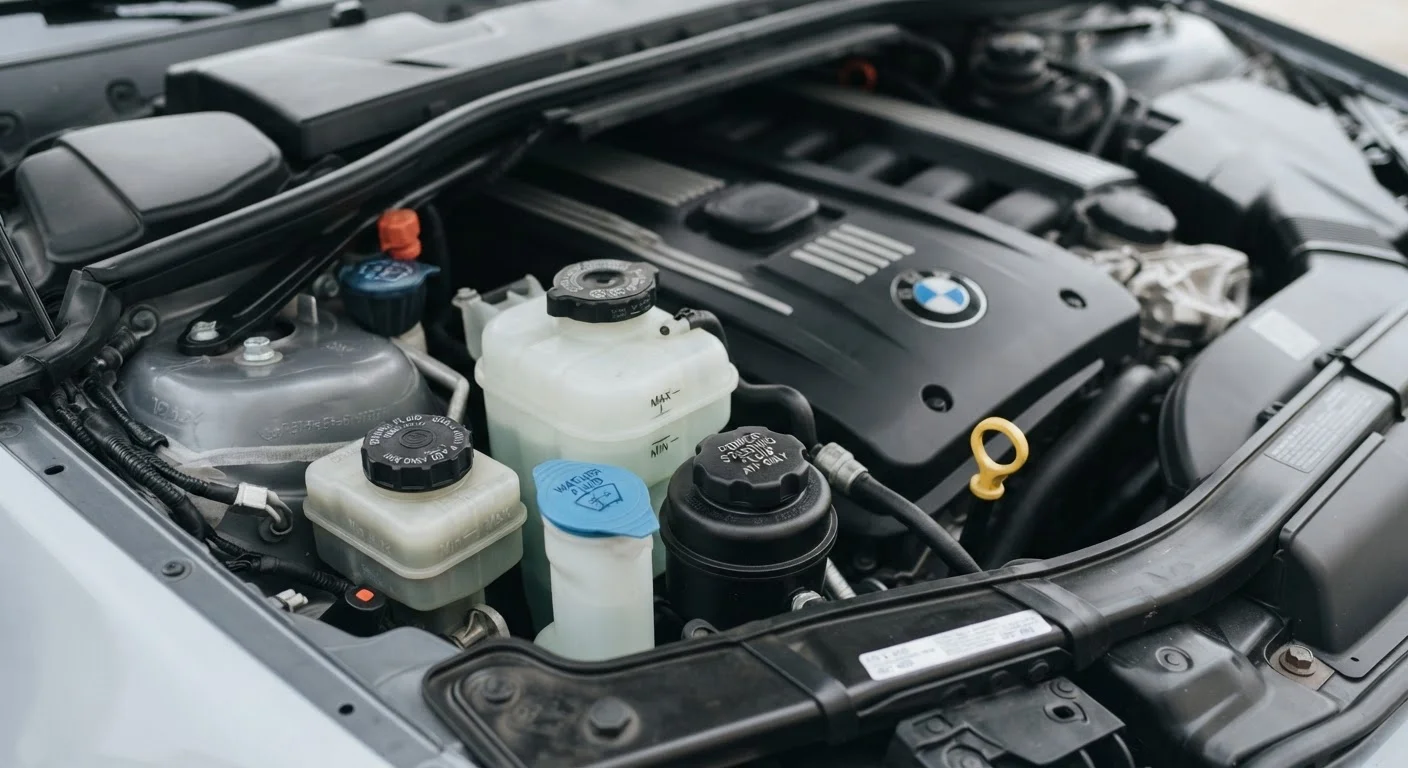
| Number of essential vehicle fluids | 6 (oil, coolant, brake, transmission, power steering, washer) (Standard passenger vehicle configuration) |
Why Fluids Matter More Than Most Drivers Realize
Your vehicle relies on a network of fluids to lubricate moving parts, transfer heat, transmit force, and prevent corrosion. When any one of them degrades or drops below the minimum level, it creates a chain reaction - increased wear, reduced performance, and potentially expensive repairs. Understanding what each fluid does and when it needs attention is a foundational part of vehicle ownership. See our complete owner's maintenance reference for broader context on keeping your vehicle reliable.
| Engine oil change interval (conventional) | Every 3,000-5,000 miles (General industry guideline; verify against your owner's manual) |
| Engine oil change interval (full synthetic) | Every 7,500-10,000+ miles (Varies by manufacturer and oil specification) |
| Coolant flush interval | Every 30,000-100,000 miles (Depends on coolant type (conventional vs. extended-life)) |
| Brake fluid replacement | Every 2-3 years (Many manufacturers recommend inspection every 2 years) |
| Transmission fluid (automatic) | Every 30,000-60,000 miles (Synthetic formulas may extend this interval) |
| Number of essential vehicle fluids | 6 (oil, coolant, brake, transmission, power steering, washer) (Standard passenger vehicle configuration) |
The intervals listed throughout this article are general guidelines. Your owner's manual - and the driving conditions you experience - should always take priority. For help interpreting those schedules, see how to read your owner's manual maintenance section.
The Six Essential Vehicle Fluids Explained
Engine Oil
Engine oil lubricates moving metal parts inside the engine, reduces friction-generated heat, and carries away microscopic debris. Over time, it breaks down chemically and becomes contaminated. Conventional oil is typically changed every 3,000-5,000 miles; full synthetic oil generally lasts 7,500-10,000 miles or more, depending on the manufacturer's specification. Check the level monthly with the dipstick. For a detailed look at what a change involves, see our guide on DIY oil changes.
Coolant (Antifreeze)
Coolant circulates through the engine and radiator to regulate operating temperature - preventing both overheating in summer and freezing in winter. It also inhibits internal corrosion. Most coolants are rated for 30,000-50,000 miles with older green formulas, while extended-life versions can last 100,000 miles or more. Flush the system according to the manufacturer's schedule, not just when a problem appears.
Brake Fluid
Brake fluid transmits the force from your foot on the pedal through hydraulic lines to the brake calipers. It is hygroscopic - meaning it absorbs moisture from the air over time - which lowers its boiling point and can lead to spongy pedal feel or brake fade. Most manufacturers recommend inspection every two years and replacement every 2-3 years, or per mileage specification.
Hygroscopic
A substance that naturally absorbs moisture from the surrounding environment. Brake fluid is hygroscopic, which is why it degrades over time even in a sealed system.
Hydraulic fluid
A fluid used to transmit mechanical force within a closed system, such as the brake lines or automatic transmission. The incompressible nature of liquid makes this possible.
Flush
A maintenance procedure in which old fluid is fully drained and replaced with fresh fluid, often accompanied by cleaning the system. Distinguished from a simple top-off or partial drain.
Synthetic fluid
A chemically engineered lubricant or functional fluid designed to offer superior performance and longevity compared to conventional petroleum-based alternatives, often extending service intervals.
Brake fade
A reduction in braking effectiveness caused by overheated or moisture-contaminated brake fluid, resulting in a soft or unresponsive pedal under repeated or hard braking.
Transmission Fluid
Transmission fluid lubricates gears and clutch packs while also acting as a hydraulic fluid in automatic transmissions. Degraded fluid leads to rough shifting and accelerated wear. Automatic transmissions typically need a fluid change every 30,000-60,000 miles under normal driving; some manufacturers specify longer intervals with synthetic fluid. Manual transmissions generally require changes every 30,000-60,000 miles as well - check your manual for the exact interval.
Power Steering Fluid
In vehicles with hydraulic power steering, this fluid allows the steering system to amplify the driver's input with minimal effort. It degrades over time and can develop leaks. Many manufacturers don't publish a hard change interval, but a visual inspection for discoloration or contamination every 30,000 miles is a reasonable practice. Note that many newer vehicles use electric power steering and have no fluid reservoir.
Windshield Washer Fluid
While it doesn't affect mechanical performance, washer fluid is a safety-critical item. It should be topped off regularly and only with a purpose-formulated washer solution - never plain water, which can freeze in cold climates and promote bacterial growth. Check the reservoir monthly and refill as needed.
High-Mileage Vehicles and Fluid Considerations
Once a vehicle crosses 100,000 miles, fluid management becomes even more important. Seals become more susceptible to leaks, and used fluids can mask the condition of aging components. Switching to high-mileage formulations of engine oil - which often include seal conditioners - may be appropriate, but any changes to your fluid regimen should be discussed with a qualified mechanic who can assess the vehicle's specific condition. For a broader breakdown of what shifts after high mileage, see how maintenance needs change after 100,000 miles.
One general caution: flushing fluids in a very high-mileage vehicle that has gone a long time without service - particularly transmission fluid - can occasionally surface underlying issues. A mechanic familiar with the vehicle's history is best positioned to advise on the right approach.
When to Involve a Qualified Mechanic
Several fluid-related tasks - such as transmission flushes, brake system bleeds, and coolant system work - involve pressurized or hydraulic components. While checking fluid levels is generally straightforward, full replacement or system flushes are best performed by a qualified mechanic, especially if you're unfamiliar with the procedure or working on a high-mileage vehicle. Always confirm the right approach for your specific make and model.