

Key Takeaways
- Your owner's manual maintenance section is the most accurate source for your specific vehicle's service intervals.
- Most manuals include two schedules: one for normal driving conditions and one for severe conditions.
- Following the manufacturer's schedule - not generic advice - protects your warranty and your vehicle.
- Mileage and time intervals both matter; use whichever threshold arrives first.
- Digital copies of most owner's manuals are available free from manufacturers if your paper copy is missing.
What you will need
Why the Owner's Manual Is Your Most Reliable Source
Generic maintenance advice - oil changes every 3,000 miles, spark plugs every 30,000 miles - circulates widely, but it does not account for your specific engine design, fluid capacities, or engineering tolerances. Your owner's manual is written by the engineers who built your vehicle. It reflects precisely how your car's components are designed to perform and how long they are expected to last under specified conditions.
Third-party maintenance guides and shop recommendations can be useful starting points, but they are generalizations. Following your manufacturer's schedule - rather than a one-size-fits-all interval - is the most reliable way to maintain your vehicle's performance and protect any remaining warranty coverage. For a broader look at building a maintenance routine, see our complete owner's maintenance reference.
What you will need
How to Read and Apply the Maintenance Schedule
With your manual open to the maintenance section and your current odometer reading in hand, work through the following steps. Each one builds on the last, moving you from locating the right schedule to knowing exactly which services are due and when.
Locate the maintenance section in your manual
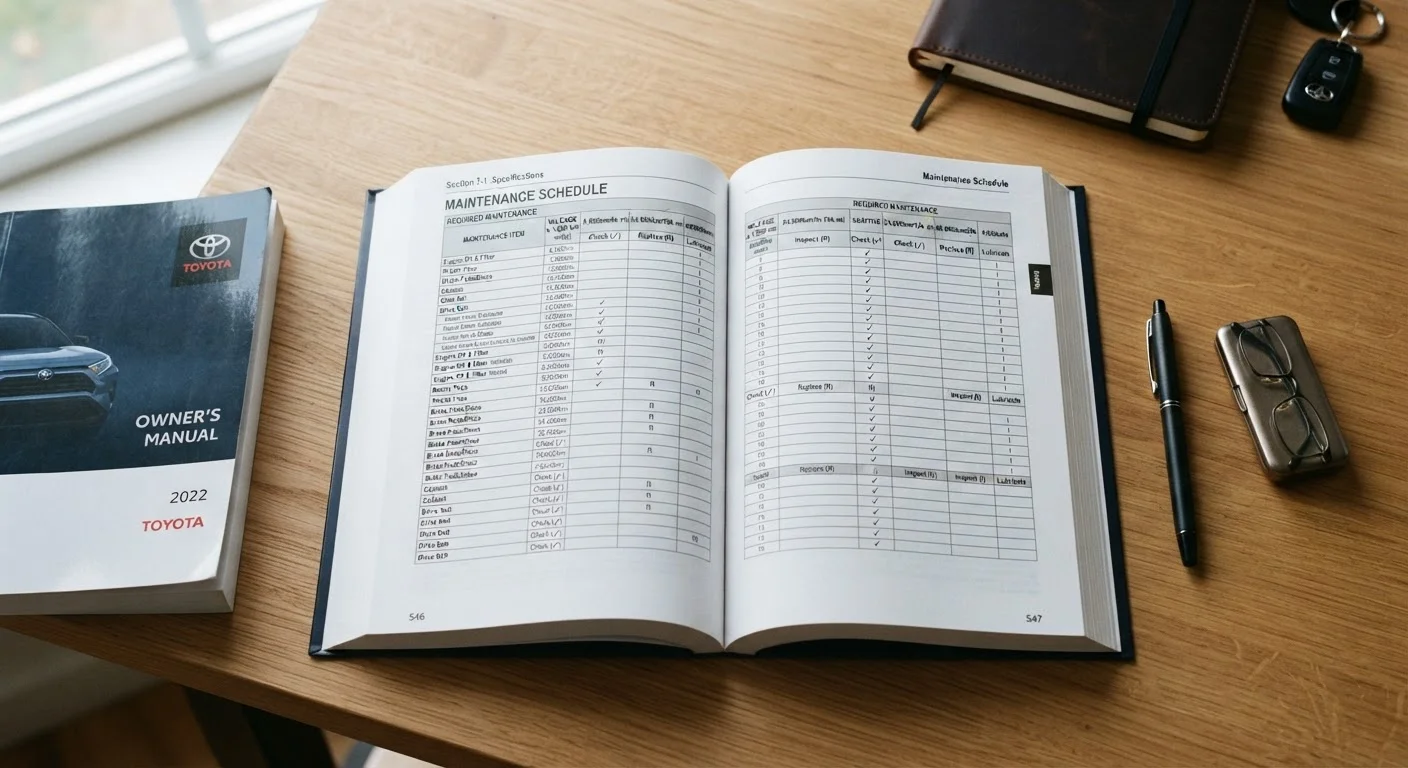
Owner's manuals are typically organized by topic. Look for a chapter titled Maintenance, Scheduled Maintenance, or Service Schedule - often found in the second half of the manual. The table of contents, usually on the first few pages, will give you the exact page number. If your paper copy is missing, visit your vehicle manufacturer's official website; most offer free downloadable PDFs organized by model year.
Identify which driving condition schedule applies to you
Most maintenance sections present two tracks: Normal and Severe (sometimes labeled Special Operating Conditions). Severe conditions include frequent short trips under five miles, stop-and-go city driving, towing, driving in dusty environments, or extreme temperature climates. If any of these describe your regular driving, the severe schedule - which calls for more frequent service - is the appropriate one to follow. Many drivers who assume they qualify for normal conditions actually meet one or more severe criteria.
Read the interval columns: mileage and time
Maintenance schedules list service items across two dimensions: mileage milestones (e.g., every 5,000 or 7,500 miles) and time intervals (e.g., every 6 or 12 months). Both matter. A vehicle that accumulates few miles can still degrade due to time - engine oil oxidizes, brake fluid absorbs moisture, and belts age regardless of distance traveled. The standard rule: service at whichever threshold - mileage or time - arrives first.
Map out the specific items listed at each interval
Scan the schedule row by row. Common items include engine oil and filter, tire rotation, air filter, cabin air filter, spark plugs, transmission fluid, coolant, brake fluid, belts, and hoses. Note which items appear at every interval versus those that recur every few years. Pay attention to footnotes - manufacturers often use symbols or letters to flag items that apply only under certain conditions or require dealer-specific procedures.
Cross-reference your current mileage against the schedule
Write down your current odometer reading, then compare it against each interval in the schedule. Identify any services that are due now or within the next 1,000 miles. Also note your vehicle's last recorded service date and mileage - if that information is available in a service log or receipts - so you can determine what has already been completed and what is still outstanding. See our guide to car fluids for help understanding what each fluid service actually involves.
Note any special instructions or warranty conditions
Some maintenance sections include specific notes about fluid specifications (such as approved oil viscosity grades or coolant types), required parts grades, or dealer-only procedures. Following these specifications is important for preserving your manufacturer's warranty. If your manual specifies a particular oil specification (such as a dexos or ILSAC rating), using a non-conforming product could affect warranty coverage. Always read any footnotes or asterisked items carefully before scheduling service.
Keep a Digital Backup of Your Manual
Manufacturer websites and several automotive reference databases offer free PDF downloads of owner's manuals organized by year, make, and model. Saving a copy to your phone means you always have access to the maintenance schedule, fluid specifications, and warning light explanations - even if your paper manual is lost or damaged.
Putting Your Schedule Into Practice
Once you've mapped out your upcoming service milestones, the practical next step is building a simple tracking system. A note on your phone, a calendar reminder, or a dedicated maintenance log all work equally well. The goal is to ensure no interval passes unnoticed.
If you drive a high-mileage vehicle, be aware that some manufacturers recommend supplemental checks beyond the standard schedule after certain thresholds. Our guide to high-mileage vehicle maintenance covers what changes and what to watch for. For newer or first-time drivers, building good habits from day one is a practical companion to this process.
Your owner's manual is not a document to read once and store in the glove box. Returning to it at each service milestone - and keeping notes on what has been completed - is one of the most straightforward ways to protect a significant financial asset.