

Key Takeaways
- Regular fluid checks and tire inspections are simple habits that prevent costly breakdowns.
- Your owner's manual is the most reliable source for your car's specific maintenance schedule.
- Warning lights and unusual sounds are early signals that should prompt prompt professional attention.
- Consistent preventive care extends vehicle life and protects resale value over time.
- New drivers who build maintenance routines early avoid the most common and expensive repair pitfalls.
Start here
Why Maintenance Habits Matter From the Start
Next
The Checks You Can Do Yourself
Then
Scheduled Service: Following Your Maintenance Timeline
Important
Warning Signs You Should Never Ignore
When you're ready
Building a Sustainable Maintenance Routine
Why Maintenance Habits Matter From the Start
Owning a car is not just about driving - it's about keeping a complex machine running safely and efficiently over time. For new drivers, the habits formed in the first weeks of ownership tend to stick. Building the right ones early pays off in fewer breakdowns, lower repair bills, and a vehicle that holds its value longer.
Neglecting basic upkeep is the most common reason cars develop expensive problems prematurely. Skipped oil changes, ignored tire wear, and overlooked warning lights are not minor oversights - they are the leading contributors to engine damage, blowouts, and failed brakes. The good news is that most routine maintenance is straightforward and largely preventive. For a broader look at ownership costs that often catch new buyers off guard, see what first-time car buyers frequently overlook.
Preventive maintenance
Routine servicing performed on a schedule to prevent problems before they occur, rather than waiting until something breaks.
Owner's manual
The manufacturer-provided booklet (or digital document) that contains official specifications, operating instructions, and the maintenance schedule for your specific vehicle.
Dipstick
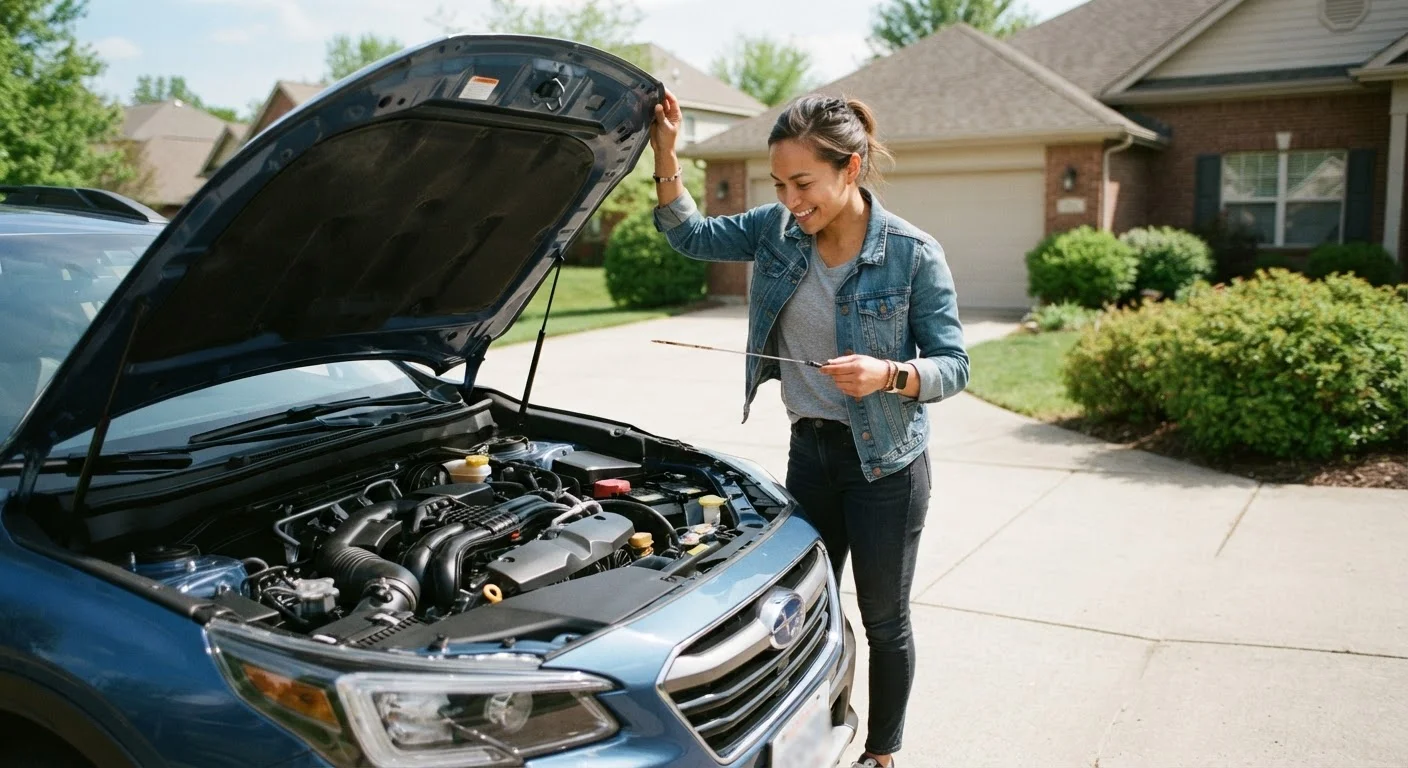
A long, thin metal rod inserted into the engine that you pull out to check the oil level and condition visually.
Tire tread depth
The measurement of the grooves on a tire's surface; adequate depth is necessary for safe traction, especially in wet or slippery conditions.
Scheduled service interval
A mileage or time milestone at which the manufacturer recommends specific maintenance tasks be performed, such as an oil change or brake inspection.
Diagnostic code
An alphanumeric code stored by your car's onboard computer when it detects a problem; a mechanic reads this code with a scanner to identify what triggered a warning light.
The Checks You Can Do Yourself
Several important checks require no tools, no mechanical background, and only a few minutes each month. Making these part of your regular routine is one of the highest-value habits a new driver can form.
- Engine oil: Check the level and color monthly using the dipstick. Dark, gritty oil or a low level signals it may be time for a change or a mechanic's inspection.
- Tire pressure: Underinflated tires reduce fuel efficiency and increase blowout risk. Check pressure monthly with an inexpensive gauge - the correct PSI is listed on the sticker inside the driver's door, not on the tire sidewall.
- Tire tread: Worn tread reduces traction, especially in wet conditions. The quarter test offers a quick visual check for unsafe wear levels.
- Lights: Walk around your vehicle periodically to confirm all exterior lights - headlights, brake lights, turn signals - are functioning.
- Fluid levels: Coolant, brake fluid, and windshield washer fluid all have visible reservoirs. Low or discolored fluid warrants attention.
These checks take under ten minutes combined and can catch developing problems well before they become emergencies.
Set a Monthly Five-Minute Check Habit
Pick the same day each month - the first of the month works well - to run through your basic vehicle checks: oil level, tire pressure, all exterior lights, and a visual scan under the hood for any obvious leaks. Consistency matters more than perfection. A quick monthly habit catches the majority of developing issues long before they require expensive repairs.
Scheduled Service: Following Your Maintenance Timeline
Beyond self-checks, every vehicle has a manufacturer-defined schedule of professional services - oil changes, filter replacements, fluid flushes, belt inspections, and more - tied to mileage or time intervals. This schedule exists because components degrade predictably, and servicing them before they fail prevents cascading damage.
Your owner's manual is the definitive source for these intervals and is specific to your vehicle's make, model, engine, and driving conditions. Many drivers overlook this document entirely, which leads to either over-servicing (unnecessary expense) or under-servicing (real risk). Our guide to reading your owner's manual's maintenance section explains how to interpret and use that information effectively.
Common scheduled services for most vehicles include oil and filter changes, tire rotations, air filter replacements, brake inspections, and coolant flushes. Intervals vary considerably by vehicle - some modern engines now specify oil changes every 7,500 to 10,000 miles under normal driving conditions, while others still call for 5,000-mile intervals. Always verify with your manual rather than relying on generic rules of thumb. For a full picture of what routine and major services involve across a vehicle's life, the complete owner's car maintenance reference is a useful companion resource.
Warning Signs You Should Never Ignore
Dashboard warning lights, unusual sounds, and changes in how a car handles are the vehicle's way of communicating that something needs attention. New drivers sometimes dismiss these signals, hoping they'll resolve on their own - a costly assumption.
- Check Engine light: Can indicate anything from a loose gas cap to a failing catalytic converter. Have it scanned by a mechanic to retrieve the stored diagnostic code.
- Oil pressure or temperature warning: Pull over safely and turn off the engine. Continuing to drive with low oil pressure or an overheating engine risks severe internal damage.
- Brake warning light or spongy pedal: Brake system issues are safety-critical and should be inspected immediately by a qualified technician.
- Unusual sounds: Squealing during braking often signals worn brake pads. Grinding, clunking, or persistent rattling all warrant professional diagnosis.
- Pulling to one side: Can indicate tire pressure imbalance, alignment issues, or brake problems.
Never Drive With a Critical Warning Light On
Oil pressure, engine temperature, and brake warning lights indicate conditions that can cause rapid, serious mechanical damage or create a safety hazard if driving continues. If any of these illuminate, pull over safely as soon as possible and contact a mechanic or roadside assistance. Turning off the light by disconnecting the battery does not fix the underlying problem.
A useful habit: consult the seasonal car maintenance calendar to understand how temperature changes affect your vehicle and when to schedule specific inspections throughout the year.
Building a Sustainable Maintenance Routine
The most effective maintenance approach is one you'll actually follow. That means keeping it simple, consistent, and documented. Here are practical ways to establish that routine:
- Keep a service log: A small notebook in the glove box or a notes app on your phone works well. Record the date, mileage, and what was done at every oil change, tire rotation, or inspection. This log proves valuable when selling the car and helps you track upcoming service intervals.
- Set calendar reminders: Use your phone to set recurring reminders for monthly self-checks and upcoming scheduled services based on your mileage progress.
- Find a trustworthy mechanic early: Establish a relationship with a qualified repair shop before you have an emergency. Ask friends or family for recommendations, read reviews, and don't hesitate to ask a shop to explain what work is being done and why.
- Budget for maintenance: Routine upkeep costs money, but predictably so. Setting aside a modest monthly amount specifically for vehicle maintenance prevents sticker shock when a service is due.
New car owners and seasoned drivers alike benefit from treating maintenance as a habit rather than a reaction. Much like learning to care for a home, the discipline built early makes every subsequent year of ownership easier. The investment in preventive care consistently costs less than the repairs it prevents.