

Key Takeaways
- A seller appearing on a major platform does not guarantee they are legitimate or trustworthy.
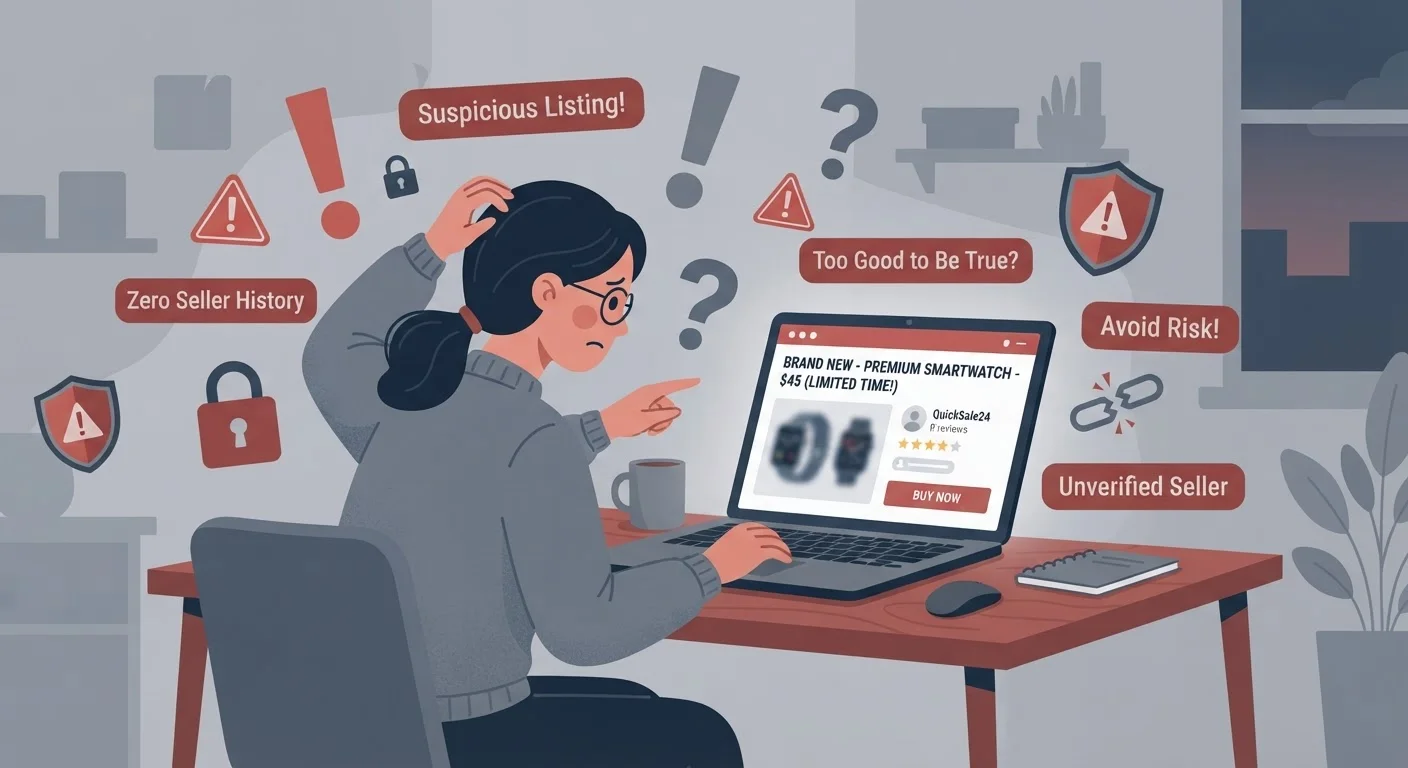
- Suspiciously low prices, vague product descriptions, and missing return policies are common warning signs.
- Review count, seller history, and fulfillment method are all useful signals to evaluate before purchasing.
- If something feels off, checking the seller's storefront and external reviews can reveal important patterns.
- Buyer protection programs vary by platform and may not cover every transaction type.
Why Third-Party Marketplaces Create Unique Risks
Major online marketplaces - the kind where millions of people shop every day - allow independent sellers to list products alongside verified retailers. That convenience comes with a trade-off: the platform's familiar branding can create a false sense of security about who you're actually buying from.
Third-party sellers range from small legitimate businesses to outright fraudulent operations. The platform itself typically doesn't verify every product claim or seller identity before a listing goes live. That means the work of spotting a bad actor often falls to you, the buyer.
Understanding how these scams operate is the first step - our in-depth look at how online shopping scams work covers the broader mechanics. Below are the specific red flags to watch for when evaluating a third-party seller.
Prices that seem impossibly low
A price dramatically below what every other seller is charging is one of the clearest signals that something is wrong. Fraudulent sellers use sharp discounts to generate quick purchases before reviews or complaints accumulate. Counterfeit goods, misrepresented products, or outright non-delivery are common outcomes.
Compare the price against at least two or three other sellers for the same item. A modest discount is normal; a 60-70% markdown on a name-brand product almost never is.
A steep discount on a name-brand item is often a sign of counterfeit goods or non-delivery.
Vague or copy-pasted product descriptions
Legitimate sellers typically provide accurate, specific product information - dimensions, materials, compatibility, model numbers. Fraudulent listings often use generic descriptions copied from elsewhere, filled with awkward phrasing or obvious translation errors.
When a listing can't tell you something basic - like what country a product was made in, or which version of a device it's compatible with - that's a sign the seller may not actually have the product, or may be misrepresenting it.
Generic, error-filled descriptions often mean the seller doesn't know - or won't say - what they're actually selling.
A brand-new seller account with no history
Most marketplace platforms display how long a seller has been active. An account that's only weeks old with hundreds of listings and suspiciously high ratings should raise questions. Fraudulent operators frequently create new storefronts after old ones are flagged or banned.
Look for sellers with at least several months of history and a meaningful number of verified purchases. A long track record doesn't guarantee legitimacy, but its absence is a flag worth taking seriously.
A storefront that's only weeks old with hundreds of listings deserves extra scrutiny.
Reviews that look manufactured
Review manipulation is widespread on major marketplaces. Signs of fake reviews include: a cluster of five-star reviews posted within a short window, reviews that don't mention the specific product, identical or near-identical phrasing across multiple reviews, and reviewers with no other purchase history.
Look for reviews that describe a negative experience or a realistic mix of opinions. An item with hundreds of reviews and zero complaints is often a sign the review pool has been filtered or artificially inflated.
A flood of identical five-star reviews posted in a short window is a classic sign of review manipulation.
No clear return or refund policy
Reputable sellers clearly state their return window, who pays for return shipping, and how refunds are processed. If this information is missing, buried, or contradicts the platform's stated policy, be cautious.
Fraudulent sellers often list items as "all sales final" or route buyers through off-platform contact to handle returns - which puts you outside the marketplace's dispute process. Always verify the return terms before purchasing, not after.
If return terms are missing or require off-platform contact, your buyer protections may be void.
Requests to communicate or pay outside the platform
Any seller who asks you to continue a transaction via personal email, messaging apps, or a payment method not supported by the marketplace is asking you to waive the platform's buyer protections. This is a textbook fraud pattern.
Keep all communication and payment within the official platform interface. If a seller insists otherwise, walk away - there is no legitimate reason for a genuine seller to route purchases outside the system. This tactic is also connected to account compromise schemes that target buyers after initial contact.
Any request to pay or communicate outside the platform immediately voids your buyer protection.
Fulfilled directly by seller when third-party fulfillment is the norm
Many marketplaces offer a seller-fulfilled option alongside platform-managed shipping. Seller-fulfilled orders are not inherently fraudulent, but they carry higher risk: the platform's tracking, return handling, and dispute processes may be more limited.
For high-value purchases, check whether the order is fulfilled by the platform itself or shipped independently by the seller. If it's the latter, confirm the return and refund policy applies the same way before you commit.
Seller-fulfilled orders often carry fewer protections than platform-managed shipments for high-value purchases.
What to Do Before You Place an Order
Spotting red flags is only useful if you act on them. If a seller triggers even two or three of the warning signs above, that's usually enough reason to look elsewhere or dig deeper before committing payment.
Search the seller name externally
Before purchasing, copy the seller's storefront name and run a quick web search - add words like "scam," "complaint," or "review" to the query. Fraudulent sellers often have complaints documented on consumer protection forums, the Better Business Bureau, or social media long before their platform listings are removed. This takes under two minutes and can save significant hassle.
Use the platform's buyer protection tools when they exist, but don't rely on them as a safety net - coverage often depends on how the order was placed and whether the item was fulfilled by the platform or shipped directly by the seller. Payment method matters too: credit cards typically offer stronger dispute rights than debit cards or payment apps for marketplace purchases.
For a structured approach to vetting any purchase, our pre-purchase safety checklist walks through seller verification, policy review, and payment protection step by step. And if you want guidance on evaluating unfamiliar brands that show up in these listings, our guide to trusting a brand you've never heard of offers an objective framework.