

Key Takeaways
- Keep total housing costs - rent, utilities, and fees - at or below 30% of gross monthly income.
- Rental applications typically require proof of income, government ID, and rental history references.
- A lease is a legally binding contract; read every clause before signing.
- Document the unit's condition with photos and written notes on move-in day to protect your security deposit.
- Tenant rights vary significantly by state and city - know your local laws before disputes arise.
Set a Realistic Rental Budget
Before browsing a single listing, establish a clear spending ceiling. The widely cited guideline is to spend no more than 30% of your gross (pre-tax) monthly income on housing - a standard used by the U.S. Department of Housing and Urban Development (HUD) to define housing affordability. In high-cost metro areas, many renters stretch beyond that threshold, so be honest about what is sustainable for your specific income and expenses.
Rent itself is rarely the only cost. Factor in:
- Security deposit - typically one to two months' rent, held by the landlord against damage or unpaid rent
- Utilities - electricity, gas, water, trash, and internet may or may not be included
- Renters insurance - usually $15-$30 per month; many landlords require it
- Pet fees or deposits - if applicable (see how pet ownership affects lease terms)
- Parking - sometimes billed separately in urban buildings
Building this full-cost picture up front prevents budget shock after you've committed to a unit.
Include Move-In Costs in Your Budget
Many renters underestimate upfront costs. Between a security deposit, first month's rent, last month's rent (required by some landlords), and moving expenses, your initial outlay can easily equal three to four months of rent. Set aside this amount before you begin your search so you're ready to move quickly when you find the right unit.
Search for Listings Strategically
With a budget set, focus your search. Online listing platforms aggregate the majority of available rentals, but property management companies and local landlords often post on their own websites or via yard signs. Narrowing by neighborhood before fixating on specific units saves significant time.
Prioritize your non-negotiables - commute distance, pet policy, parking, laundry access - and treat everything else as a preference. In competitive markets, speed matters: a well-priced unit in a desirable area can receive multiple applications within hours of posting.
44M+
Renter households in the U.S.
According to the U.S. Census Bureau, more than 44 million American households rent their primary residence.
30%
HUD's housing affordability threshold
The U.S. Department of Housing and Urban Development defines households spending more than 30% of gross income on housing as cost-burdened.
~$25-$75
Typical rental application fee range
Most landlords and property managers charge a non-refundable screening fee in this range to cover credit and background check costs.
If you are weighing renting against purchasing property, a comparison of the financial and lifestyle trade-offs is worthwhile before committing to a long-term lease. See renting vs. buying trade-offs that actually matter for a balanced breakdown.
Tour Properties and Evaluate Carefully
A tour is your opportunity to assess what a listing photo cannot show. Arrive with a plan: test every appliance, run taps to check water pressure, inspect window seals, look for signs of moisture or mold in bathrooms and under sinks, and note the condition of floors and walls.
Ask the landlord or property manager directly about:
- Average utility costs for the unit
- How maintenance requests are submitted and typically resolved
- Lease start date flexibility
- Building rules around noise, guests, and alterations
For a structured approach, use a renter's apartment walkthrough checklist to document damage and flag issues before handing over any deposit.
Visit the property at different times of day - once during daylight and once in the evening - to get a realistic sense of noise levels, lighting, and neighborhood activity.
Conditions that feel acceptable during a noon tour can change dramatically on a weekday evening or weekend, and those conditions will be your daily reality for the lease term.
Ask specifically how long the current landlord has owned the property and whether it has recently been listed for sale.
A property mid-sale or with a frequently changing owner can complicate lease renewals and maintenance responsiveness - factors that affect your stability as a renter.
Apply, Get Screened, and Negotiate
A rental application is a formal request to rent - and a consent to be screened. Most landlords run a credit check (to assess payment history) and a background check (criminal and eviction records). Standard documentation you should prepare includes:
- Government-issued photo ID
- Recent pay stubs or proof of income (bank statements, offer letters, or tax returns for self-employed applicants)
- Contact information for previous landlords
- Personal references, if requested
Application fees, which cover screening costs, typically range from $25 to $75 and are generally non-refundable. If your credit is limited, some landlords will accept a co-signer or a larger upfront deposit.
Negotiation is possible, particularly in softer rental markets. Lease length, move-in date, and sometimes rent itself may be open to discussion - especially if a unit has been listed for several weeks.
Never Pay a Deposit Without a Signed Lease
Rental scams frequently involve requests for deposits or application fees before any paperwork is signed or the property is verified. Always confirm that the person collecting funds is the legal owner or an authorized property manager. Never wire money or pay in cash without a written receipt, and do not hand over any funds until you have a signed lease in your possession.
Read and Sign the Lease
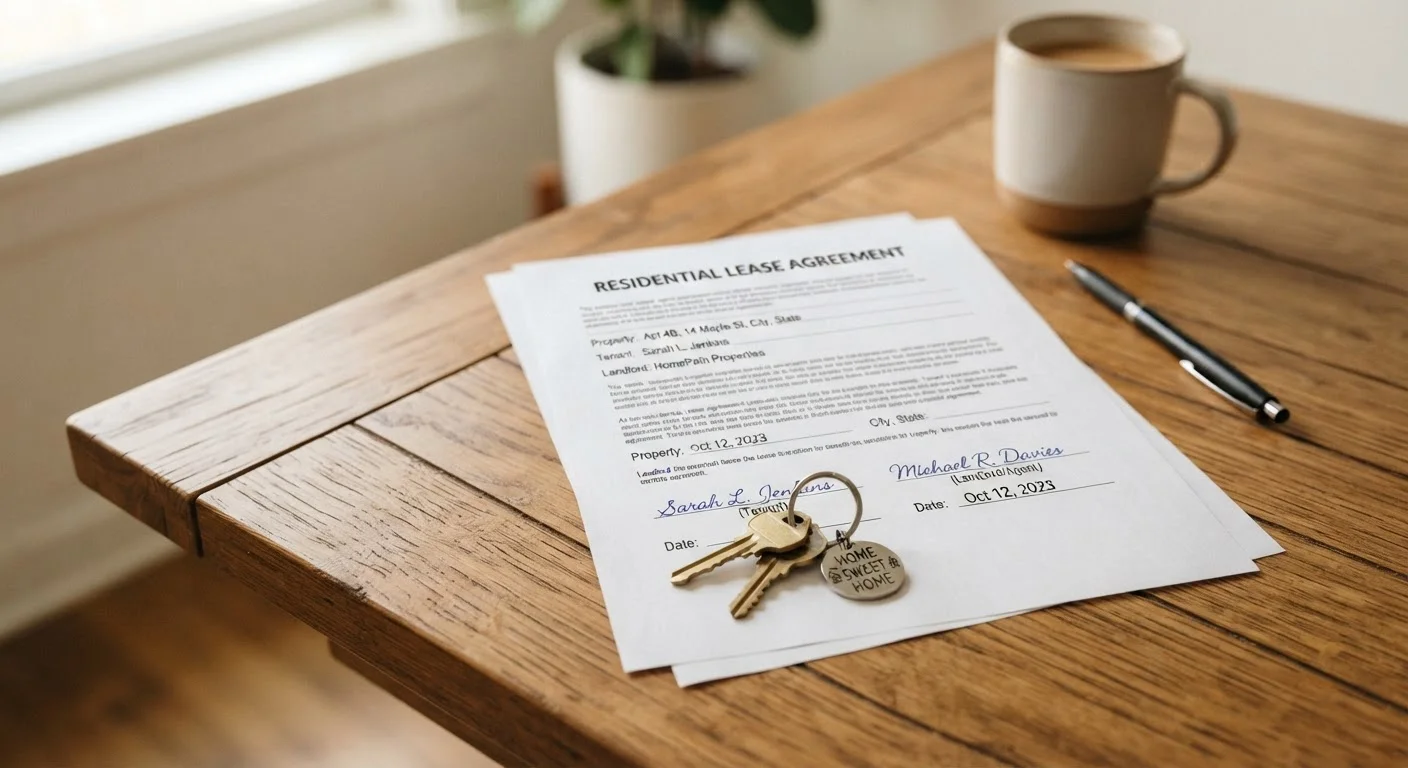
A lease is a legally binding contract between you (the tenant) and the landlord. No amount of verbal assurance overrides what is written. Before signing, read the full document - not just the rent amount and end date.
Pay particular attention to:
- Lease term - fixed-term (commonly 12 months) vs. month-to-month
- Renewal and termination clauses - notice requirements and early-termination penalties
- Rent increase provisions - how and when the landlord may raise rent
- Subletting policy - whether you may sublet and under what conditions
- Rules and restrictions - smoking, modifications, noise, guests
- Security deposit terms - what constitutes deductible damage vs. normal wear and tear
Tenant protection laws vary widely. Some cities impose rent stabilization or limit deposit amounts; others offer landlords significant flexibility. Research your state and local tenant rights before you sign.
Move In Safely and Document Everything
On or before your first day of tenancy, conduct a formal move-in inspection. Walk through every room with the landlord or their representative, completing any provided move-in checklist, and photograph every pre-existing scratch, stain, or defect. Send copies of your documentation to the landlord in writing - email creates a timestamped record.
This step is critical: most security deposit disputes hinge on whether damage existed before the tenant moved in. States generally require landlords to return deposits within 14 to 30 days of move-out, with written itemization of any deductions.
Additional first-week priorities:
- Set up renters insurance before moving furniture in
- Locate the electrical panel, water shutoff, and gas shutoff
- Confirm emergency contact procedures for maintenance
- Change the unit's Wi-Fi password if applicable
- Update your address with USPS, your employer, and financial institutions
The rental journey shares structural parallels with other major consumer processes - much like the full car-buying journey from research to keys in hand, each stage builds on the last, and being prepared at every step gives you the best outcome.