

Key Takeaways
- Soil pH controls whether nutrients are available to plant roots, not just whether they're present in the soil.
- Most vegetables and ornamentals prefer a pH between 6.0 and 7.0, though some plants have specific needs outside this range.
- A simple, inexpensive soil test is the only reliable way to know your soil's actual pH.
- Lime raises pH in acidic soil; sulfur or acidifying fertilizers lower pH in alkaline soil - but changes happen gradually.
- Raised beds give you greater control over soil pH from the start.
Soil pH
Soil pH is a measure of how acidic or alkaline your soil is, rated on a scale from 0 to 14. A pH of 7 is neutral; values below 7 are acidic and values above 7 are alkaline (also called basic). Most garden plants grow best in soil that falls somewhere between mildly acidic and neutral - roughly pH 6.0 to 7.0.
pH affects the solubility of mineral compounds in soil water, which directly controls how easily plant roots can absorb nutrients. Even when nutrients are physically present in the soil, an out-of-range pH can lock them into forms that roots cannot take up.
Why pH Matters More Than Most Gardeners Realize
You can water faithfully, fertilize on schedule, and plant in full sun - and still watch your plants limp along, looking pale and unhappy. In many cases, soil pH is the silent culprit. When pH strays too far from a plant's preferred range, nutrients already in the soil become chemically unavailable to roots. The plant starves even though the food is technically there.
Think of soil pH as a gatekeeper. Iron, manganese, phosphorus, and nitrogen are all affected differently depending on whether your soil leans acidic or alkaline. For instance, iron becomes less available in alkaline soils, causing a yellowing condition called iron chlorosis - leaves turn yellow while their veins stay green. In highly acidic soils, manganese and aluminum can reach levels that are actually toxic to roots. Understanding this relationship is the foundation of good soil management.
6.0-7.0
Optimal pH range for most garden vegetables
This range is widely cited by horticultural extension services as the target zone where nutrient availability is most balanced for common food crops.
14-point
Scale used to measure soil acidity
The pH scale runs from 0 (most acidic) to 14 (most alkaline), with each whole number representing a tenfold difference in acidity - meaning pH 5 is ten times more acidic than pH 6.
3-6 months
Typical time for lime to fully adjust pH
According to university extension guidelines, ground limestone takes several months to fully react in soil, making fall application ideal for spring planting goals.
How to Test Your Soil's pH
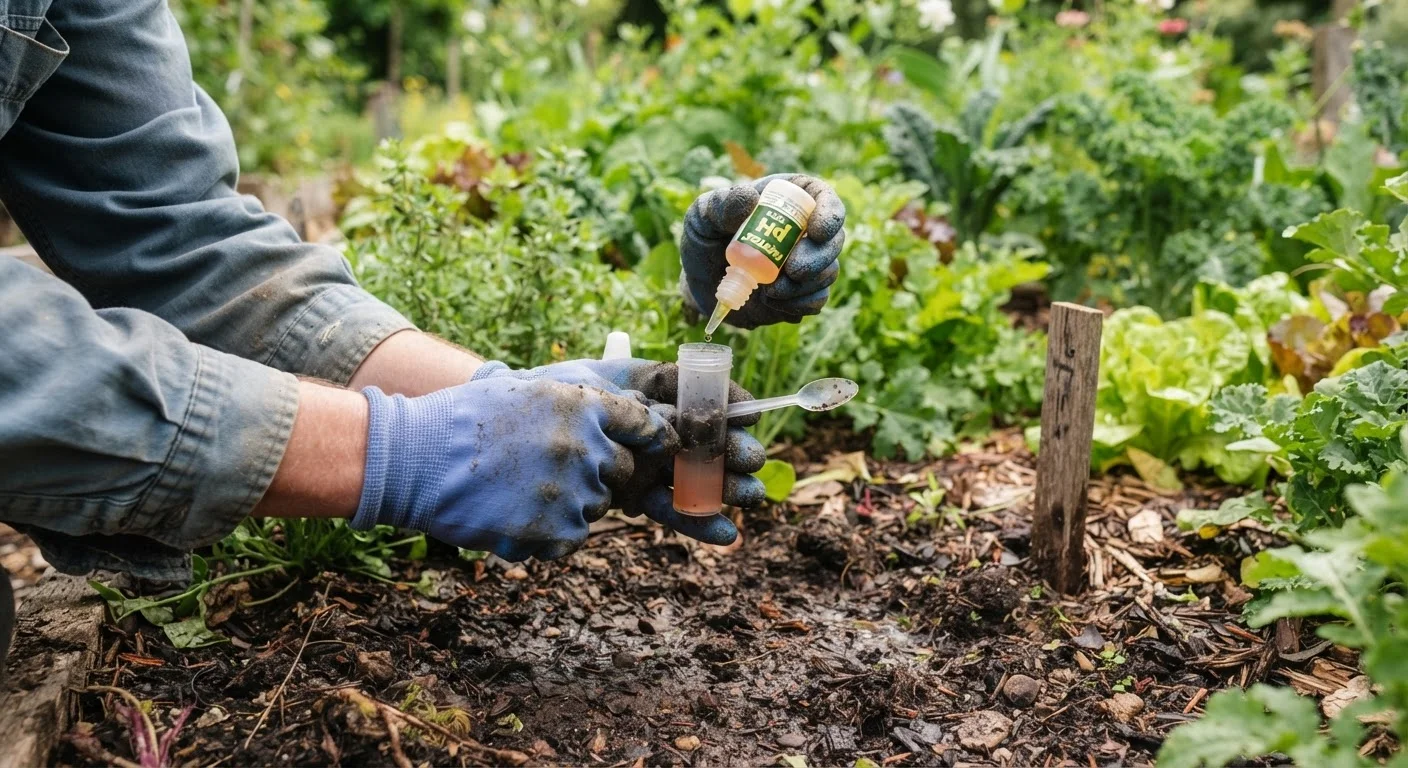
The only reliable way to know your soil's pH is to test it. Fortunately, testing is straightforward and inexpensive. You have two main options:
- Home test kits: These use a color indicator that changes shade when mixed with a soil sample. They're widely available at garden centers and give quick, usable readings - though they're less precise than lab tests.
- Lab soil tests: Your local cooperative extension service (run through most land-grant universities) typically offers low-cost or free soil testing. A lab test returns a detailed nutrient profile along with your pH reading and specific amendment recommendations tailored to your region and crop goals.
To collect an accurate sample, take small scoops from multiple spots in your garden bed - at least 6 to 8 inches deep - and mix them together before testing. A single spot can give a skewed reading. If you're planning a vegetable garden from scratch, testing before you plant is especially valuable. See our complete vegetable garden guide for how soil prep fits into early planning.
Test Before You Amend
Never add lime, sulfur, or other pH-adjusting materials based on guesswork or plant appearance alone. Applying the wrong amendment - or too much of the right one - can push pH further out of range. A soil test costs very little and gives you a precise target to work toward. Your local cooperative extension office is an excellent starting point for finding affordable testing options.
Adjusting Soil pH: Raising and Lowering It
Once you have your test results, you can decide whether to amend. The two most common situations are soil that's too acidic and soil that's too alkaline.
Raising pH (Making Soil Less Acidic)
Adding agricultural lime (ground limestone) is the standard approach. Calcitic lime raises pH and adds calcium; dolomitic lime adds both calcium and magnesium - useful if your soil is also magnesium-deficient. Application rates depend on your current pH, your target pH, and your soil type. Clay soils require more lime than sandy soils to achieve the same shift. Always follow the quantities recommended by your soil test report rather than estimating.
Lowering pH (Making Soil Less Alkaline)
Elemental sulfur is the most common amendment for lowering pH. Soil microbes convert it to sulfuric acid over weeks, gradually acidifying the soil. Acidifying fertilizers and sphagnum peat moss can also contribute to modest pH reductions over time. Again, the amount needed depends on your starting pH, target pH, and soil texture.
In both cases, patience is essential. Meaningful pH shifts take at least several weeks, and large corrections should be spread across multiple seasons to avoid stressing plants. Gardeners who use raised beds have a significant advantage here - starting with a custom soil blend means you can set your pH from day one. Our article on raised beds vs. in-ground planting explains this and other soil-control benefits in detail.
Matching pH to What You're Growing
Not every plant wants the same conditions. Understanding your plants' preferences helps you set realistic targets rather than chasing an arbitrary ideal.
| Plant Type | Preferred pH Range |
|---|---|
| Most vegetables | 6.0-7.0 |
| Blueberries | 4.5-5.5 |
| Azaleas & rhododendrons | 4.5-6.0 |
| Lawns (cool-season grasses) | 6.0-7.0 |
| Lavender | 6.5-7.5 |
| Potatoes | 5.0-6.0 |
Native plants are another case worth noting - many are naturally adapted to the soil chemistry of their home region, which is one reason they often require less intervention overall. Our piece on native plants and landscape design explores how working with your local soil conditions, rather than against them, can simplify yard care considerably.