

Key Takeaways
- The standard dietary reference intake for protein is 0.8 grams per kilogram of body weight for sedentary adults.
- Active individuals, older adults, and those recovering from illness generally need more protein than the baseline recommendation.
- Both animal and plant foods can provide adequate protein when meals are planned thoughtfully.
- Excess protein is not automatically stored as muscle - total calorie balance and activity level matter.
- Most Americans already meet or exceed baseline protein needs through their regular diet.
What Protein Actually Does in the Body
Protein is one of three macronutrients - alongside carbohydrates and fat - that supply energy and structure to the body. Unlike carbohydrates, which serve primarily as fuel, protein's most critical role is structural and regulatory. It forms the building blocks of muscle, skin, hair, enzymes, hormones, and immune cells.
Proteins are made from smaller units called amino acids. Of the roughly 20 amino acids involved in human physiology, nine are considered essential - meaning the body cannot synthesize them and must obtain them through food. A diet that consistently falls short of these essential amino acids can impair tissue repair, immune response, and basic metabolic function.
For a broader grounding in how macronutrients interact, see our beginner's guide to nutrition.
How Much Protein Do You Actually Need?
The DRI established by the National Academies of Medicine sets the Recommended Dietary Allowance (RDA) for protein at 0.8 grams per kilogram of body weight per day for healthy sedentary adults. For a 154-pound (70 kg) adult, that works out to roughly 56 grams per day.
However, this baseline represents the minimum needed to prevent deficiency in most people - not necessarily an optimal target for everyone. Research consistently suggests higher intakes may benefit:
- Older adults: Studies indicate that adults over 65 may need 1.0-1.2 g/kg daily to help preserve muscle mass and reduce fall risk.
- Physically active people: Endurance and strength athletes often require 1.2-2.0 g/kg, depending on training volume and goals.
- Those recovering from surgery or illness: Healing tissues have elevated protein demands.
0.8 g/kg
Baseline protein RDA for sedentary adults
Established by the National Academies of Medicine as the minimum daily requirement to prevent deficiency in most healthy adults.
~16%
Share of calories from protein in average U.S. diet
According to NHANES dietary data, American adults typically consume protein well within or above the acceptable macronutrient distribution range of 10-35% of total calories.
1.2-2.0 g/kg
Protein range often cited for active individuals
Position papers from sports nutrition organizations such as the International Society of Sports Nutrition suggest this range for athletes engaged in regular resistance or endurance training.
Individual needs vary based on body composition, health status, and activity level. Always consult a registered dietitian or physician before significantly changing your protein intake, especially if you have a kidney condition or other chronic illness.
Animal vs. Plant Protein Sources
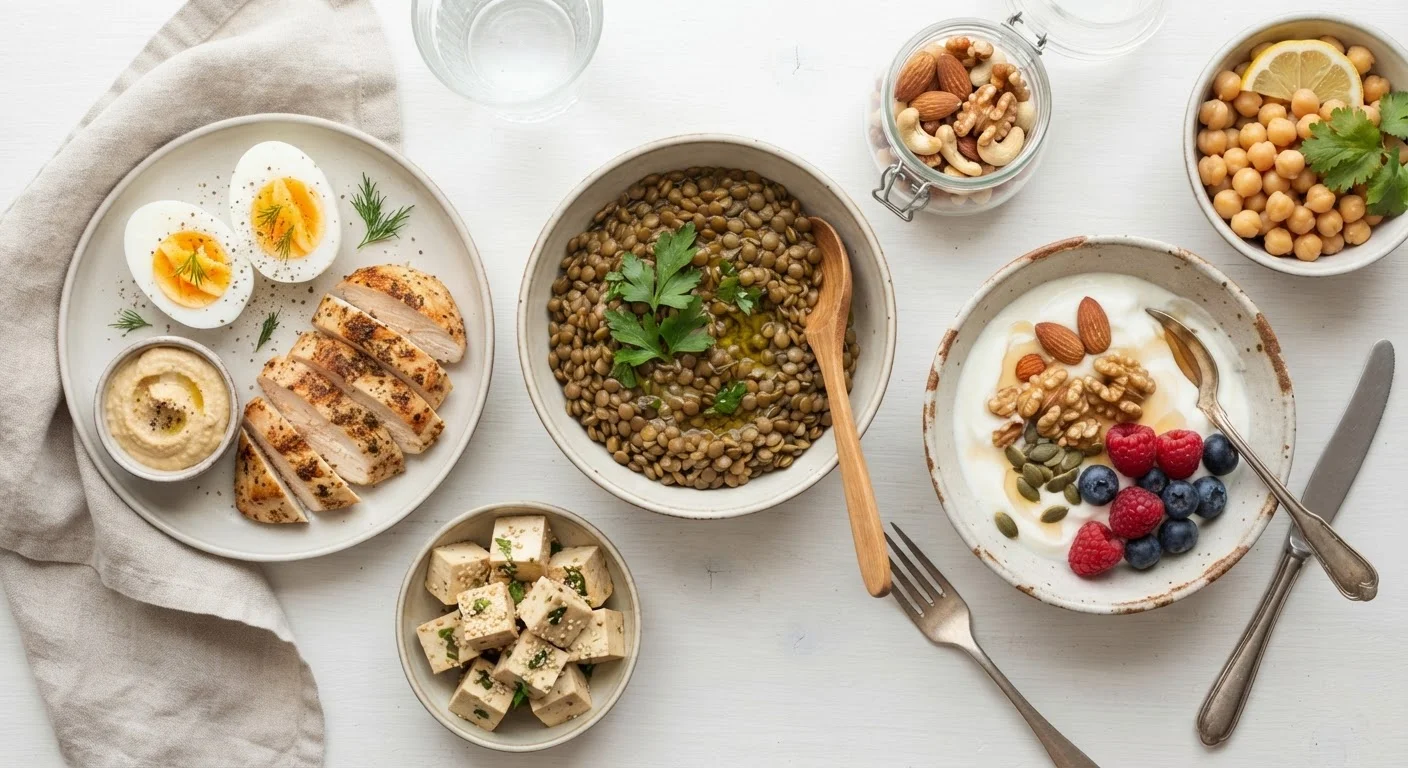
Protein quality is often assessed by how well a food supplies all essential amino acids. Animal-based foods - including meat, poultry, fish, eggs, and dairy - are generally complete proteins, meaning they contain all nine essential amino acids in sufficient quantities.
Most plant proteins are considered incomplete individually, though this doesn't mean plant-based diets are inadequate. Legumes, whole grains, nuts, and seeds together cover the full amino acid spectrum. Soybeans and quinoa are notable exceptions - both are complete plant proteins.
| Food | Approx. Protein (per 100g) | Complete? |
|---|---|---|
| Chicken breast (cooked) | 31g | Yes |
| Canned tuna | 25g | Yes |
| Greek yogurt | 10g | Yes |
| Lentils (cooked) | 9g | No |
| Tofu (firm) | 8g | Yes |
| Black beans (cooked) | 8g | No |
| Quinoa (cooked) | 4g | Yes |
For readers curious how protein considerations differ across species, our article on feeding cats a healthy diet offers an interesting contrast.
Don't fixate solely on total daily protein - aim to include at least 20-30 grams at each main meal to support steady amino acid availability throughout the day.
Research on muscle protein synthesis suggests that meal-level distribution, not just daily totals, influences how efficiently the body uses dietary protein for tissue repair and maintenance.
If you're relying primarily on plant proteins, pair legumes with whole grains in the same day - you don't need to combine them in a single meal - to cover your full essential amino acid profile.
Modern dietary guidelines have moved away from the outdated requirement to combine complementary proteins at every sitting; eating varied plant foods across the day is sufficient for most healthy adults.
Common Protein Myths Worth Debunking
Protein is one of the most misunderstood nutrients in popular health culture. Several persistent myths can lead people toward unnecessary spending or misguided dietary decisions.
Myth: More protein always means more muscle
Protein is necessary for muscle synthesis, but consuming protein beyond what the body can use for repair and growth doesn't automatically build muscle. Resistance exercise is the primary driver of muscle growth; protein supports the process but cannot substitute for training stimulus.
Myth: High protein diets damage kidneys in healthy people
In people with healthy, functioning kidneys, current evidence does not support the claim that moderately high protein intakes cause kidney damage. However, people with pre-existing kidney disease are often advised to moderate protein intake - a distinction that matters enormously. Speak with a healthcare provider if you have any kidney concerns.
Myth: Plant-based eaters always lack protein
With thoughtful planning, plant-based diets can meet protein needs at virtually any life stage. This is a point echoed across established dietary guidelines, including those from the Academy of Nutrition and Dietetics.
Our piece on common nutrition myths Americans still believe covers related misconceptions in greater depth.
Practical Ways to Meet Your Protein Needs
Most Americans already consume adequate protein - the challenge is often distribution across the day and food quality, not total quantity. Research suggests that spreading protein intake across meals, rather than concentrating it at dinner, may support better muscle protein synthesis throughout the day.
Practical strategies for consistent protein intake include:
- Include a protein source at every meal - eggs at breakfast, legumes at lunch, fish or poultry at dinner.
- Use snacks strategically: Greek yogurt, cottage cheese, edamame, or a small handful of nuts can add 8-15g without a full meal.
- Rotate between animal and plant sources to vary nutrient profiles and support a more sustainable diet overall.
- Read labels on packaged foods - protein content varies widely in items like bread, pasta, and dairy alternatives.
Nutrition science continues to evolve, and individual responses to dietary patterns differ. For a clear-eyed look at why research findings sometimes conflict, see our explainer on why nutrition studies seem to contradict each other.
Understanding protein is one piece of a broader nutritional picture that also includes vitamins and minerals your body can't produce on its own.
This article is for general informational and educational purposes only and is not a substitute for professional medical or dietary advice. Consult a qualified healthcare provider or registered dietitian for guidance tailored to your individual health needs.