

Key Takeaways
- Nutrition is about the full range of nutrients your body needs - not just calories.
- Macronutrients (carbohydrates, proteins, fats) and micronutrients (vitamins, minerals) each play distinct roles.
- No single food is perfect; variety and balance across food groups matter most.
- Small, consistent habit changes tend to be more sustainable than dramatic dietary overhauls.
- Sound nutrition supports not just physical health but energy, mood, and long-term wellbeing.
Start here
What Nutrition Actually Means
Next
The Major Nutrients and What They Do
Build on it
Food Groups and Dietary Patterns
Put it into practice
Practical Habits to Build From Day One
Stay on track
Common Beginner Misconceptions
What Nutrition Actually Means
Nutrition is the study of how the substances in food affect the body's growth, repair, energy production, and overall function. It is broader than the popular conversation around dieting or weight - it encompasses everything from how your cells generate energy to how your immune system defends against illness.
At its core, nutrition science examines two categories of nutrients: macronutrients, which the body needs in relatively large amounts, and micronutrients, which are required in smaller but equally essential quantities. Understanding this distinction is the first step toward making sense of the enormous volume of nutrition information circulating online.
This article is for general educational purposes only and is not a substitute for personalized advice from a qualified healthcare or registered dietetics professional.
Macronutrients
The three nutrients the body needs in the largest amounts: carbohydrates, proteins, and fats. Each provides energy and performs specific structural or functional roles.
Micronutrients
Vitamins and minerals required in smaller amounts. Despite being needed in tiny quantities, they are essential for processes like immune defense, bone formation, and energy metabolism.
Dietary Fiber
A type of carbohydrate found in plant foods that the body cannot fully digest. Fiber supports digestive health and is associated with a range of long-term health benefits.
Dietary Pattern
The overall combination and frequency of foods a person eats regularly - as opposed to any single food or meal. Research suggests overall patterns matter more for health than individual food choices.
Ultra-processed Foods
Foods that have undergone extensive industrial processing and typically contain additives, preservatives, and high levels of added sugar, sodium, or unhealthy fats, with limited nutritional benefit.
Phytonutrients
Naturally occurring compounds found in plants that are not strictly essential but are associated with health benefits, including antioxidant and anti-inflammatory effects.
The Major Nutrients and What They Do
The three macronutrients are carbohydrates, proteins, and fats. Carbohydrates are the body's preferred energy currency, fueling everything from brain function to physical movement. Proteins supply amino acids - the building blocks used to construct and repair tissues, produce enzymes, and support immune function. Fats are essential for absorbing fat-soluble vitamins (A, D, E, and K), supporting cell membrane integrity, and providing concentrated energy.
Micronutrients include vitamins and minerals. Iron carries oxygen in the blood; calcium supports bone density; vitamin C aids tissue repair and immune defense. Each plays a specific physiological role, and prolonged deficiency in any of them can produce measurable health effects.
Fiber - a type of carbohydrate that the body does not fully digest - deserves particular mention. Dietary fiber supports digestive health, helps regulate blood sugar responses, and is associated with lower risk of several chronic conditions according to a substantial body of research. Most Americans consume less than the recommended amount.
Water is sometimes called the forgotten nutrient. It is involved in nearly every bodily process, from temperature regulation to nutrient transport, and adequate hydration is foundational to how all other nutrients function.
Food Groups and Dietary Patterns
The U.S. Department of Agriculture's Dietary Guidelines for Americans organizes food into groups - vegetables, fruits, grains, protein foods, and dairy or fortified alternatives - to help people build balanced eating patterns. No single food group provides everything the body needs, which is why variety across groups is consistently emphasized in nutrition guidance.
Whole, minimally processed foods within each group generally retain more of their nutritional value than heavily processed versions. For example, a whole grain contains fiber, B vitamins, and minerals that are often stripped away during refining - and sometimes partially added back through fortification.
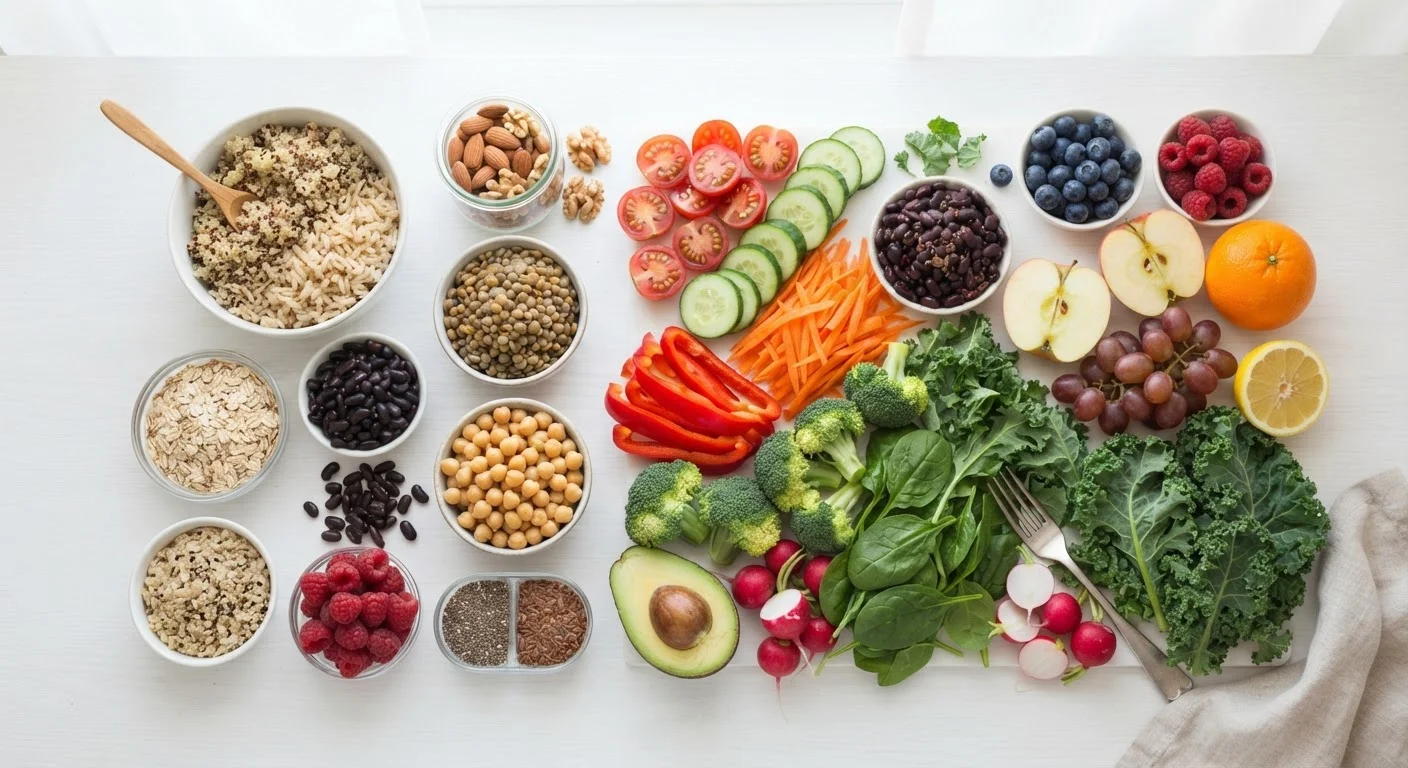
Rather than focusing on individual foods as either "good" or "bad," nutrition researchers increasingly emphasize overall dietary patterns. Patterns characterized by an abundance of vegetables, fruits, legumes, whole grains, and moderate amounts of lean protein sources have consistently been associated with positive long-term health outcomes in large observational studies. When you're ready to translate these principles into a shopping routine, our guide to building a grocery list that reflects sound nutrition principles offers a practical starting point.
Start With Addition, Not Subtraction
Many people find it easier to improve their diet by adding nutritious foods rather than immediately eliminating favorites. Adding a serving of vegetables to an existing meal, for example, naturally shifts the overall nutritional balance without creating a sense of deprivation. Over time, these additions often crowd out less nutritious options on their own.
Practical Habits to Build From Day One
Sustainable nutrition improvements rarely come from wholesale dietary overhauls. Research on behavior change suggests that smaller, stackable habits are more likely to persist over time. A few evidence-informed starting points:
- Prioritize vegetables at most meals. Aim for a variety of colors, which generally indicates a range of different phytonutrients and antioxidants.
- Include a protein source at each meal. Protein increases satiety and supports muscle maintenance, which becomes especially important as people age.
- Read nutrition labels with purpose. Our article on reading a nutrition label without getting lost breaks down every line of the standard U.S. Nutrition Facts panel.
- Limit ultra-processed foods. These products often contain high levels of added sugars, sodium, and saturated fats while offering limited fiber and micronutrients.
- Stay hydrated throughout the day. Thirst can sometimes be mistaken for hunger, and mild dehydration can affect concentration and energy levels.
Nutrition also intersects meaningfully with physical activity. Combining sound eating habits with regular movement - including strength training for beginners - supports muscle health and metabolic function more effectively than either approach alone.
MyPlate (USDA)
The U.S. Department of Agriculture's MyPlate resource provides practical, evidence-based guidance on food groups, portion balance, and building healthy eating patterns for different life stages.
Dietary Guidelines for Americans
The official federal nutrition guidance document, updated every five years, summarizing the current scientific evidence on diet and health for the general U.S. population.
Academy of Nutrition and Dietetics - Find a Nutrition Expert
The professional organization for registered dietitian nutritionists (RDNs) maintains a directory to help readers connect with credentialed nutrition professionals for personalized guidance.
Common Beginner Misconceptions
Nutrition is one of the most myth-dense areas of health information. A few clarifications worth internalizing early:
- "Fat makes you fat."
- Dietary fat is calorically dense, but it is also essential. Healthy fat sources - such as nuts, seeds, avocados, and oily fish - are associated with positive cardiovascular and brain health outcomes. Avoiding fat entirely is neither necessary nor evidence-based.
- "You need to detox."
- The body has its own highly effective detoxification systems - primarily the liver and kidneys. There is no credible scientific evidence that commercial cleanses or detox protocols meaningfully enhance these processes. Our article on common nutrition myths examines several of these popular claims in depth.
- "Supplements can replace food."
- Supplements can address specific, identified deficiencies, but they do not replicate the full complexity of whole foods, which contain thousands of bioactive compounds that interact in ways not yet fully understood.
The most reliable nutrition information comes from registered dietitians, peer-reviewed research, and established public health bodies. When in doubt, a consultation with a registered dietitian nutritionist (RDN) is the most direct path to guidance suited to your individual situation.