

Key Takeaways
- Cats are obligate carnivores and require animal-sourced protein to survive and thrive.
- Taurine, arachidonic acid, and vitamin A are nutrients cats cannot synthesize adequately on their own.
- Wet food provides meaningful hydration; dry food is calorie-dense - both have trade-offs worth understanding.
- Ingredient labels follow AAFCO rules: order by pre-cooking weight, not nutritional contribution.
- Life stage matters: kitten, adult, and senior cats have meaningfully different nutrient requirements.
- Always involve your veterinarian in major dietary decisions, especially for cats with health conditions.
Why Cats Have Unique Nutritional Needs
Cats are obligate carnivores - a biological classification meaning their bodies are specifically adapted to derive all essential nutrients from animal tissue. Unlike dogs or humans, cats lack certain metabolic pathways that would allow them to convert plant-based precursors into the nutrients they need. This isn't a preference; it's a physiological reality with direct consequences for how you should feed them.
Three nutrients illustrate this dependence clearly. Taurine, an amino acid abundant in muscle meat and heart tissue, is essential for feline cardiac function and vision. Cats cannot synthesize adequate taurine from other amino acids the way most mammals can. Arachidonic acid, a fatty acid cats cannot produce from linoleic acid as other species do, must come from animal fat. And unlike many mammals, cats cannot convert beta-carotene from plants into usable vitamin A - they need preformed vitamin A from animal liver or fish oils.
Understanding these biological constraints helps explain why a nutritionally balanced commercial cat food is structured very differently from dog food or human food - and why substitutions can be genuinely harmful rather than simply suboptimal.
Never Feed Cats a Vegan or Homemade Diet Without Expert Oversight
Because cats cannot synthesize taurine, arachidonic acid, or vitamin A from plant sources, an unsupplemented plant-based diet poses serious, potentially fatal health risks including dilated cardiomyopathy and blindness. Homemade diets - even meat-based ones - are frequently nutritionally incomplete without rigorous formulation by a board-certified veterinary nutritionist. If you are considering either approach, consult a veterinary professional before making any change.
Protein: The Non-Negotiable Macronutrient
Protein is not just important for cats - it is metabolically central in a way that differs from most other species. Cats use protein continuously as an energy source, even when dietary intake is low. This means their protein requirement is relatively high compared to omnivores, and cannot be significantly reduced without consequence over time.
The quality of protein matters as much as quantity. Biological value - a measure of how efficiently an animal can use the amino acids in a protein source - is higher for animal proteins like chicken, turkey, salmon, and beef than for most plant proteins. A food listing chicken or fish as the first ingredient will generally provide more usable protein than one leading with corn gluten meal or soy protein.
When evaluating protein content on a dry food label, convert the guaranteed analysis to a dry-matter basis by dividing crude protein by (100 minus the moisture percentage) - this gives you a fair comparison against wet food labels.
As-fed percentages are distorted by moisture content, making wet and dry foods appear incomparable; dry-matter conversion reveals the actual nutrient density and helps owners make informed choices.
If your cat is a reluctant water drinker, consider placing water bowls away from the food dish - cats instinctively prefer water sources separated from their prey, a holdover from wild behavior.
Hydration is closely linked to urinary and kidney health in cats; small environmental adjustments to encourage drinking can have a meaningful long-term impact, especially for cats eating primarily dry food.
Cats also require a complete amino acid profile. Beyond taurine, they need arginine, methionine, and lysine in adequate amounts. Deficiency in arginine, for example, can lead to dangerous ammonia buildup in the blood within hours of a protein-free meal - a unique feline vulnerability. Commercial foods formulated to AAFCO (Association of American Feed Control Officials) standards are designed to meet these needs, but it is worth understanding why the requirement exists.
Wet Food vs. Dry Food: What the Science Says
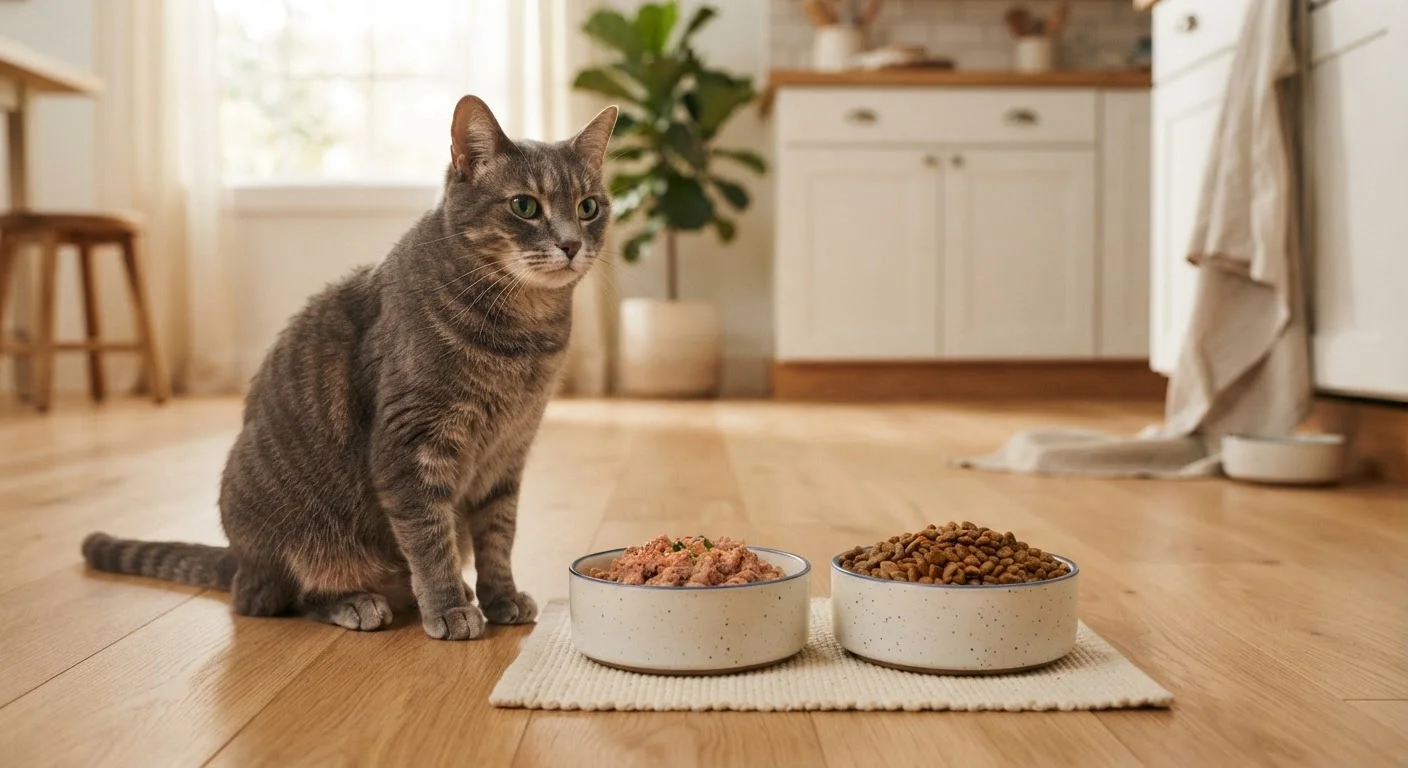
The wet-versus-dry debate is one of the most common questions cat owners raise, and the honest answer is that both formats have legitimate trade-offs. For a deeper side-by-side analysis, see our guide on wet food vs. dry food for cats.
Wet food contains roughly 70-80% moisture, which supports urinary tract health in cats - an important consideration given that cats evolved in arid environments and have a relatively low thirst drive. Cats fed primarily dry food may consume significantly less total water than their physiology benefits from, which can contribute to concentrated urine and, in predisposed cats, urinary crystal formation or chronic kidney stress over time.
Dry food (kibble) is calorie-dense, shelf-stable, and convenient. It typically contains more carbohydrates than wet food - not inherently harmful, but something to be aware of since cats have limited enzymatic capacity to digest starch efficiently. Dry food does not meaningfully clean teeth contrary to a common belief; dental health in cats requires active intervention such as brushing or veterinary dental cleanings.
Try a Gradual Food Format Transition
If you want to introduce more wet food into a dry-food-only routine, start by replacing just 10-15% of the daily dry portion with wet food for the first few days. Most cats accept new textures and flavors more readily when changes are incremental rather than abrupt, reducing the likelihood of food refusal or gastrointestinal upset.
A mixed feeding approach - combining wet and dry - is commonly recommended by veterinarians as a practical middle ground, though the right balance depends on an individual cat's health, age, and preferences.
Reading Cat Food Labels with Confidence
Cat food labels in the United States follow rules established by the Association of American Feed Control Officials (AAFCO). Understanding a few key conventions helps you evaluate what you are actually buying.
- Ingredient order reflects pre-cooking weight, not final nutritional contribution. Chicken listed first may be 70% water; once cooked, its relative proportion shifts. This is why multiple protein-adjacent ingredients listed in sequence (e.g., chicken, chicken meal, turkey) can signal a genuinely protein-rich formula.
- "Chicken meal" is not inferior to whole chicken - it is a concentrated, dehydrated protein source with a higher protein percentage by weight than fresh chicken.
- The nutritional adequacy statement is the most important line on the label. Look for language confirming the food meets AAFCO nutrient profiles for the appropriate life stage, or that it has passed feeding trials.
- Guaranteed analysis shows minimum crude protein and fat, and maximum fiber and moisture - useful for comparison but expressed on an as-fed basis, which makes wet and dry foods hard to compare directly without converting to a dry-matter basis.
Ingredients like carrageenan, artificial colorants, and certain preservatives are subjects of ongoing discussion among pet nutritionists, though current regulatory guidance does not prohibit their use. If you have concerns, a board-certified veterinary nutritionist can help interpret labels in the context of your specific cat's health.
Life Stage Nutrition: Kittens, Adults, and Seniors
Cats have meaningfully different nutritional needs across their lifespan, and feeding the wrong life-stage formula for extended periods can have real consequences.
Kittens (typically under 12 months) are growing rapidly and require higher levels of protein, fat, calcium, and phosphorus than adults. Kitten formulas are calorie-dense to support this growth. Foods labeled for "all life stages" must meet kitten requirements and are therefore also suitable for adults, though calorie management becomes important to avoid overfeeding.
Adult cats benefit from maintenance-level nutrition calibrated to their activity level and body condition. Obesity is one of the most common preventable health problems in domestic cats, and overfeeding - even with nutritionally sound food - contributes significantly. Portion control and regular weight monitoring matter as much as ingredient quality.
Senior cats (generally considered age 10 and older) often experience changes in kidney function, digestive efficiency, and muscle mass. Some senior cats benefit from adjusted phosphorus levels to reduce kidney workload, while others may need increased protein to counter muscle wasting. Our companion article on senior cat care covers these shifts in detail. Veterinary guidance at this stage is especially important, as one-size-fits-all senior formulas may not match your cat's individual needs.
~60%
Adult cats affected by obesity or overweight
The Association for Pet Obesity Prevention has estimated that a majority of domestic cats in the U.S. are overweight or obese, making portion management a critical nutritional concern.
70-80%
Moisture content in typical wet cat food
Compared to approximately 10% moisture in dry kibble, wet food contributes substantially more water to a cat's daily intake, supporting kidney and urinary health.
~30-40%
Protein (dry matter) recommended for adult cats
Veterinary nutritionists generally suggest adult maintenance diets contain at least 26% crude protein on a dry-matter basis, though many cats thrive on higher amounts, reflecting their carnivorous biology.
When to Adjust Your Cat's Diet
Routine nutrition works well for healthy cats - but several situations warrant a closer look at what and how you are feeding.
Weight changes in either direction are meaningful signals. Unexplained weight loss, even in an apparently healthy cat, can indicate hyperthyroidism, diabetes, dental pain, or other conditions that affect appetite and nutrient absorption. Unexplained weight gain may reflect overfeeding, reduced activity, or endocrine changes. In both cases, a dietary adjustment without a veterinary diagnosis may mask an underlying issue rather than resolve it.
Health diagnoses such as chronic kidney disease, diabetes mellitus, food allergies, or inflammatory bowel disease often require prescription or therapeutic diets formulated to specific nutrient targets. These are distinct from standard commercial foods and should be introduced under veterinary supervision.
Transition protocols matter. Abrupt food changes can cause gastrointestinal upset in cats. A gradual transition over 7-10 days - mixing increasing proportions of the new food with the old - helps most cats adjust without digestive disruption.
If you are still establishing your foundation as a cat owner, the complete guide to bringing your first cat home covers early feeding routines alongside other essential care basics. For ongoing health monitoring, our annual vet visit checklist can help you track weight and raise nutrition questions with your veterinarian each year.
This article is for general informational purposes only and is not a substitute for professional veterinary advice. Always consult a licensed veterinarian for guidance specific to your cat's health and dietary needs.