

Key Takeaways
- Title and ownership history reveal how many hands a vehicle has passed through and any gaps worth questioning.
- Accident and damage records vary in completeness - a clean report doesn't guarantee a damage-free past.
- Odometer discrepancies flagged in a history report are a serious red flag that warrants walking away.
- Service records and recall information add meaningful context about how well a vehicle was maintained.
- A history report is a starting point, not a substitute for a pre-purchase mechanical inspection.
What you will need
Why Vehicle History Reports Exist - and What They Can't Do
Vehicle history reports compile public records and data from participating sources - insurers, state DMVs, auction houses, rental fleets, and repair facilities - into a single document tied to a vehicle's VIN. The goal is to surface information that a seller may not volunteer and that a visual inspection cannot reveal.
That said, history reports have a fundamental limitation: they only reflect events that were actually reported to the contributing data sources. A fender-bender paid out of pocket, a flood-damaged vehicle that was never declared a total loss, or routine maintenance performed at an independent shop that doesn't report to any database may leave no trace. Understanding this boundary upfront is the most important thing a buyer can do before pulling a report. Think of it as a necessary filter, not a guarantee. For a broader view of where this fits in the purchase process, see the full car-buying journey from research to keys in hand.
Pull the Report Before the Test Drive
Ordering a vehicle history report before you invest time in a test drive is a practical way to filter out vehicles with serious title issues or odometer fraud early. Most reports are available directly through the issuing services using the VIN. The cost is modest relative to the financial risk of a bad purchase.
How to Read Each Section Without Getting Lost
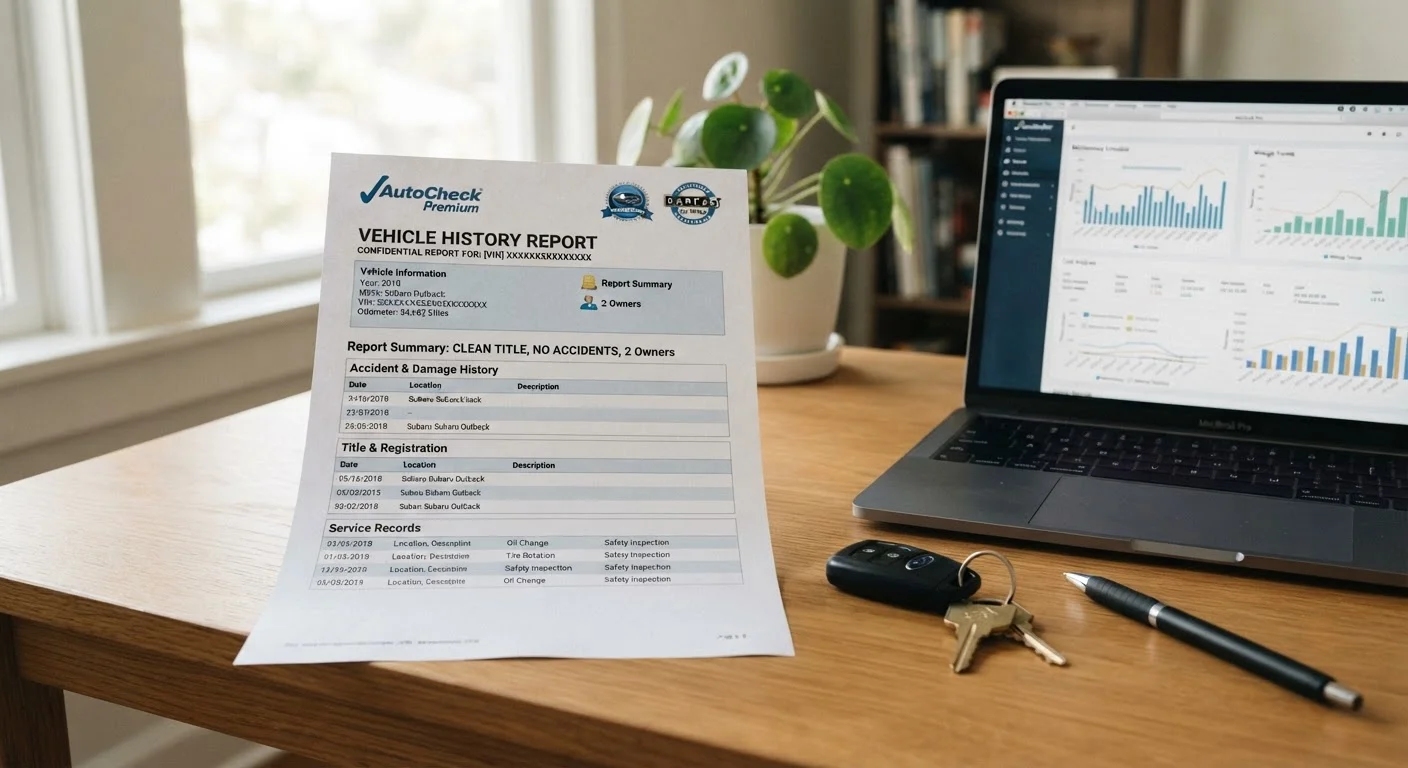
Most vehicle history reports follow a similar structure. Here's what to focus on in each major section.
Verify the VIN Matches the Vehicle
Before reading a single line of the report, confirm that the VIN on the report matches the VIN physically on the vehicle - typically on a plate visible through the windshield at the base of the dashboard and on the door jamb sticker. A mismatch is an immediate disqualifier.
Review Title and Ownership History
This section shows how many owners the vehicle has had, what state(s) it was titled in, and whether the title carries any brands. Key title brands to watch for include salvage (declared a total loss by an insurer), flood, lemon law buyback, and rebuilt/reconstructed. Each carries significant implications for safety, repairability, and resale value.
Multiple owners in a short period can be benign - fleet vehicles, for example - or a signal that previous buyers found problems. Context matters.
Examine Accident and Damage Records
Look for reported accidents, the severity classification (minor, moderate, severe), which area of the vehicle was affected, and whether airbags deployed. Structural or frame damage is the most consequential finding - repairs to a vehicle's frame can compromise crash safety even when cosmetically invisible.
Note that not all accidents appear. Insurance claims through smaller carriers, cash repairs, and incidents in jurisdictions that don't report to the database may be absent entirely.
Check Odometer Readings Over Time
Reports typically log odometer readings at each ownership transfer and at inspection or service events. Compare these readings chronologically. A reading that is lower than a prior recorded reading - called an odometer rollback - is a federal offense and an absolute red flag. Even a large unexplained gap between readings (e.g., no readings for three years) is worth scrutinizing.
Review Service and Use History
Some reports include service records from dealers or participating repair shops, and many note whether a vehicle was used as a rental, fleet, or lease vehicle. Consistent, documented service intervals are a positive signal. A complete absence of service records doesn't mean the car wasn't maintained - it may just mean the owner used shops that don't report - but it does remove an important layer of reassurance.
Also check for any noted use as a taxi, ride-share, or police vehicle, as these typically involve higher-intensity use than private ownership.
Note Open Recalls and Lien Information
Some reports flag open safety recalls by name and component. An outstanding recall means the manufacturer has identified a defect and issued a repair at no cost to the owner - but only if it's been performed. Unaddressed recalls on a vehicle you're about to purchase become your problem. Separately, a report may show whether the vehicle carries an active lien (money owed to a lender). Purchasing a vehicle with an unresolved lien can create legal complications around clear title.
Once you've worked through each section, compare any findings against what the seller has told you. Discrepancies - not just negative findings - are worth probing. If the report shows a lapse in registration or a period of unknown ownership, ask about it directly. Also consider pairing the report with a pre-purchase inspection from a qualified independent mechanic, which can surface mechanical issues no database will capture.
A Clean Report Is Not a Clean Bill of Health
Sellers sometimes market a vehicle with a clean history report as problem-free. This framing is misleading. A clean report means no negative events were reported to the contributing databases - it says nothing about unreported incidents, deferred maintenance, or emerging mechanical issues. Always pair a history report review with a physical used-car inspection by an independent mechanic.
Putting the Report in Context Before You Decide
A vehicle history report is one input among several. Before the test drive, it's worth doing broader research on the model's reliability patterns and ownership costs - something covered in detail in what to research about any vehicle before a test drive. After purchase, staying ahead of routine car maintenance is what keeps a vehicle's actual history positive going forward.
One final note: the report may show open safety recalls. Federal law requires dealers to repair open recalls on used vehicles before sale in some cases, but private sellers are under no such obligation. Check the NHTSA database independently using the VIN to confirm recall status, and factor unresolved recalls into your negotiation or decision. A car with a single minor accident on record and a full service history may be a far sounder purchase than a clean-report vehicle with no documented maintenance at all.
This article is for general informational purposes only. It does not constitute legal, financial, or professional automotive advice. Always verify information with qualified professionals before making a purchase decision.