

Key Takeaways
- Furnished rentals typically cost 15-30% more per month than comparable unfurnished units.
- Furnished units suit short-term stays and relocating renters with minimal belongings.
- Unfurnished leases offer more control over your living space and lower monthly rent.
- Security deposits on furnished rentals are often higher to cover the value of included items.
- Lease length and lifestyle mobility should heavily influence which option makes sense.
Move-in ready with no furniture purchasing required
Furnished units allow renters to arrive with suitcases and start living immediately, eliminating the need to coordinate deliveries, assemble furniture, or make large upfront purchases.
Lower one-time setup costs for short stays
When the rental period is brief, avoiding furniture purchases and moving costs can offset the higher monthly rent, making the total cost competitive with unfurnished options.
Well-suited to corporate or temporary relocations
Professionals on temporary assignments or employer-sponsored relocations often prefer furnished units because they align with reimbursement structures and minimize logistical burden.
More commonly available on flexible lease terms
Furnished rentals are more frequently offered on short-term or month-to-month bases, giving renters the mobility to move without being locked into a long lease.
Higher monthly rent than comparable unfurnished units
Furnished units typically command a 15-30% premium over equivalent unfurnished rentals in the same market, a gap that grows significantly over a twelve-month lease.
Larger security deposits to cover furniture liability
Landlords typically require higher deposits on furnished units to protect against potential damage to included items, tying up more cash and creating move-out dispute risk.
Less control over aesthetic and personal comfort
Renters must live with furniture they did not select - potentially mismatched styles, unsupportive mattresses, or items in worse condition than described in the listing.
Risk of deposit disputes over furniture wear
Determining what counts as normal wear versus damage on landlord-owned furniture is a common source of disagreement at lease end, and renters bear the burden of proof.
Our Verdict
Furnished rentals trade higher monthly costs for genuine convenience - a worthwhile deal for people relocating, working on temporary assignments, or unwilling to commit to a location. Unfurnished rentals reward those who plan to stay longer, want to personalize their space, and prefer lower ongoing costs over the hassle of moving their own belongings.
Furnished units are best for mobile renters on shorter timelines; unfurnished units are better suited to long-term renters who already own furniture or want to build a home on their own terms.
What the Labels Actually Mean
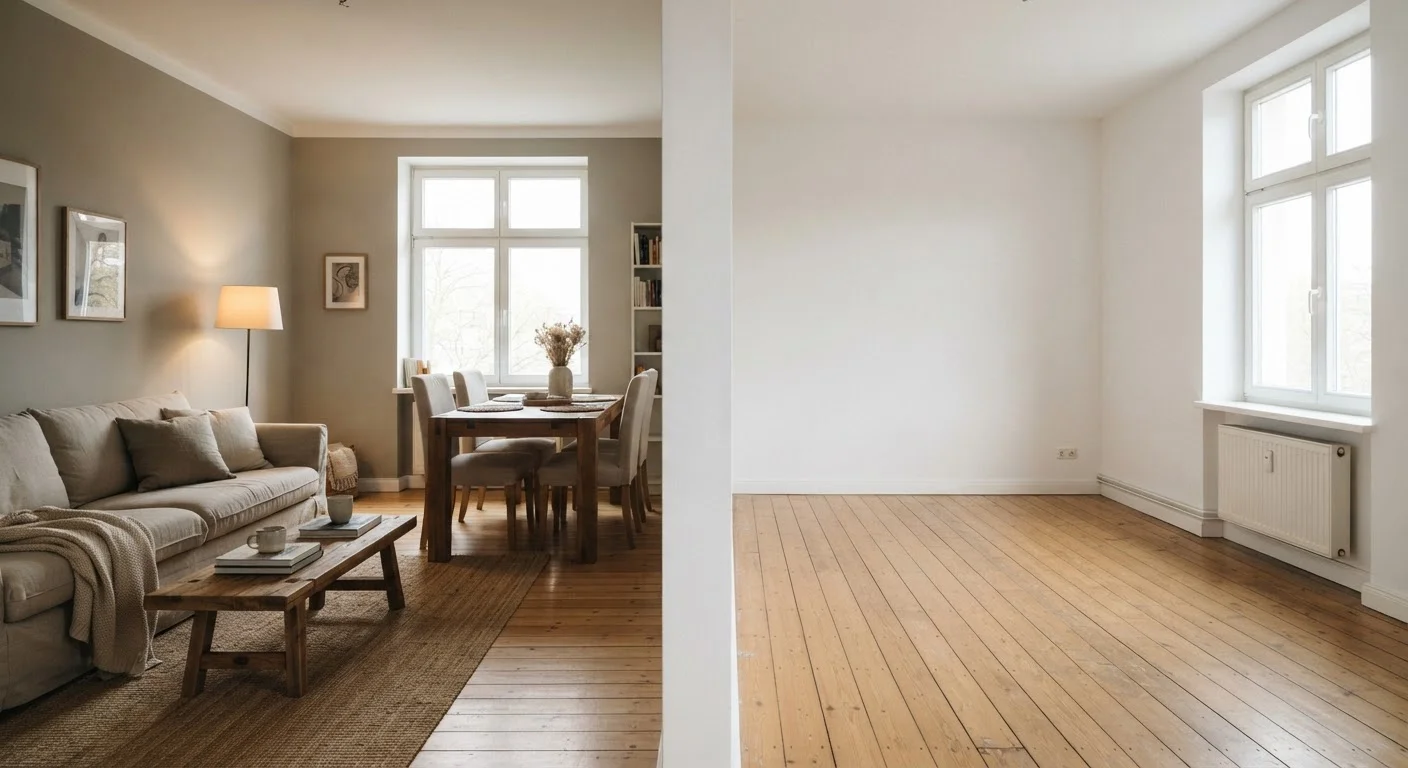
When a listing says "furnished," it typically means the unit includes core furniture pieces - a bed frame and mattress, a sofa, a dining table with chairs, and often basic kitchen equipment such as cookware and utensils. "Fully furnished" may also include linens, a television, and small appliances, though definitions vary by landlord and market. There is no universal standard, so it is worth asking for an itemized inventory before signing anything.
"Unfurnished" simply means the space is empty of furniture. It may still include major appliances like a refrigerator, stove, and washer/dryer, depending on the building - these are generally not considered furniture. If appliance coverage matters to you, understanding what rental listings actually include can prevent costly surprises after move-in.
The Case for Furnished Rentals
Move-in ready with no furniture purchasing required
Furnished units allow renters to arrive with suitcases and start living immediately, eliminating the need to coordinate deliveries, assemble furniture, or make large upfront purchases.
Lower one-time setup costs for short stays
When the rental period is brief, avoiding furniture purchases and moving costs can offset the higher monthly rent, making the total cost competitive with unfurnished options.
Well-suited to corporate or temporary relocations
Professionals on temporary assignments or employer-sponsored relocations often prefer furnished units because they align with reimbursement structures and minimize logistical burden.
More commonly available on flexible lease terms
Furnished rentals are more frequently offered on short-term or month-to-month bases, giving renters the mobility to move without being locked into a long lease.
The clearest advantage of a furnished rental is the reduction in logistical friction. Renters who are relocating for work, completing a short-term assignment, or moving to a new city without an established home base avoid the cost and complexity of buying, moving, or storing furniture. In high-turnover markets - major metros, university towns, or areas with large corporate housing demand - furnished inventory tends to be plentiful.
There is also a financial argument in specific circumstances. If you are in a city for six months and would otherwise need to rent a moving truck, purchase a bed and sofa, and then sell or store them on departure, the premium on a furnished unit may actually come out ahead of those one-time costs.
The Case for Unfurnished Rentals
Higher monthly rent than comparable unfurnished units
Furnished units typically command a 15-30% premium over equivalent unfurnished rentals in the same market, a gap that grows significantly over a twelve-month lease.
Larger security deposits to cover furniture liability
Landlords typically require higher deposits on furnished units to protect against potential damage to included items, tying up more cash and creating move-out dispute risk.
Less control over aesthetic and personal comfort
Renters must live with furniture they did not select - potentially mismatched styles, unsupportive mattresses, or items in worse condition than described in the listing.
Risk of deposit disputes over furniture wear
Determining what counts as normal wear versus damage on landlord-owned furniture is a common source of disagreement at lease end, and renters bear the burden of proof.
For renters with a longer time horizon - typically twelve months or more - unfurnished units are almost always the more economical choice. The monthly savings of 15-30% over a furnished equivalent compound meaningfully over a year or two. That gap can represent thousands of dollars that stays in your pocket rather than subsidizing a landlord's furniture investment.
Unfurnished spaces also give renters full control over their environment. Your furniture reflects your taste, fits your specific needs, and travels with you when you leave. There is no risk of being held liable for a landlord's aging sofa or a worn mattress you didn't choose. For renters weighing longer-term housing decisions, the broader trade-offs between renting and buying are worth examining alongside the furnished vs. unfurnished question.
Costs Beyond the Monthly Rent
Rent is not the only financial variable. Furnished units routinely carry higher security deposits - often equivalent to two or three months' rent - because landlords need to cover potential damage to the included items. When you move out, disputes over furniture wear and tear can complicate the return of that deposit.
15-30%
Typical furnished rental premium over unfurnished
Real estate industry estimates consistently place furnished units at a 15-30% monthly cost premium compared to unfurnished equivalents in the same market.
2-3x
Security deposit multiple on many furnished units
Landlords offering furnished rentals frequently require deposits equivalent to two to three months' rent to cover potential furniture damage, versus one month on unfurnished units.
Unfurnished renters face upfront costs of their own: buying or transporting furniture, purchasing window treatments, and equipping a kitchen from scratch. These costs are real and should be modeled before assuming an unfurnished unit is automatically cheaper. Lease flexibility is a related consideration - furnished units are more commonly offered on shorter or month-to-month terms, while unfurnished leases tend to lock you into twelve-month commitments. If lease length flexibility matters to you, reviewing the differences between month-to-month and fixed-term leases can help clarify the full picture.
Which Renters Should Lean Which Way
A few questions can help clarify the right direction. How long do you plan to stay? If the answer is under six months, furnished typically wins on convenience. If it is over a year, unfurnished almost always wins on cost. Do you already own furniture? If so, an unfurnished unit costs you nothing extra in setup. Are you in a life transition - a new city, a new job, a post-breakup reset - where flexibility matters more than optimization? Furnished units give you room to breathe before committing.
Always Request a Written Furniture Inventory
Before signing a furnished lease, ask the landlord for a detailed, written inventory of every included item - along with its current condition. Photograph everything on move-in day and keep copies. This documentation is your primary protection if deposit disputes arise at move-out. Without it, proving that damage was pre-existing becomes significantly harder.
Location matters too. In dense urban markets, furnished units may carry a smaller relative premium than in suburban or rural areas where furnished inventory is thin. In those markets, you may pay a steep premium for convenience that a more competitive city market would not charge.