

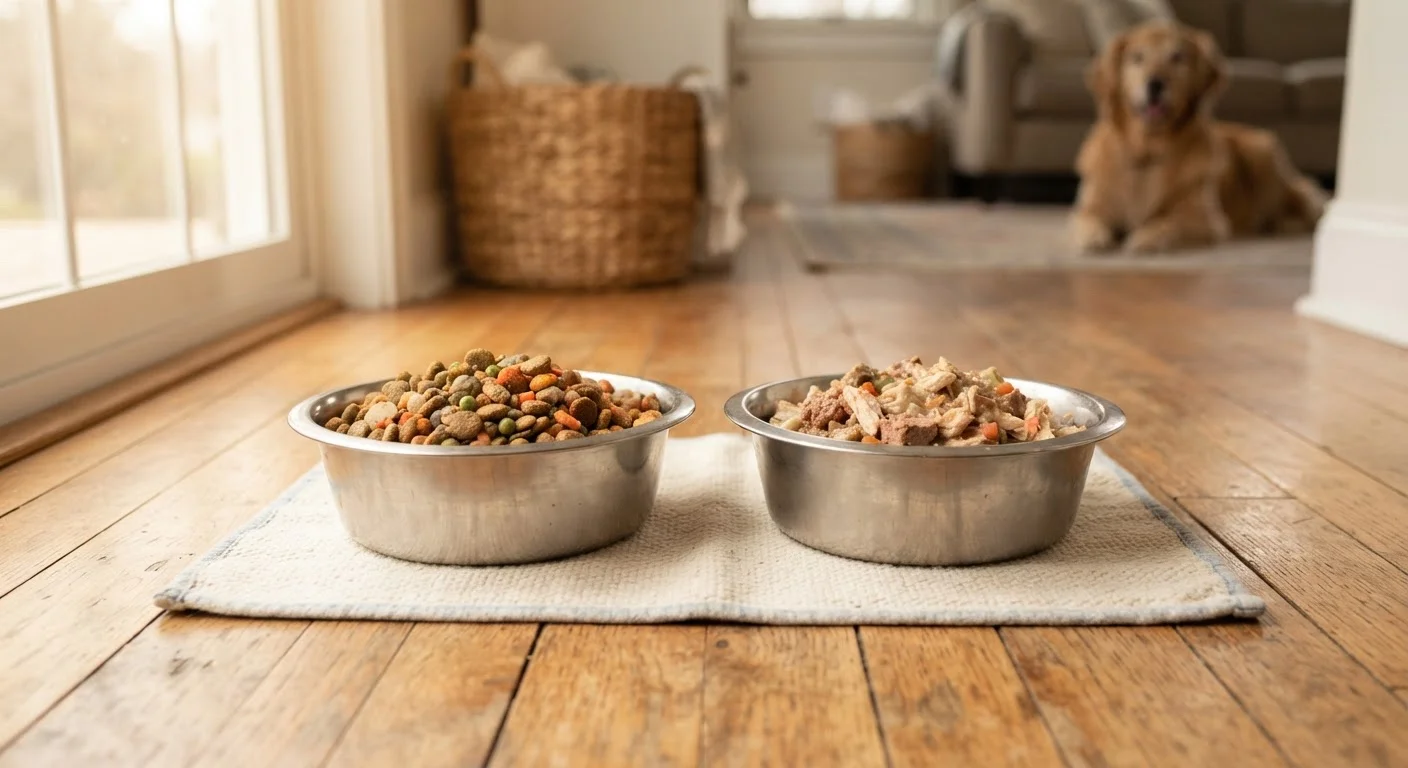
Key Takeaways
- Kibble is calorie-dense, shelf-stable, and generally more affordable per serving than canned food.
- Wet food provides significantly more moisture, which supports urinary and kidney health in dogs.
- Neither format is universally superior - the right choice depends on your dog's age, health, and preferences.
- Many veterinarians support mixing both formats to balance palatability, hydration, and convenience.
- Always confirm major dietary changes with your veterinarian, especially for dogs with chronic conditions.
Option A
Dry Dog Food (Kibble)
The convenient, calorie-dense everyday staple.
Best for: Dogs without specific hydration concerns who need a structured, budget-friendly feeding routine.
Option B
Wet Dog Food (Canned)
The moisture-rich, palatable option for picky or health-sensitive dogs.
Best for: Dogs that need extra hydration, have dental sensitivities, or are reluctant eaters.
If your dog is healthy and you want an affordable, easy-to-store daily diet
Dry Dog Food (Kibble)
Kibble offers a complete, balanced diet at lower cost per serving and stays fresh in a sealed container for weeks without refrigeration.
If your dog drinks too little water or has a history of urinary issues
Wet Dog Food (Canned)
Wet food is roughly 75-80% moisture, making it an effective way to increase daily fluid intake without forcing extra water consumption.
If you have a senior dog with dental pain or difficulty chewing
Wet Dog Food (Canned)
The soft texture of canned food is much easier on sore or missing teeth, reducing mealtime discomfort for older dogs.
If your dog is a reluctant eater or needs appetite stimulation
Wet Dog Food (Canned)
Wet food has a stronger aroma and richer flavor profile, which tends to be more enticing for picky or low-appetite dogs.
If you want the benefits of both formats without committing to one
Dry Dog Food (Kibble)
Using kibble as the base and topping with a small amount of wet food gives you storage convenience, cost savings, and added palatability.
What Sets Dry and Wet Dog Food Apart
At their core, dry kibble and canned wet food differ most significantly in moisture content. Kibble typically contains around 10% moisture, while canned food ranges from 75% to 82%. This single difference cascades into meaningful nutritional and practical distinctions for dog owners.
Because kibble is calorie-dense, smaller portions deliver the energy most dogs need. Canned food, by contrast, is heavier per serving and often requires feeding larger volumes to meet the same caloric targets. Both formats can be nutritionally complete when they carry an AAFCO nutritional adequacy statement - that label language confirms the food meets established nutrient profiles for dogs at a given life stage.
| Criterion | Dry Dog Food (Kibble) | Wet Dog Food (Canned) |
|---|---|---|
| Moisture Content | ~10% | 75-82% |
| Caloric Density | High - smaller portions needed | Low - larger volumes required |
| Cost per Serving | Generally lower | Generally higher |
| Shelf Life (Opened) | Weeks in airtight container | 2-3 days refrigerated |
| Palatability | Moderate | High - stronger aroma and flavor |
| Dental Texture | Hard - may be difficult for some dogs | Soft - suitable for sensitive mouths |
| Hydration Support | Minimal | Significant |
| Travel Convenience | Easy - no refrigeration needed | Less convenient - requires cooling |
If you're building a consistent feeding schedule for your dog, how you choose between these formats can interact directly with mealtime timing and portion planning. See our guide to building a daily routine your dog can count on for practical tips on structuring mealtimes.
Health and Nutritional Considerations
Hydration is one of the clearest health arguments for wet food. Dogs that consume wet food regularly tend to have higher overall fluid intake, which may support urinary tract health and reduce the risk of certain kidney issues. This is especially relevant for dogs prone to urinary crystals or those living in warm climates.
Dental health is more nuanced. A common assumption is that dry kibble mechanically cleans teeth as dogs chew, but veterinary dental organizations note this benefit is limited and should not replace regular tooth brushing or professional dental cleanings. Dogs with painful or missing teeth, however, will genuinely struggle with hard kibble, making wet food the more humane option.
A Note on Dental Claims
Some dry kibble products are marketed with dental health benefits, and certain prescription dental diets do have evidence supporting plaque reduction. However, standard kibble is not a reliable substitute for active dental care. The American Veterinary Dental College recommends daily tooth brushing as the gold standard, supplemented by veterinarian-approved dental treats or diets where appropriate.
Weight management is another factor worth examining. Because wet food has lower caloric density, dogs fed primarily canned diets may feel fuller on fewer calories - useful for overweight dogs. However, portion discipline is still necessary; the higher palatability of wet food can lead some dogs to overeat if not carefully measured. For dogs recovering from illness or surgery, a veterinarian may recommend a specific food format as part of their recovery plan, so always seek professional guidance in those situations.
Dog nutrition parallels many of the same debates seen in cat feeding - if you're feeding multiple pets, our overview of dry vs. wet food for cats covers the same trade-offs from a feline perspective.
Cost, Convenience, and Practical Trade-Offs
For most households, dry kibble is meaningfully less expensive per calorie than wet food. A large bag of kibble, stored properly in an airtight container, can last weeks without any spoilage risk. Open cans of wet food must be refrigerated and used within two to three days, which adds a layer of meal planning and increases the chance of waste.
Wet food also takes up more refrigerator space and requires more frequent shopping for large dogs, where portions are substantial. Travel and outdoor feeding is simpler with kibble - dry food is easy to pre-portion and carry without spoilage concerns.
~75-82%
Moisture content in canned dog food
Compared to roughly 10% in dry kibble, making wet food a meaningful source of daily fluid intake for dogs.
~25%
of U.S. dog owners mix wet and dry food
Industry surveys suggest a substantial portion of pet owners combine both formats to balance palatability, cost, and nutrition.
That said, mixing formats is a legitimate and widely used strategy. Adding a spoonful of wet food to a kibble bowl improves palatability for picky dogs without dramatically increasing cost, and it introduces some hydration benefit. If you do mix, it's worth adjusting total caloric intake so you don't inadvertently overfeed. Many dog owners find that maintaining exercise habits alongside a well-calibrated diet makes a real difference in weight stability - our article on meeting your dog's physical needs year-round outlines how activity levels should inform feeding approaches.
This article provides general educational information about dog nutrition and is not a substitute for personalized veterinary advice. Consult your veterinarian before making significant changes to your dog's diet, especially if your dog has existing health conditions.