

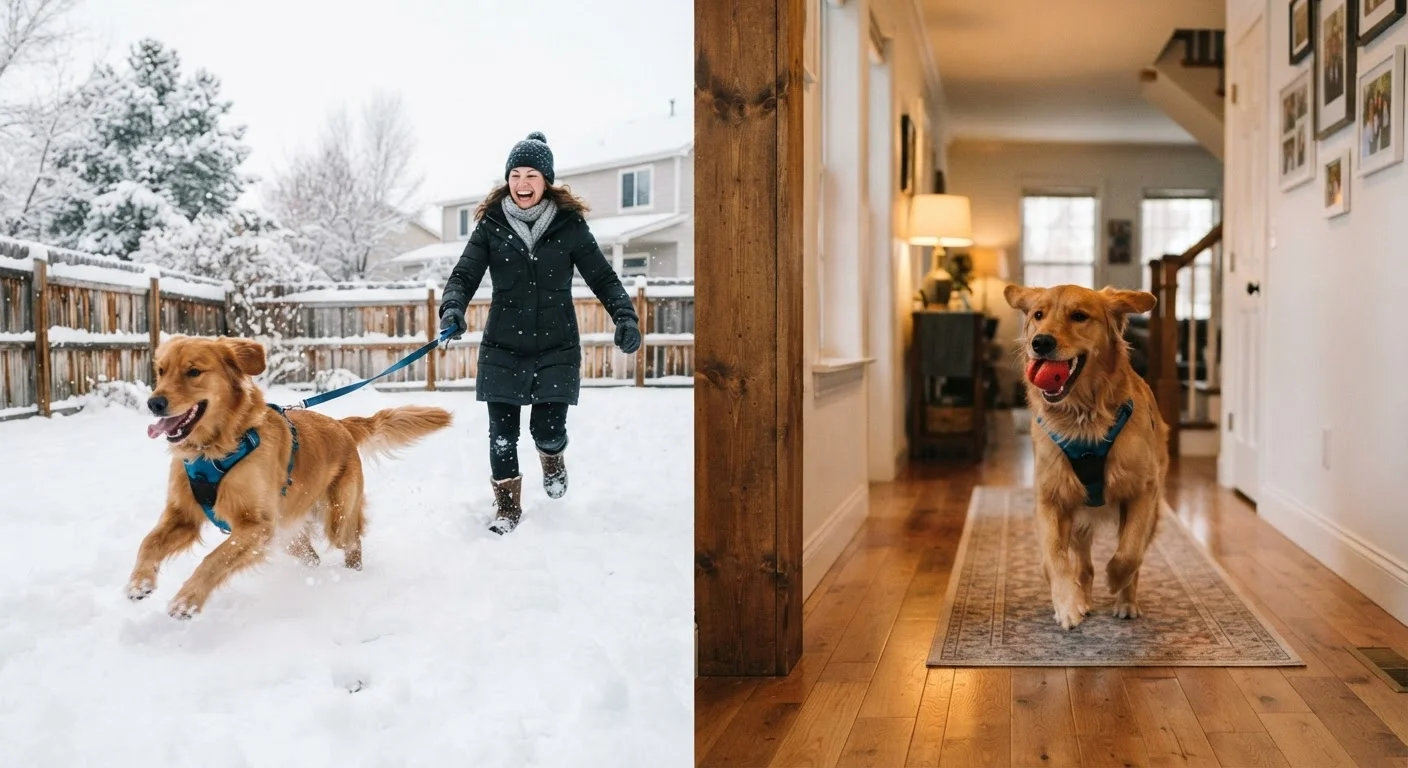
Key Takeaways
- Neither indoor nor outdoor exercise is universally superior - the right choice depends on breed, age, weather, and health status.
- Outdoor exercise provides sensory enrichment and space for full-body movement, but extreme temperatures and hazards require planning.
- Indoor activities can fully meet a dog's physical and mental needs when tailored to the available space and the dog's energy level.
- Dogs with health conditions, flat faces, or joint issues may need modified routines regardless of setting.
- A consistent daily structure combining both settings tends to produce the best behavioral and physical outcomes.
Our Verdict
Both indoor and outdoor exercise are valuable tools, and most dogs benefit most from a flexible combination of the two. Outdoor settings offer irreplaceable sensory stimulation and space for aerobic effort, while indoor options provide a reliable fallback that can be surprisingly effective when done with intention. The goal isn't to pick one permanently - it's to match the setting to your dog's current needs, weather conditions, and life stage.
| Best for | Recommended |
|---|---|
| High-energy breeds and young dogs needing sustained aerobic output | Outdoor Exercise |
| Extreme weather days, senior dogs, or dogs recovering from injury | Indoor Exercise |
| Small breeds, brachycephalic dogs, or apartment dwellers | Indoor Exercise |
| Dogs that need mental stimulation alongside physical activity | Combined Approach |
Why the Setting of Exercise Matters for Dogs
Dogs don't simply need to burn calories - they need movement that engages their bodies and minds in ways that match their biology. The environment where that movement happens shapes the type of stimulation a dog receives, the intensity that's safely achievable, and the risks involved. A working breed running trails gets a fundamentally different physiological and neurological experience than the same dog doing laps in a living room, even if the time spent is identical.
That said, indoor and outdoor exercise aren't competitors. Think of them as complementary tools in a year-round care strategy. Just as a consistent daily routine reduces anxiety and improves behavior, a predictable mix of indoor and outdoor activity helps dogs feel secure and physically balanced. Knowing when to use each setting - and why - is what this comparison is designed to help with.
Outdoor Exercise: Strengths, Limitations, and Safety Factors
Outdoor exercise offers dogs what no indoor setting can fully replicate: open space, varied terrain, and a constant stream of sensory input from scents, sights, and sounds. This environmental richness engages a dog's nose and brain simultaneously with its body, contributing to what behavioral researchers call cognitive fatigue - the satisfying mental tiredness that tends to produce calmer, more settled behavior at home.
Activities like leash walking, off-leash play in fenced areas, swimming, and hiking all support cardiovascular fitness, muscle tone, and joint mobility. For high-energy breeds - retrievers, herding dogs, working breeds - outdoor settings are often the only realistic way to meet their aerobic requirements.
The limitations are real, however. Extreme heat is a genuine danger; dogs regulate body temperature far less efficiently than humans, and pavement can reach temperatures that cause paw pad burns well before the air temperature feels dangerous. Cold, ice, road salt, and reduced daylight also complicate winter routines. Brachycephalic (flat-faced) breeds such as bulldogs and pugs face respiratory strain in heat and humidity that can escalate quickly to emergency-level distress.
Heat and Cold Are Serious Risks Outdoors
Dogs can suffer heatstroke at temperatures that feel comfortable to humans, particularly on humid days or when exercising on asphalt. On hot days, walk during early morning or evening hours and check pavement temperature with your hand before your dog walks on it. In winter, limit exposure for short-coated or small breeds, check paws for ice-ball buildup, and rinse off road salt after walks. If your dog shows signs of distress - excessive panting, drooling, stumbling, or reluctance to move - stop activity and contact your veterinarian immediately.
Age matters here too. As dogs age, joint health, cardiovascular capacity, and thermoregulation all shift - often requiring shorter, gentler outdoor sessions rather than the sustained exercise a younger dog could handle.
Indoor Exercise: What It Can and Can't Deliver
Indoor exercise is frequently underestimated. Done with purpose, it can address a dog's physical conditioning, mental engagement, and social bonding needs - all without setting foot outside. The key is intentionality: passive time indoors is not exercise.
Effective indoor options include hallway fetch, stair climbing (for dogs without joint problems and only after a veterinarian confirms it's appropriate), hide-and-seek games using treats or toys, treadmill walking designed for dogs, and structured training sessions that combine obedience work with movement. Puzzle feeders and nose-work exercises tax a dog's brain in ways that translate into physical calm - a tired brain often accompanies a tired body.
Make Indoor Sessions Count
Short, focused indoor sessions beat aimless wandering every time. A 10-minute structured training circuit - sit, down, recall, stay - combined with a nose-work game can tire a medium-energy dog more effectively than 30 minutes of free roaming. Rotate activities every few days to prevent boredom and keep engagement high.
The main constraints of indoor exercise are space and intensity ceiling. Most home environments limit sustained aerobic effort, and even a large living room won't replicate the biomechanical variety of uneven outdoor terrain. For working breeds, indoor activity alone is rarely sufficient over the long term. For small breeds, senior dogs, or dogs in recovery, however, a thoughtfully designed indoor routine may meet daily needs entirely on moderate-weather days.
| Outdoor Exercise | Indoor Exercise | |
|---|---|---|
| Aerobic intensity potential | High - open space allows sustained effort | Moderate - space limits peak output |
| Sensory and mental stimulation | Very high - novel scents, terrain, and sights | Moderate - depends on activity variety |
| Weather dependency | High - heat, cold, ice create real risk | None - fully weather-independent |
| Safety for brachycephalic breeds | Limited in heat or humidity | Generally safer with climate control |
| Suitability for senior dogs | Possible with modified intensity and surface | Often well-suited for lower-impact needs |
| Equipment or space required | Leash, poop bags, fenced area helpful | Puzzle toys, open hallway, or dog treadmill |
| Socialization opportunities | High - other dogs, people, environments | Low - typically limited to household members |
How Breed, Age, and Health Shape the Right Balance
No single exercise formula works for every dog. Breed characteristics - energy level, coat type, musculature, respiratory anatomy - set the baseline. A Siberian Husky thrives in cold outdoor conditions that would quickly stress a Chihuahua. A senior Labrador with hip dysplasia needs a gentler approach than a healthy two-year-old of the same breed.
Health conditions change the calculus significantly. Dogs with orthopedic issues, heart disease, or respiratory disorders should have exercise routines reviewed and approved by a veterinarian. This isn't a formality - activity that seems mild can be harmful in the wrong context. If your dog has a diagnosed condition, the default rule should be: ask before adjusting the routine.
The good news is that flexibility is achievable. Most dogs adapt well to seasonal shifts between primarily indoor and primarily outdoor routines, provided the transition is gradual and the total physical and mental stimulation they receive remains consistent. Building a daily routine that accommodates both settings - rather than relying entirely on one - tends to produce dogs that are calmer, more adaptable, and better conditioned year-round.
This article provides general information for educational purposes and is not a substitute for personalized veterinary guidance. Always consult your veterinarian before making significant changes to your dog's exercise routine, especially if your dog is a puppy, senior, or has any health conditions.