

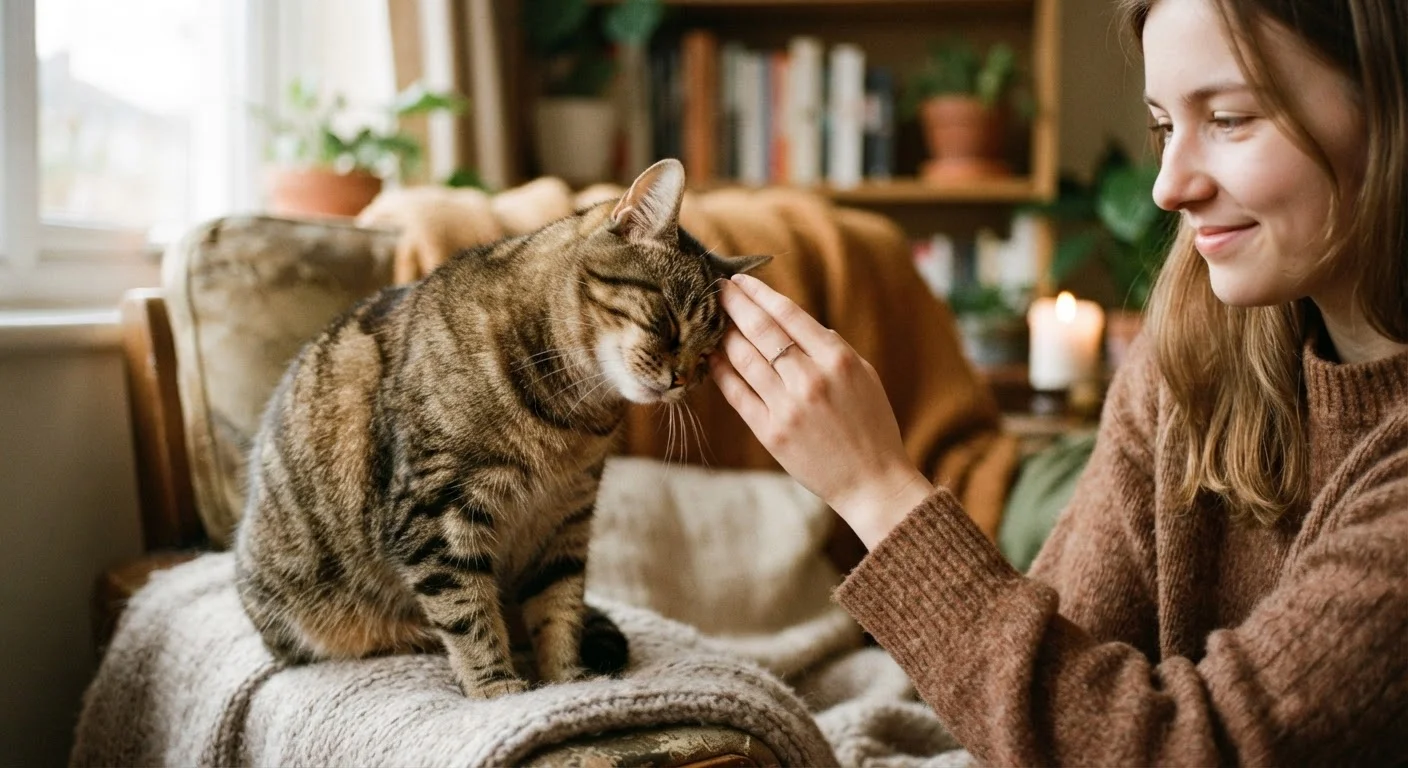
Key Takeaways
- Cats express affection through subtle behaviors that differ significantly from canine displays of love.
- Head bunting, slow blinking, kneading, and allogrooming are all well-documented signs of feline trust.
- Purring signals comfort but does not always indicate happiness - context matters.
- A cat choosing to sit near you or follow you room to room is a meaningful social gesture.
- Respecting a cat's pace and preferred interaction style strengthens the human-cat bond over time.
Feline Affection
Feline affection refers to the ways cats express trust, comfort, and social bonding with humans or other animals. Unlike dogs, cats are facultative social creatures - meaning social bonds are optional rather than hardwired into their survival - so their affectionate gestures tend to be subtle and context-dependent. Recognizing these signals helps owners understand that a cat's reserved nature is not indifference.
Domestic cats (Felis catus) retain behavioral traits from their solitary wild ancestors, which is why many of their affection signals evolved from grooming and scent-marking rather than pack-based social display.
Why Cat Affection Looks Nothing Like Dog Affection
Dogs greet you at the door, wag their tails, and seek prolonged physical contact. These behaviors are products of thousands of years of selective breeding for social responsiveness to humans. Cats followed a different evolutionary path. Their wild ancestors were solitary hunters with no survival need for pack hierarchy or constant social reinforcement. As a result, feline affection is expressed through proximity, restraint, and subtle body language rather than enthusiasm.
This difference confuses many cat owners. A cat that sits calmly across the room may actually be deeply attached - choosing to be in the same space is a deliberate social choice for an animal that values solitude. Understanding this reframes what affection means for a species that never needed to broadcast its feelings.
Reading your cat's body language is a foundational skill for any cat owner who wants to understand what their pet is actually communicating.
The Key Behaviors That Signal Feline Affection
Feline affection researchers and veterinary behaviorists have identified several consistent behaviors that indicate a cat trusts and bonds with a person:
- Head bunting: Pressing the forehead or cheek against you deposits scent from glands in those areas. It's a marking behavior that says, effectively, "you belong to my social world."
- Slow blinking: A relaxed, deliberate blink in your direction indicates the cat feels unthreatened. It's the opposite of the fixed stare cats use when they perceive danger.
- Kneading: This rhythmic paw motion originates from nursing behavior in kittens. When adults do it near or on a person, it's a strong indicator of contentment and emotional safety.
- Allogrooming: When a cat licks your hand or hair, it is grooming you - a behavior reserved for individuals in a cat's trusted social group.
- Tail-up approach: A cat walking toward you with its tail held straight up is displaying a friendly, confident greeting - the feline equivalent of an open, welcoming posture.
- Following and proximity: A cat that follows you from room to room or consistently sits near you is seeking social connection on its own terms.
2020
Year slow-blink study was published
A peer-reviewed study in Scientific Reports (2020) found that cats were more likely to slow-blink at humans who slow-blinked at them first, suggesting the gesture functions as a positive affiliation signal.
~10,000
Years cats have lived alongside humans
Archaeological evidence suggests domestic cats have coexisted with humans for roughly 10,000 years, though selective breeding for social traits began much later than with dogs.
45.3M
U.S. households with a cat
According to the American Pet Products Association's 2023-2024 National Pet Owners Survey, approximately 45.3 million U.S. households include at least one cat.
A Note on Purring - It's More Complicated Than You Think
Purring is often assumed to be a universal signal of happiness, but veterinary research tells a more nuanced story. Cats also purr when in pain, during labor, or when anxious. The sound is better understood as a self-soothing mechanism that happens to be most common during positive interactions.
When a cat purrs while kneading in your lap, that combination of signals strongly suggests contentment. When a cat purrs alone in a hiding spot while appearing tense, the context suggests something else entirely. Always read purring alongside posture, ear position, and eye expression rather than in isolation.
For a deeper look at common misconceptions about feline behavior, see cat health myths veterinarians want debunked.
Watch the Tail and Ears Together
A purring cat with flattened ears or a lashing tail is sending a mixed message - and the body language usually overrides the sound. When evaluating whether your cat is content or stressed, take in the whole picture: ear angle, tail movement, whisker position, and overall posture. This holistic reading is far more reliable than any single signal on its own.
How to Strengthen Your Bond With a Cat
Cats form stronger bonds when humans adapt to their communication style rather than imposing a dog-centric model of affection. A few evidence-informed principles help:
- Let the cat initiate contact. Offering a relaxed hand at nose level and allowing the cat to approach builds trust faster than reaching out and grabbing.
- Respect preference signals. If a cat moves away, it's communicating. Chasing or restraining a cat that wants space damages trust over time.
- Practice slow blinking. Experiment with slow, deliberate blinks in your cat's direction during calm moments - it signals non-threatening intent.
- Establish consistent routines. Cats are sensitive to environmental change. Predictable feeding, play, and quiet time reinforces a sense of safety.
A cat's overall wellbeing - including how it expresses affection - is also influenced by physical health and nutrition. Feeding your cat a nutritionally sound diet supports the kind of calm, secure temperament that makes bonding easier.