

Key Takeaways
- Smart speakers only activate after detecting a wake word - they are not continuously recording full conversations.
- Voice recordings are stored by manufacturers and can be reviewed; users can delete this history in account settings.
- Useful for hands-free tasks, timers, smart home control, and accessibility - especially for people with mobility challenges.
- Privacy settings vary by device, but most platforms offer options to limit data retention and disable voice history.
- Households with children should review what data smart speakers collect and adjust settings accordingly.
Hands-free control for timers, reminders, and searches
Users can set kitchen timers, add items to shopping lists, or check the weather without touching a screen - a small but genuinely useful daily convenience.
Useful accessibility tool for users with mobility challenges
Voice-activated control can meaningfully increase independence for people with arthritis, visual impairments, or other conditions that make device interaction difficult.
Simple integration with smart home devices
Smart speakers serve as a central voice interface for lights, thermostats, and locks, making a connected home easier to manage without navigating multiple apps.
Instant answers and general information queries
Quick factual lookups - unit conversions, spelling, sports scores, news briefings - are handled rapidly without requiring the user to stop what they're doing.
Accessible entry point for non-technical users
Setup is generally simple, and voice interaction requires no technical knowledge, making these devices usable by older adults and children who may struggle with touchscreens.
Accidental activations capture and store unintended audio
Background conversation or TV audio can trigger the wake word detection, causing clips of ambient household audio to be sent to manufacturer servers without the user's awareness.
Voice recordings are stored by manufacturers by default
Unless users actively change settings, audio clips from interactions are retained on company servers and may be reviewed by human employees for quality assurance purposes - a practice major manufacturers have acknowledged.
Limited transparency about how data is used long-term
Privacy policies are lengthy and technical, and the downstream use of aggregated voice data for product development or advertising targeting is not always clearly communicated to consumers.
Security depends on account and network hygiene
A compromised home Wi-Fi network or a shared account with weak credentials can expose smart speaker access to unauthorized parties, making broader home network security relevant.
Children's voices may be collected without explicit awareness
Many households don't realize that interactions from children are captured and potentially stored under the same data policies as adult users, with limited specific protections in some jurisdictions.
Our Verdict
Smart speakers deliver real convenience for everyday tasks, and their privacy risks - while genuine - are manageable with a few deliberate settings adjustments. The key is understanding what these devices actually do rather than assuming the worst or ignoring the concerns entirely. Informed use, not avoidance, is usually the right approach for most households.
Smart speakers are a strong fit for households that want hands-free convenience and are willing to spend a few minutes reviewing and adjusting the default privacy settings.
What Smart Speakers Actually Do
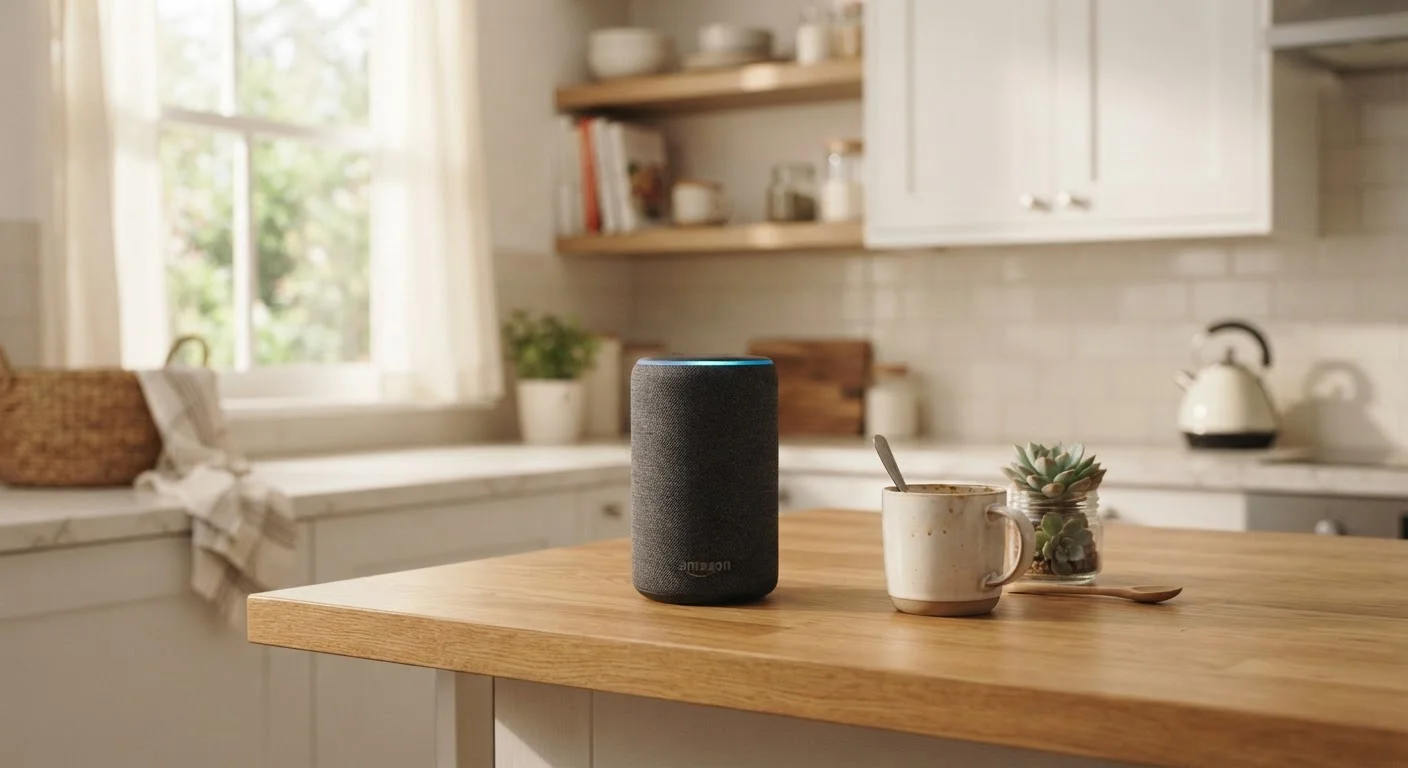
A smart speaker is a voice-activated device that connects to the internet and responds to spoken commands. Popular examples follow a similar design: a small cylindrical or flat device with a built-in microphone array that listens for a specific trigger phrase - commonly called a wake word - such as "Hey" followed by the assistant's name.
The device is not recording everything said in the room. Before the wake word is detected, the speaker processes audio locally on the device itself and discards it. Once the wake word is heard, a short audio clip - your request - is sent to the manufacturer's servers for processing, and a response is returned. That exchange is typically logged and stored by the manufacturer.
This is an important distinction: these devices are not passive listening bugs, but they do capture and transmit voice data after activation. Accidental activations - when background noise or conversation resembles the wake word - do happen, and those clips are also sent and stored.
What 'Always Listening' Actually Means
The phrase 'always listening' is technically accurate but often misunderstood. Smart speakers continuously monitor audio locally on the device for the wake word, but this local monitoring does not result in recordings being sent anywhere. Only after wake word detection does audio leave the device. The distinction matters: local processing for a trigger phrase is categorically different from continuous cloud recording of household audio.
For a broader look at how connected devices track user behavior, see what your smartphone's settings menu is quietly tracking.
The Real Benefits: Where Smart Speakers Genuinely Deliver
For many users, the day-to-day value of a smart speaker is straightforward and practical.
Hands-free control for timers, reminders, and searches
Users can set kitchen timers, add items to shopping lists, or check the weather without touching a screen - a small but genuinely useful daily convenience.
Useful accessibility tool for users with mobility challenges
Voice-activated control can meaningfully increase independence for people with arthritis, visual impairments, or other conditions that make device interaction difficult.
Simple integration with smart home devices
Smart speakers serve as a central voice interface for lights, thermostats, and locks, making a connected home easier to manage without navigating multiple apps.
Instant answers and general information queries
Quick factual lookups - unit conversions, spelling, sports scores, news briefings - are handled rapidly without requiring the user to stop what they're doing.
Accessible entry point for non-technical users
Setup is generally simple, and voice interaction requires no technical knowledge, making these devices usable by older adults and children who may struggle with touchscreens.
Beyond these headline uses, smart speakers can be a meaningful accessibility tool. For people with limited hand mobility, visual impairments, or conditions that make typing and screen interaction difficult, voice control can meaningfully increase independence at home. They also integrate with a wider ecosystem of smart home devices - from lights to thermostats - making that technology approachable for people who wouldn't otherwise navigate multiple apps.
The Privacy Trade-Offs You Should Know About
The concerns around smart speakers are legitimate - they just require some context to evaluate fairly.
Accidental activations capture and store unintended audio
Background conversation or TV audio can trigger the wake word detection, causing clips of ambient household audio to be sent to manufacturer servers without the user's awareness.
Voice recordings are stored by manufacturers by default
Unless users actively change settings, audio clips from interactions are retained on company servers and may be reviewed by human employees for quality assurance purposes - a practice major manufacturers have acknowledged.
Limited transparency about how data is used long-term
Privacy policies are lengthy and technical, and the downstream use of aggregated voice data for product development or advertising targeting is not always clearly communicated to consumers.
Security depends on account and network hygiene
A compromised home Wi-Fi network or a shared account with weak credentials can expose smart speaker access to unauthorized parties, making broader home network security relevant.
Children's voices may be collected without explicit awareness
Many households don't realize that interactions from children are captured and potentially stored under the same data policies as adult users, with limited specific protections in some jurisdictions.
~35%
U.S. adults who own a smart speaker
Pew Research Center surveys have consistently placed smart speaker ownership among roughly a third of American adults, making them a mainstream household device.
Seconds
Typical length of a captured voice clip
Most manufacturer documentation indicates that a single voice command interaction captures a short clip - generally a few seconds - rather than extended audio.
Households with children face additional considerations. Voice assistants can respond to children's questions and commands, which means children's voices may also be captured and stored. Parents should review manufacturer policies on data collected from minors and adjust household settings accordingly. Understanding digital risks for children is a useful starting point for those conversations.
It's also worth noting that smart speakers are not uniquely risky compared to other connected devices already in most homes - smartphones, for instance, have their own extensive data collection defaults, as explored in common online safety myths that give people a false sense of security.
Practical Steps to Use Smart Speakers More Deliberately
Most of the meaningful privacy controls for smart speakers are available directly in the manufacturer's companion app or account settings. A few worth reviewing:
- Voice history: Most platforms allow you to view, delete, and auto-delete stored voice recordings. Turning on automatic deletion (typically after 3 or 18 months) is straightforward.
- Microphone mute: Every major smart speaker includes a physical mute button or switch that cuts power to the microphone. This provides a hardware-level guarantee that the device is not listening.
- Review third-party skills and integrations: Smart speakers can connect to third-party apps and services. Periodically reviewing which services have access is good practice.
- Placement: Keeping smart speakers out of bedrooms and private spaces reduces the risk of sensitive conversations being accidentally captured.
These steps won't eliminate all data collection - that's inherent to how cloud-connected devices work - but they give users meaningful control over retention and access. For a broader introduction to managing your digital privacy, online privacy for people who don't consider themselves tech-savvy offers clear, jargon-free guidance.