

Key Takeaways
- Yellow grass is a symptom, not a disease - the pattern and location of yellowing reveal the true cause.
- Overwatering and underwatering can look nearly identical on the surface; check soil moisture before acting.
- Nitrogen deficiency typically causes uniform pale yellowing, while fungal disease creates irregular patches with distinct borders.
- Soil compaction restricts root access to water and nutrients, often mimicking drought stress even after rain.
- Treating without diagnosing first can make the underlying problem significantly worse.
Lawn Yellowing (Chlorosis)
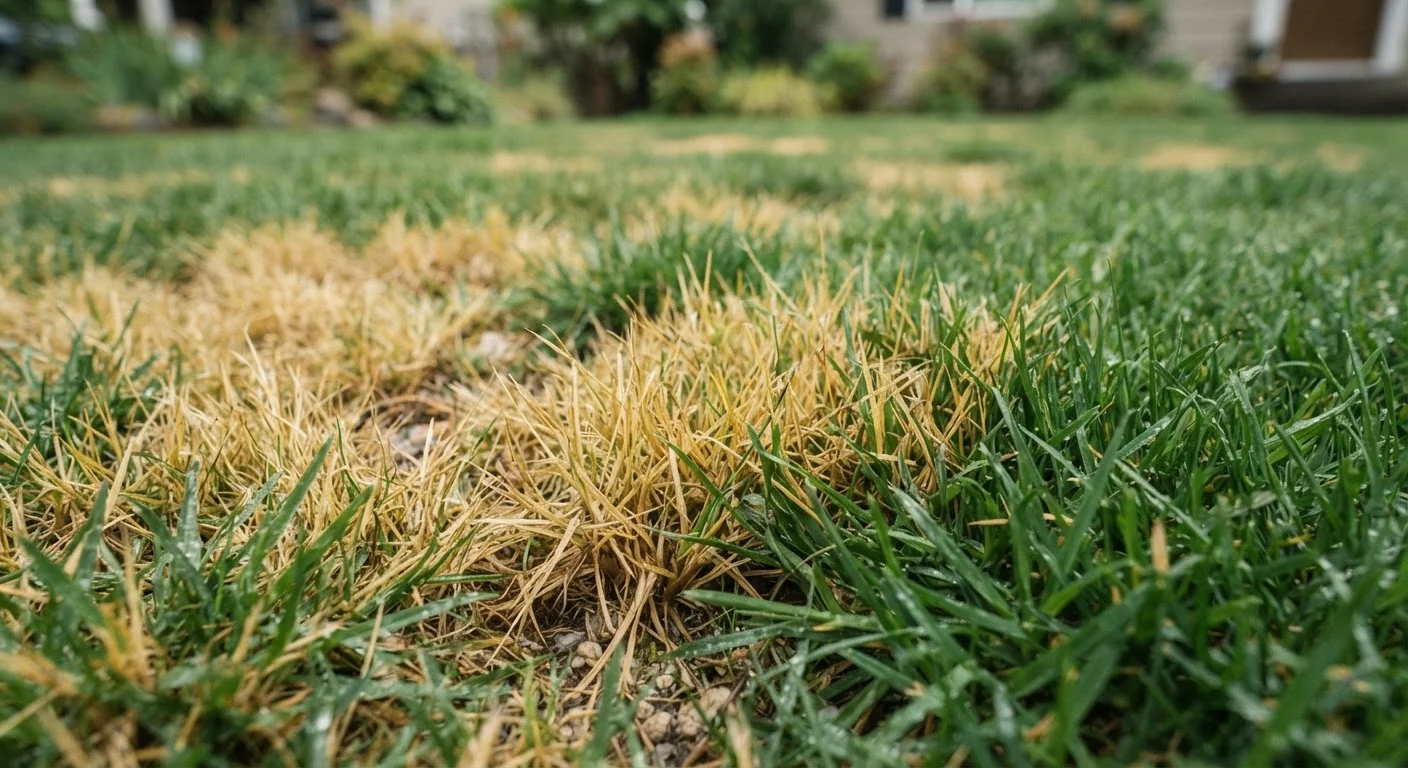
Lawn yellowing - sometimes called chlorosis when nutrients are involved - is when grass blades lose their green color and take on a pale yellow or straw-like appearance. It's not a single problem but a visible symptom with several possible causes, including drought, overwatering, nutrient deficiencies, fungal disease, or soil compaction. Correctly identifying the underlying cause is essential before applying any treatment.
Chlorosis specifically refers to reduced chlorophyll production in plant tissue, often triggered by iron, nitrogen, or magnesium deficiency. Not all lawn yellowing is true chlorosis - drought stress and fungal damage produce similar visual symptoms through different biological mechanisms.
How to Read the Pattern Before You React
The single most useful thing you can do when your lawn starts yellowing is to stop and observe the pattern before reaching for the hose or fertilizer bag. Where the yellow appears - and how it's distributed - is your first diagnostic clue.
Uniform, overall paleness across the entire lawn typically points to a nutrient shortage, most often nitrogen. In contrast, irregular patches with defined edges suggest fungal disease. Yellow stripes that follow your mowing lines may indicate a dull mower blade scalping the turf. Yellowing concentrated along sidewalks or driveways often signals salt accumulation from de-icing products or reflected heat.
This same diagnostic mindset applies beyond the lawn. Just as surface cracks and stains inside your home reveal underlying structural issues, grass color changes are symptoms that point to something happening at the root level - often out of sight.
Grass Species Matters for Diagnosis
Cool-season grasses (such as Kentucky bluegrass and fescues) and warm-season grasses (such as Bermuda and zoysia) respond differently to heat, drought, and seasonal changes. Warm-season grasses naturally go dormant and turn tan in winter - this isn't disease. Knowing your grass type helps distinguish normal dormancy from a genuine problem.
The Four Most Common Causes - and How to Tell Them Apart
1. Drought stress. Grass blades curl lengthwise, the lawn loses its springiness (footprints remain visible rather than bouncing back), and yellowing progresses to straw-brown from the tips down. Probe the soil: if the top 4-6 inches are dry and crumbly, drought is likely.
2. Overwatering. Soggy, oxygen-depleted soil prevents roots from functioning normally. Overwatered lawns often yellow in low spots or across flat areas with poor drainage, and the soil feels spongy underfoot. Before increasing irrigation, read our guide on common watering mistakes that harm gardens - the evidence often surprises homeowners.
3. Nutrient deficiency. Nitrogen deficiency causes a generalized, even yellowing that starts in older growth and moves upward. Iron deficiency (common in alkaline soils) produces interveinal chlorosis - the area between leaf veins turns yellow while veins stay green. A soil test, available through many county extension offices, removes the guesswork.
4. Fungal disease. Diseases like dollar spot, brown patch, and pythium blight create circular or irregular patches, sometimes with a water-soaked or thread-like appearance at the margins during humid mornings. Fungal issues are often worsened by overwatering, poor air circulation, or watering late in the day.
~40%
Residential water used outdoors on average
According to the U.S. Environmental Protection Agency, roughly 40% of residential water use in the U.S. goes toward outdoor irrigation, much of which is applied inefficiently.
6 inches
Target soil depth for adequate lawn moisture
Turfgrass extension guidelines commonly recommend that irrigation penetrate at least 6 inches of soil to encourage deep root development and drought resilience.
Soil and Root Problems You Can't See
Not all yellowing traces back to water or nutrients directly. Compacted soil - dense from heavy foot traffic, clay content, or years without aeration - physically restricts root growth and limits the uptake of both water and nutrients even when those resources are present. A lawn on compacted soil can yellow during drought-like conditions even after adequate rainfall.
Thatch buildup, the layer of dead organic matter that accumulates above the soil surface, can also block water penetration and harbor fungal spores. When thatch exceeds roughly half an inch in depth, it begins to work against the lawn rather than for it.
Both compaction and thatch are addressable through core aeration and dethatching - routine practices covered in our full-year lawn maintenance guide. Addressing these issues as part of seasonal preparation - ideally in fall - positions the lawn to recover more vigorously the following spring. Our fall yard prep checklist walks through the key steps before cold weather sets in.
Use a Soil Probe Before You Act
A simple soil probe or even a long screwdriver inserted 6 inches into your lawn tells you more than appearances can. Dry and hard soil points toward drought; wet and spongy soil suggests excess moisture. This 30-second check prevents misdiagnosis and wasted effort before any treatment begins.
Responding the Right Way
Once you've identified the likely cause, the response becomes much clearer. For drought stress, deep and infrequent watering - soaking to a 6-inch depth rather than light daily sprinkling - encourages deeper root growth. For overwatering, reduce irrigation frequency and address any drainage issues. For nutrient deficiency, a targeted fertilizer application based on a soil test is more effective and less wasteful than a broad-spectrum product. For fungal disease, improving airflow, adjusting watering schedules, and in serious cases, applying an appropriate fungicide (following label directions carefully) are the typical approaches.
Treating a yellow lawn correctly is fundamentally about patience and precision. Grass that has been stressed by the wrong response - fertilizer applied to drought-burned turf, for example - takes longer to recover than grass that was simply left alone while the root cause was properly identified. Observe first, confirm your diagnosis, and then act with purpose.
This article is for general informational purposes only. Local soil conditions, grass species, and climate vary significantly. For persistent or severe lawn problems, consulting a local cooperative extension service or certified lawn care professional is advisable.