

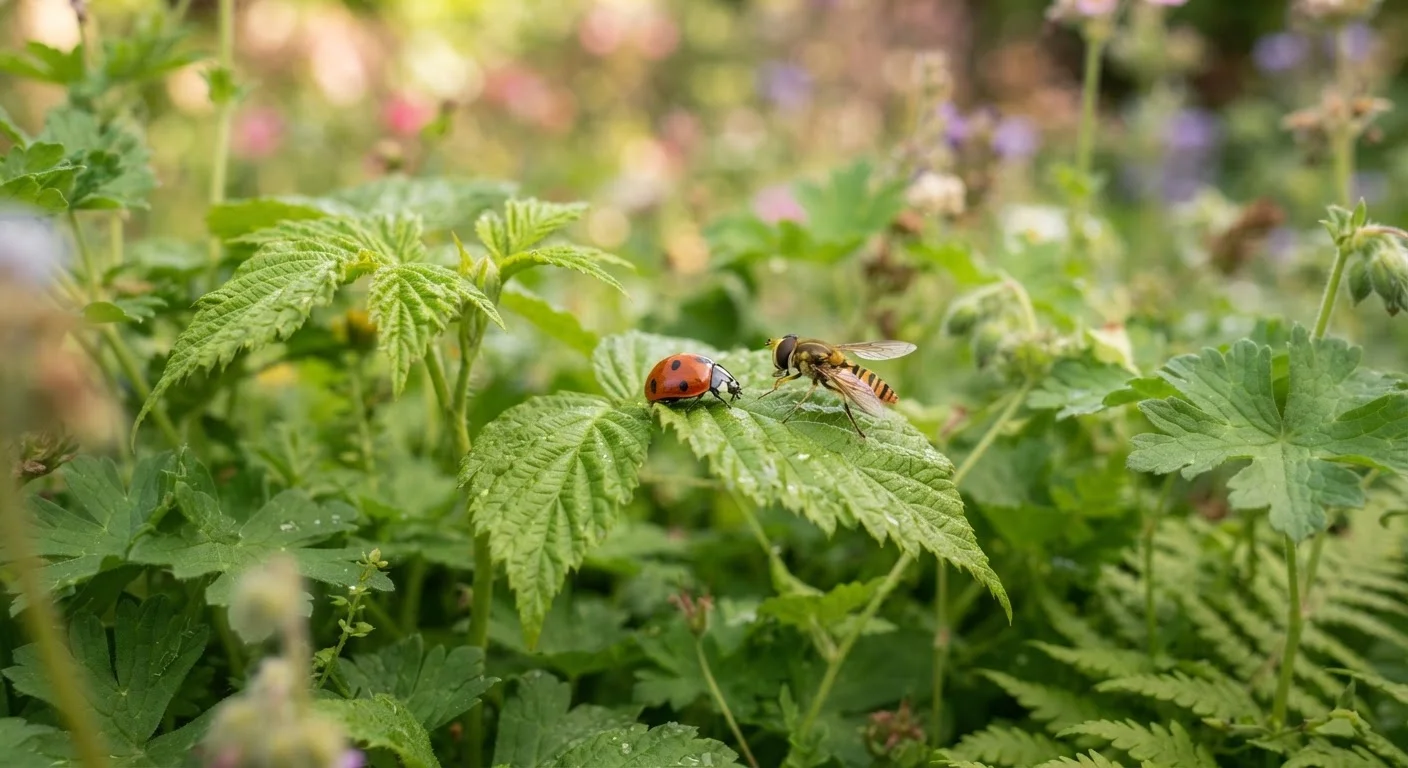
Key Takeaways
- Many common garden insects are beneficial predators or pollinators, not pests.
- Misidentifying a helpful bug and spraying pesticides can devastate your garden's ecosystem.
- Appearance alone is a poor guide - behavior and life stage matter just as much.
- Biodiversity in your garden is a sign of health, not a problem to be solved.
- Patience and observation are often more effective than reaching for a spray bottle.
Why Misidentification Is a Real Problem
When something unfamiliar appears in the garden, the instinct to eliminate it is understandable. But acting on that instinct without identification is one of the most common - and damaging - mistakes home gardeners make. Beneficial insects often arrive precisely because a pest problem is already developing. Killing them removes the biological check that would have resolved the issue naturally.
Healthy gardens are biodiverse gardens. The presence of many different insect species, even ones that look alarming, generally reflects a functioning ecosystem rather than a crisis. Learning to observe before acting is the single most effective shift a gardener can make. For more on how garden decisions interact with your broader landscape, see our article on native plants and landscape health.
Myth
Wasps in the garden are aggressive pests that serve no useful purpose and should be eliminated.
Fact
Most wasps are either pollinators or predatory insects that actively hunt caterpillars, aphids, and other plant-damaging pests.
Many gardeners associate wasps only with painful stings, but the majority of wasp species encountered in gardens are solitary, non-aggressive, and remarkably helpful. Paper wasps and parasitic wasps hunt caterpillars and aphids to feed their larvae. Parasitic wasps - tiny and often mistaken for gnats - lay eggs inside harmful insect hosts, eventually eliminating them. Unless a nest is situated directly in a high-traffic area where contact is inevitable, wasps near garden beds are almost always doing more good than harm.
Myth
Spiders found on plants are harmful to the garden and should be removed.
Fact
Garden spiders are natural predators that control aphids, flies, and other damaging insects without any chemical intervention.
Spiders occupy a vital role in garden ecosystems. Orb weavers, crab spiders, and jumping spiders all prey on a wide range of insects that damage plants. Crab spiders are particularly effective because they camouflage themselves on flowers and ambush thrips, aphids, and small beetles. Far from being a problem, a healthy spider population is a reliable indicator that your garden is ecologically balanced. Relocating or killing them disrupts the pest control they naturally provide.
Myth
Black and yellow striped insects hovering over flowers are always bees or wasps and should be treated with caution.
Fact
Many of these insects are hoverflies - harmless, non-stinging flies that mimic bee coloration as a defense mechanism.
Hoverflies (family Syrphidae) are masters of mimicry. Their black-and-yellow banding resembles bees and wasps closely enough to fool most gardeners - and most predators. In reality, hoverflies cannot sting and pose zero threat. Adults feed on pollen and nectar, making them valuable pollinators. Their larvae feed on aphids, making them doubly useful. If an insect is hovering in place and then darting horizontally, it is almost certainly a hoverfly, not a bee.
Myth
Seeing small bugs clustered on stems means your plant is infested and needs immediate treatment.
Fact
Clustered insects may be predatory or parasitic species that have gathered because the actual pest population is already present - and being eaten.
When gardeners spot clusters of tiny insects on stems, the assumption is often infestation. But clusters of Aphidius parasitic wasps, predatory midge larvae, or even immature lacewings can look indistinguishable from pest colonies at a glance. Lacewing larvae, in particular, are sometimes called "aphid lions" - voracious predators that consume aphids faster than nearly any other garden insect. Spraying without proper identification can eliminate exactly the insects controlling your actual problem. A hand lens or macro photo can help you identify what you're seeing before acting.
Myth
Ground beetles in the garden are a sign of soil problems or decay.
Fact
Ground beetles are aggressive predators of slugs, soil-dwelling larvae, and weed seeds, and they are a sign of a healthy garden environment.
Ground beetles (family Carabidae) are dark, fast-moving insects that hide under mulch, rocks, and debris. Their secretive habits often lead gardeners to assume they're scavengers or decomposers connected to rot or poor soil. In fact, they are relentless hunters. Many species eat slug eggs, cutworm larvae, and even weed seeds - providing pest and weed management entirely for free. Maintaining mulch and leaf litter gives them habitat; eliminating it removes one of your most effective natural pest-control allies.
How to Tell the Difference - and What to Do Instead
Correct identification does not require expert-level entomology. A few practical habits can prevent costly mistakes:
- Photograph before you act. A clear close-up photo can be submitted to your local cooperative extension service or identified using reputable citizen-science apps.
- Observe behavior, not just appearance. Is the insect feeding on leaves, or is it feeding on other insects? Is it hovering over flowers, or tunneling into stems?
- Check for actual plant damage. The presence of an insect is not evidence of harm. Look for chewed leaves, wilting, discoloration, or stunted growth - and trace back whether insects are causing it or responding to it.
- Tolerate a threshold. Some pest presence is normal. A few aphids on one stem rarely warrants treatment if predators are present.
Resist the Urge to Act Immediately
Finding unusual insects on your plants can trigger a reflex to spray, squash, or remove them. Give yourself at least a few days of observation first. Many insects that appear threatening are either harmless or are in the process of hunting the pests that actually threaten your garden. Acting too quickly often removes your garden's best defenders.
Understanding what's actually happening in your garden also intersects with how you water and maintain it. Stressed, overwatered plants are far more vulnerable to genuine pest damage - worth reviewing in our piece on common watering mistakes. Thoughtful companion planting strategies can also reduce pest pressure naturally by supporting predator habitat and confusing pest insects.
Pesticides Kill Beneficial Insects Too
Broad-spectrum insecticides do not distinguish between harmful and helpful insects. Applying them unnecessarily can wipe out populations of predatory beetles, parasitic wasps, and pollinators. Before treating any pest, take time to correctly identify the insect and confirm it is causing measurable damage to your plants.
The garden rewards patience. Before reaching for any treatment, give observation a chance - you may find the problem is already being solved.
~97%
Of insect species that are neutral or beneficial
Entomologists broadly estimate that only around 1-3% of insect species qualify as agricultural or garden pests, meaning the vast majority are harmless or actively helpful.
400+
Aphids consumed per week by a single lacewing larva
University extension research on lacewing larvae documents their exceptionally high aphid consumption rates, making them one of the most efficient biological controls available to home gardeners.