

| What flexibility measures | Passive muscle lengthening ability |
| What mobility measures | Active joint range of motion under muscular control |
| What stretching is | A method or technique, not an outcome |
| Best time for static stretching | Post-exercise, during cool-down (Broadly supported by exercise science literature) |
| Best time for dynamic stretching | Pre-exercise, as part of a warm-up |
| Can you be flexible but not mobile? | Yes - passive range does not equal active control |
Why These Terms Get Confused
Walk into any gym, open a fitness app, or read a workout plan, and you'll likely encounter the words stretching, mobility, and flexibility used as if they mean the same thing. They don't - and understanding the difference can help you build a more effective, sustainable movement habit.
Each concept addresses a different aspect of how your body moves. Confusing them can lead to skipping work that actually matters for your goals, or spending time on something that doesn't address what you actually need. This guide defines each term clearly so you can apply them with confidence.
Just as the health world uses similar-sounding terms with distinct meanings - the way therapy, counseling, and psychiatry are often conflated despite being different - precision with movement language pays off.
| What flexibility measures | Passive muscle lengthening ability |
| What mobility measures | Active joint range of motion under muscular control |
| What stretching is | A method or technique, not an outcome |
| Best time for static stretching | Post-exercise, during cool-down (Broadly supported by exercise science literature) |
| Best time for dynamic stretching | Pre-exercise, as part of a warm-up |
| Can you be flexible but not mobile? | Yes - passive range does not equal active control |
Flexibility, Mobility, and Stretching: Clear Definitions
Flexibility refers to the passive ability of a muscle or muscle group to lengthen. It's how far a muscle can be extended when an external force - gravity, a strap, or a partner - is applied. Flexibility is a property of the muscle tissue itself.
Mobility refers to the active ability of a joint to move through its full intended range of motion under your own muscular control. You can be flexible without being mobile: a person might be able to push their leg into a high position with assistance but struggle to lift it there independently. Mobility requires both range of motion and the strength and neuromuscular control to use it.
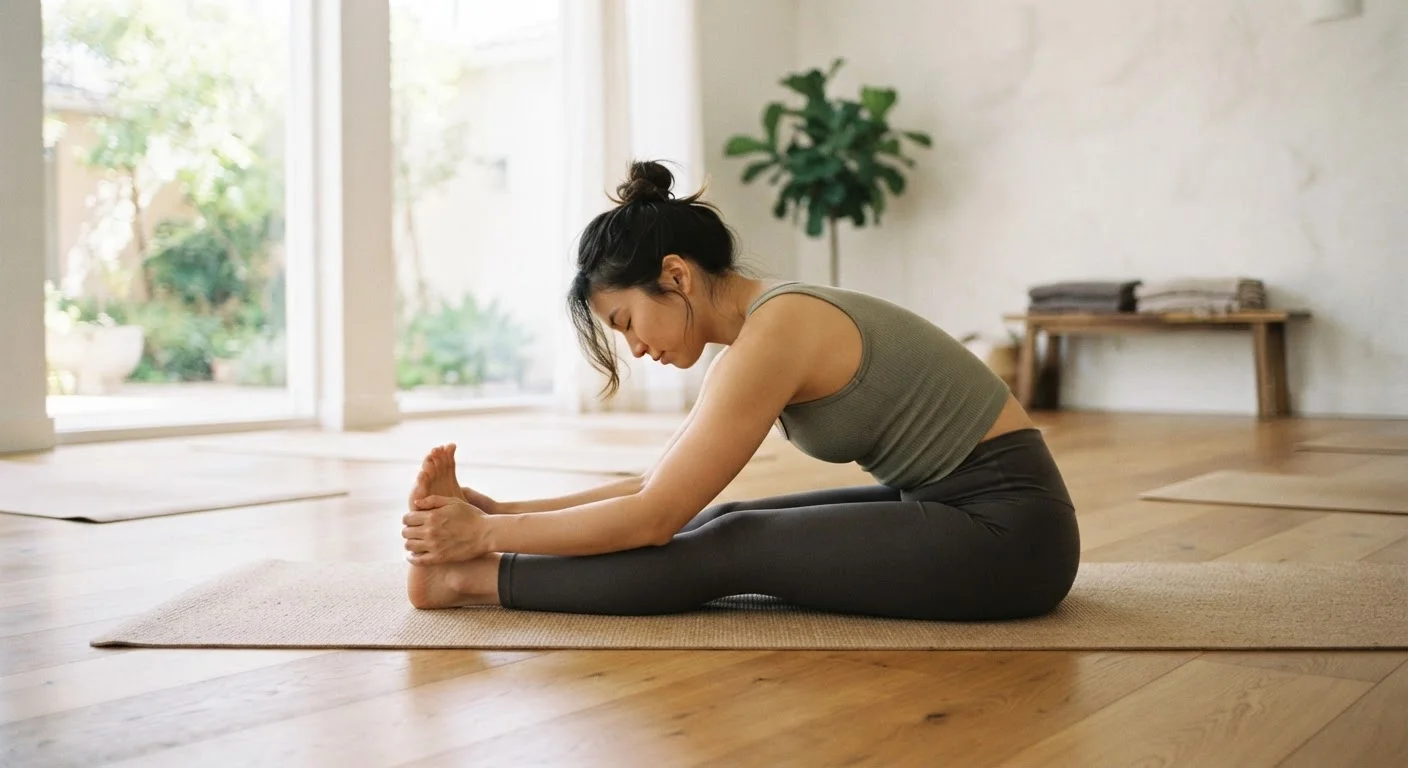
Stretching is a method - a set of techniques used to improve flexibility and, to some extent, support mobility. It includes static stretching (holding a position), dynamic stretching (controlled movement through a range), and other modalities like proprioceptive neuromuscular facilitation (PNF). Stretching is a tool; flexibility and mobility are outcomes.
Flexibility
The passive ability of a muscle or muscle group to lengthen. It describes how far a muscle can be extended, often with the help of an external force like gravity or a stretch strap.
Mobility
The active ability of a joint to move through its full intended range of motion under your own muscular control. Mobility requires both range of motion and the strength to use it.
Static Stretching
A stretching technique in which a position is held for an extended period - typically 20 to 60 seconds - to gradually lengthen the muscle. Most effective as a post-exercise practice.
Dynamic Stretching
Controlled, repetitive movements that take a joint through its range of motion. Commonly used in warm-ups because they activate muscles without reducing force output.
Range of Motion (ROM)
The full movement potential of a joint - how far it can move in each direction. ROM can be passive (with assistance) or active (under your own control).
PNF Stretching
Proprioceptive Neuromuscular Facilitation - an advanced stretching technique combining muscle contraction and relaxation phases to improve flexibility, often used in physical therapy settings.
As you age, the relationship between these three factors becomes more consequential. How exercise needs shift across decades affects which of these components deserves more attention at different life stages.
When Each One Matters - and How to Use Them
For everyday function - getting off the floor, reaching overhead, climbing stairs without stiffness - mobility is generally the more practical target. A joint that can actively move through its full range reduces injury risk and supports quality of life.
For recovery, wind-down, and managing muscle tension, static stretching (holding a stretch for 20-60 seconds post-exercise) remains well-supported. Research generally does not support static stretching as an injury-prevention strategy before exercise, but it has value for post-workout recovery and improving passive flexibility over time.
Dynamic stretching and mobility drills - controlled leg swings, hip circles, or shoulder rotations - are better suited to warm-ups because they prepare joints for active movement without temporarily reducing muscle force output.
It's worth noting that these practices fit naturally into low-impact exercise routines, which are accessible to a wide range of fitness levels and often integrate mobility and flexibility work as core components rather than afterthoughts.
You Can Train Both Simultaneously
Mobility work and flexibility training are not mutually exclusive - many routines, including yoga and Pilates, develop both at once. If you're unsure where to start, a physical therapist or certified movement specialist can assess your specific range-of-motion needs and suggest appropriate practices. Always consult a qualified professional if you have an injury or chronic condition.
This article is for general informational purposes only and is not a substitute for personalized advice from a qualified healthcare or fitness professional. If you have an injury, chronic condition, or specific movement concerns, consult a licensed physical therapist or physician before beginning any new exercise program.