

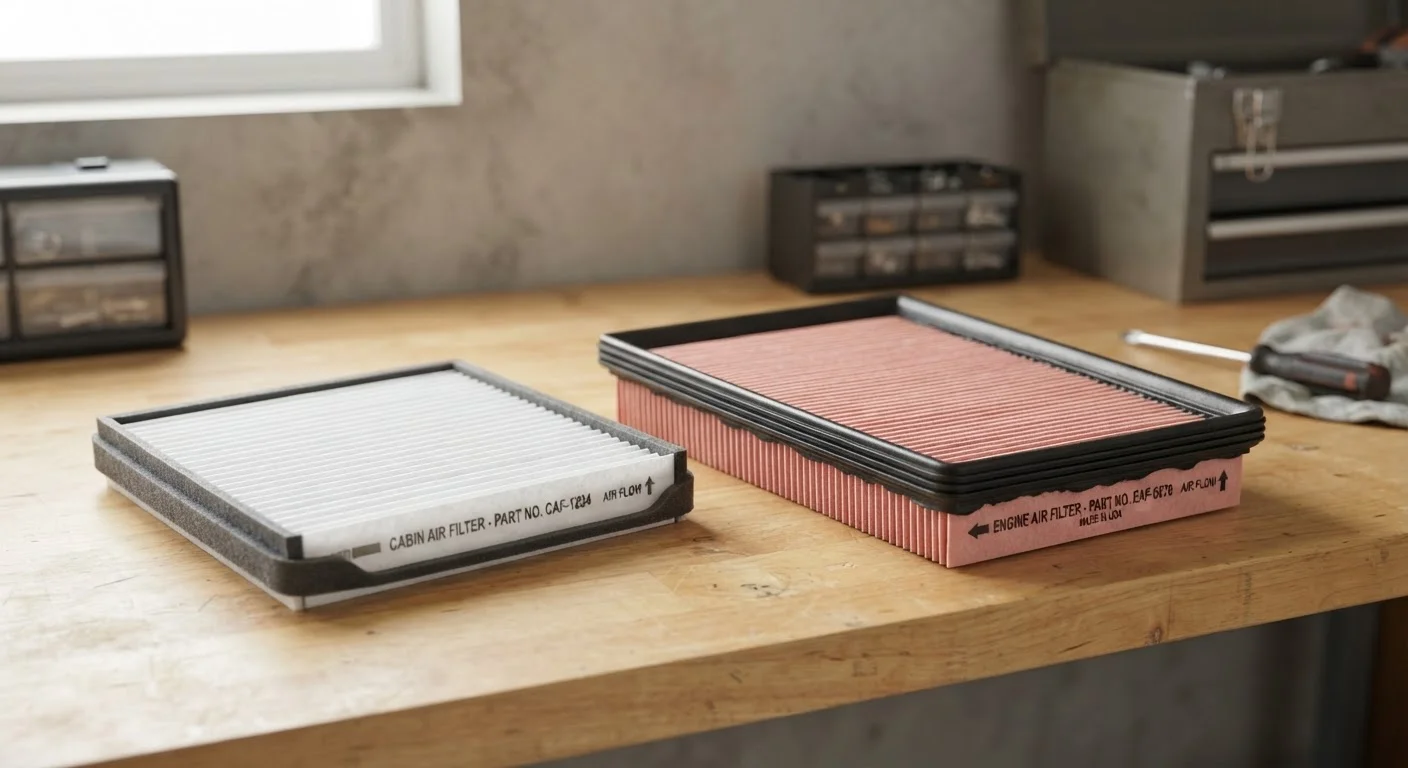
Key Takeaways
- Cabin air filters clean air entering the passenger compartment; engine air filters protect the combustion process.
- A clogged engine air filter can reduce fuel efficiency and cause long-term engine wear - the stakes are higher.
- Cabin filters typically need replacement every 15,000-25,000 miles; engine filters every 15,000-30,000 miles depending on conditions.
- Both filters are often neglected because their decline is gradual and not immediately obvious to drivers.
- Replacing either filter is relatively inexpensive compared to the repairs that neglect can trigger.
Option A
Cabin Air Filter
The air quality guardian for your passengers.
Best for: Drivers concerned about interior air quality, allergies, and keeping the HVAC system running cleanly.
Option B
Engine Air Filter
The frontline defense for your engine's performance and longevity.
Best for: Every driver - a clogged engine filter directly affects fuel economy, power output, and long-term engine health.
If you or your passengers suffer from allergies or respiratory sensitivities
Cabin Air Filter
A fresh cabin filter significantly reduces pollen, dust, and particulate matter inside the vehicle, improving the air you breathe during every drive.
If your fuel economy has dropped or your engine feels sluggish
Engine Air Filter
A restricted engine air filter starves the combustion chamber of air, hurting efficiency and performance - replacing it is one of the simplest fixes available.
If you drive frequently in dusty, rural, or high-pollution environments
Engine Air Filter
Harsh conditions accelerate engine filter contamination and demand more frequent inspection to prevent debris from entering the engine.
If your cabin vents produce weak airflow or a musty odor
Cabin Air Filter
A saturated cabin filter blocks airflow through the HVAC system and can harbor mold or bacteria, affecting both comfort and air quality.
What Each Filter Actually Does
Despite sitting in the same vehicle and being referred to simply as "air filters," these two components serve completely separate systems and protect different things.
The cabin air filter sits in the HVAC (heating, ventilation, and air conditioning) system, typically behind the glove compartment or under the dashboard. Its job is to clean the air before it reaches the passenger compartment - trapping pollen, dust, smog particles, mold spores, and other airborne contaminants. It has no effect on how the engine runs.
The engine air filter is located in the engine bay, inside the air intake housing. Its role is to prevent dirt, debris, and particulate matter from entering the combustion chamber. Clean air is essential for proper fuel combustion - the engine needs a precise ratio of air to fuel, and contaminated or insufficient airflow disrupts that balance.
Think of it this way: the cabin filter protects the people in the car, while the engine filter protects the car itself.
| Criterion | Cabin Air Filter | Engine Air Filter |
|---|---|---|
| System served | HVAC / passenger compartment | Engine / combustion system |
| What it protects | Passengers and HVAC components | Engine internals and sensors |
| Typical location | Behind glove box or under dash | Engine bay air intake housing |
| Common interval | 15,000-25,000 miles | 15,000-30,000 miles |
| Key warning signs | Weak airflow, musty smell | Poor fuel economy, sluggish acceleration |
| Consequences of neglect | Poor air quality, blower motor strain | Engine wear, sensor damage, high repair costs |
| Relative stakes | Comfort and health impact | Mechanical and financial impact |
Replacement Intervals and Warning Signs
Both filters degrade gradually, which means drivers often miss the warning signs until the problem is well established.
Cabin air filter: Most manufacturers recommend replacement every 15,000 to 25,000 miles, though this varies by vehicle and environment. Signs of a failing cabin filter include reduced airflow from the vents, a musty or stale smell when the HVAC is running, and increased dust accumulation on interior surfaces. Allergy sufferers may also notice worsened symptoms inside the vehicle.
Engine air filter: Typical replacement intervals fall between 15,000 and 30,000 miles, but driving conditions matter significantly. Dusty roads, gravel surfaces, and stop-and-go urban traffic all accelerate contamination. Warning signs include a noticeable drop in fuel economy, sluggish acceleration, a rough idle, or - in more advanced cases - a check engine light triggered by airflow sensor readings.
25%
Potential fuel economy loss from clogged engine filter
The U.S. Department of Energy has noted that a restricted air filter can reduce fuel economy on older carbureted engines; modern fuel-injected engines may see reduced performance and increased emissions instead.
15,000-30,000 mi
Typical engine air filter replacement range
Most vehicle manufacturers specify this interval in owner's manuals, though severe driving conditions - dust, gravel, off-road use - warrant more frequent inspection.
Because the consequences of a clogged engine filter are more mechanically severe, it's worth treating it as a higher-priority item during routine inspections. That said, skipping any scheduled maintenance has a way of compounding into larger, costlier problems over time.
What Happens When You Neglect Each One
Neglect looks different for each filter - and so do the consequences.
A long-overdue cabin air filter primarily degrades comfort and air quality. The HVAC blower motor may strain harder to push air through a clogged medium, potentially shortening the motor's lifespan. Passengers breathe dirtier air, and in humid climates, a saturated filter can become a breeding ground for mold. The comparison isn't entirely unlike what happens in your home system - HVAC filter neglect causes similar cascading effects.
A neglected engine air filter, however, carries higher mechanical stakes. Restricted airflow forces the engine management system to compensate, often resulting in a richer fuel mixture (too much fuel relative to air). Over time, this increases fuel consumption, raises carbon deposits inside the combustion chamber, and can stress oxygen sensors and catalytic converters. In extreme cases of neglect, fine particulate matter may bypass a severely compromised filter and cause abrasive wear on cylinder walls - a repair that runs into thousands of dollars.
The asymmetry is worth noting: a dirty cabin filter is primarily a comfort and air quality problem, while a dirty engine filter is a performance and durability problem.
Check Your Owner's Manual First
Replacement intervals listed in this article reflect general industry guidance and can vary significantly by vehicle make, model, and operating environment. Your owner's manual is the definitive source for your specific vehicle's maintenance schedule. When in doubt, have a qualified mechanic inspect both filters during routine service visits - visual inspection often tells the story quickly.
This article is for general informational purposes only. Always consult your vehicle's owner's manual or a qualified mechanic for maintenance intervals and service guidance specific to your make and model.