

Key Takeaways
- The declarations page summarizes your entire policy on one or two pages, not the full contract.
- It lists your covered vehicles, named drivers, coverage types, limits, deductibles, and premium.
- Errors on a declarations page - wrong VIN, unlisted driver - can complicate or void a claim.
- Reviewing it at every renewal helps you catch coverage gaps before you need to file.
- Coverage limits and deductibles directly affect both your premium and your out-of-pocket risk.
What you will need
What a Declarations Page Actually Is
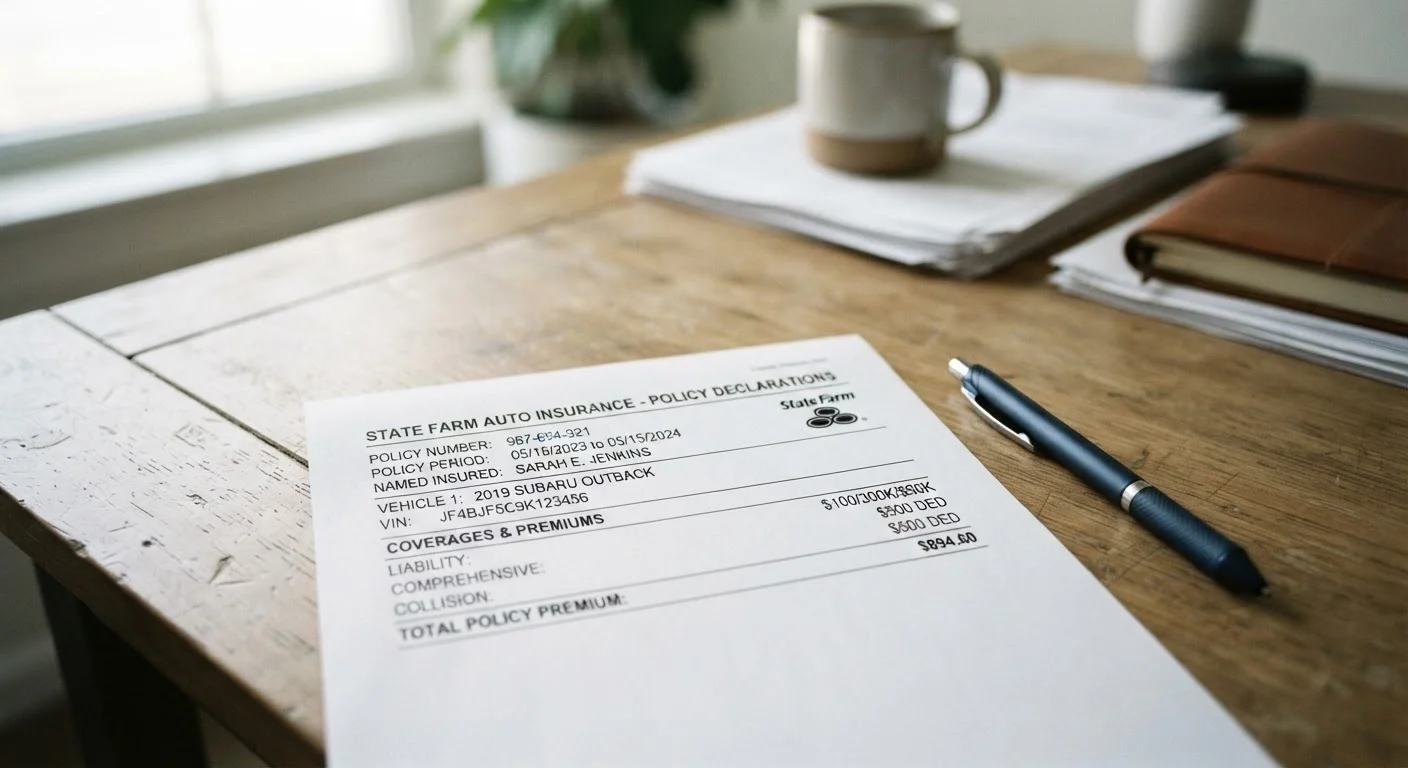
An auto insurance declarations page is a concise, standardized summary of your policy's key terms. Think of it as the cover sheet to a much longer contract. It tells you who is covered, what vehicles are covered, which coverage types apply, and how much coverage you carry - all in a format designed to be readable at a glance.
It is not, however, the full legal agreement. The complete policy document - which may run dozens of pages - contains the exclusions, definitions, and conditions that ultimately determine whether a claim is paid. Always keep both documents accessible.
Declarations Page ≠ Full Policy
The declarations page is a summary, not the legally binding contract. Exclusions, conditions, and precise definitions are contained in the full policy document. If a coverage question arises - especially at claim time - the complete policy language governs, not the summary.
Before you renew, it's worth reviewing your coverage holistically. Our guide on what to review before renewing your auto insurance policy walks through a practical renewal checklist.
What You'll Need Before You Start
What you will need
Current Auto Insurance Declarations Page
The primary document you will review and verify during this process.
Vehicle Registration or Title
Used to confirm that the listed VIN and vehicle details match insurer records exactly.
Prior-Term Declarations Page
Allows side-by-side comparison to spot changes in limits, deductibles, or premium at renewal.
Full Policy Document
Provides the complete contract language behind the summary figures on the declarations page.
How to Read It: Step by Step
Locate and identify your declarations page
Insurers typically mail the declarations page - often called the "dec page" - at the start of each policy term and again at renewal. You can also download it from your insurer's online account portal or mobile app. It is usually the first one or two pages of your policy packet, distinctly labeled "Declarations" or "Policy Declarations."
Verify your personal and policy information
The top section identifies the named insured (you, and any co-applicant), your mailing address, the policy number, and the coverage period (effective and expiration dates). Confirm all of these are accurate. An incorrect address can affect where claims correspondence is sent and, in some states, how your premium is calculated, since insurers often rate risk partly by garaging location.
Confirm vehicle details and listed drivers
Your dec page will list each covered vehicle by year, make, model, and VIN. Cross-reference the VIN against your registration or title to ensure it matches exactly. The page will also name every driver covered under the policy. Verify that all household members who regularly drive your vehicle are listed - an unlisted regular driver may give the insurer grounds to dispute a claim.
Review each coverage type and its limits
This is the most information-dense section. Your dec page will list every coverage type you carry, typically in a table format, along with the corresponding limit - the maximum amount the insurer will pay for a covered loss. Common coverages include bodily injury liability, property damage liability, uninsured/underinsured motorist, medical payments (MedPay) or personal injury protection (PIP), collision, and comprehensive. For a plain-language explanation of what each type pays for, see our article on the core auto coverage types.
Limits are often expressed as split limits (e.g., 100/300/100) or as a single combined single limit. For unfamiliar terms, our auto insurance glossary provides clear definitions.
Check your deductibles
For collision and comprehensive coverages, your dec page will show a deductible - the amount you pay out of pocket before the insurer covers the rest of a claim. A higher deductible typically lowers your premium; a lower deductible means less upfront cost when you file. Confirm that the deductible shown matches what you intended when you set up or last renewed the policy.
Review your premium and any endorsements
The premium section shows the total cost broken down by coverage type and vehicle. Reviewing this breakdown reveals which coverages drive most of your cost. Also look for endorsements - optional add-ons such as roadside assistance, rental reimbursement, or gap coverage - which appear as line items. If you see charges for endorsements you didn't request or no longer need, contact your insurer to clarify or remove them.
[important_callout]Save a Digital Copy After Each Renewal
Store each year's declarations page in a secure digital folder alongside the full policy document. If a dispute ever arises over what coverage you had on a specific date, having archived copies is invaluable. Most insurers make prior-term documents available through an online account portal.
Why This Review Matters at Renewal
Policy terms can change at renewal without a prominent notification - a coverage limit may shift, a discount may expire, or a previously included endorsement may be repriced. Reviewing your declarations page each term takes only a few minutes and is one of the simplest ways to avoid coverage gaps.
It also positions you to have an informed conversation with your insurer if something doesn't look right. Misunderstandings about what a policy actually covers are among the most common sources of claim disputes - our article on common car insurance misconceptions outlines several that catch policyholders off guard.
If you do need to file a claim, understanding your declarations page in advance makes the process far less stressful. See our overview of how the auto insurance claims process works for what to expect from first report through settlement.
This article is for general informational purposes only and does not constitute personalized insurance or legal advice. Coverage terms, limits, and regulations vary by insurer and by state. Consult a licensed insurance professional and read your actual policy documents for guidance specific to your situation.