

Key Takeaways
- Dealers use market data, vehicle condition, and local demand to calculate trade-in offers.
- Arriving without independent research puts sellers at a significant informational disadvantage.
- Bundling the trade-in negotiation with a new purchase price can obscure what you're actually receiving.
- Minor reconditioning costs weigh heavily on dealer offers - presentation matters.
- Timing and where you sell can meaningfully affect the value you walk away with.
How Trade-In Value Is Actually Determined
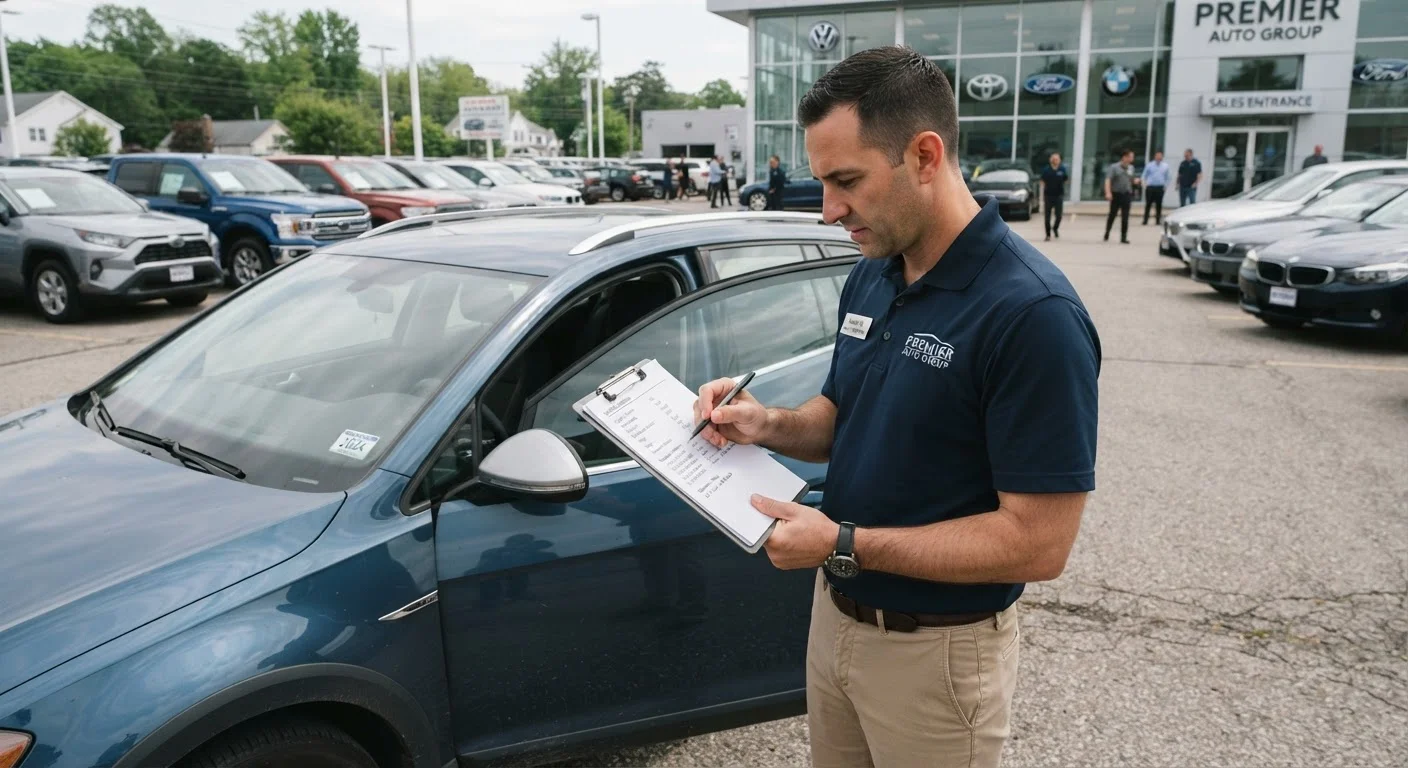
When a dealership appraises your vehicle, it isn't a single number pulled from thin air - it's an estimate built from several overlapping inputs. Appraisers typically consider the vehicle's make, model, year, trim level, mileage, mechanical condition, and cosmetic state. They also weigh local market demand: a pickup truck may command a stronger offer in a rural market than a compact sedan would.
Dealers reference industry valuation guides and current auction data to anchor their offer. They then subtract an expected reconditioning cost - what it will take to clean, repair, and certify the vehicle for resale - along with a profit margin. The result is a wholesale-range offer, not a retail price. That gap between what you're offered and what the car sells for on the lot is a built-in feature of how dealership trade-ins work, not a hidden penalty.
Understanding this baseline helps set realistic expectations before you step onto the lot. For a broader look at how vehicle valuation works in different contexts - including insurance claims - see our piece on how cars get valued after a loss.
~$3,000-$5,000
Typical gap between trade-in and private sale price
Industry observers generally estimate the difference between wholesale trade-in offers and comparable private-sale prices runs in this range, though it varies by vehicle type and market conditions.
3+
Independent appraisals recommended before selling
Consumer advocacy groups commonly advise getting multiple appraisals to establish a reliable value range before accepting any single trade-in offer.
Common Mistakes That Cost Sellers Money
Even sellers who've done some homework can leave value on the table. The following mistakes are among the most consistently costly - and most consistently avoidable.
Walking in without independent valuation research.
Why it happens: Many sellers assume the dealer's offer is a fair market rate because it's presented with professional tools and confident framing.
Negotiating the trade-in and new vehicle purchase as a single bundled number.
Why it happens: Dealers sometimes present a combined monthly payment or total deal figure, which makes it hard to see what's attributed to the trade-in versus the purchase price.
Neglecting the vehicle's presentation before the appraisal.
Why it happens: Sellers often underestimate how much visible wear, interior odors, or minor cosmetic damage affects an appraiser's perception - and their reconditioning cost estimate.
Revealing your loan payoff amount or urgency to sell early in the conversation.
Why it happens: Sellers naturally respond to friendly conversation and may share financial details without realizing they shift negotiating leverage.
Accepting the first offer without exploring alternatives.
Why it happens: The trade-in process can feel final once a number is presented, and many sellers don't realize offers can be compared across multiple dealers or third-party buyers.
Beware of the Bundled Deal Structure
When a dealer presents a single 'blended' payment or total deal number, it becomes very difficult to evaluate whether your trade-in received fair value. Always request that the trade-in allowance be itemized separately from the purchase price of any new vehicle. If a salesperson is reluctant to break out the numbers, that itself is worth noting.
For guidance on keeping negotiations structured and transparent - including how to separate trade-in and purchase discussions - see negotiating a car price without feeling pressured.
Alternatives Worth Considering
A dealership trade-in isn't the only path. Private sales typically yield higher returns because you're selling at or near retail rather than wholesale - but they require more time, effort, and comfort with the process. Third-party buying services offer speed and convenience, though their offers still reflect a resale margin. Understanding these trade-offs helps you decide which channel fits your situation.
If you're weighing dealership purchases versus private sellers more broadly, our comparison of buying from a dealership vs. a private seller walks through the protections and pricing dynamics each path involves. Keeping your vehicle in good mechanical shape - documented through consistent service records - also tends to support stronger offers across every channel. The car maintenance hub offers practical guidance on staying on top of that upkeep.
This article is for general informational purposes only. Trade-in values vary by region, market conditions, and individual vehicle circumstances. Readers are encouraged to gather multiple independent appraisals before making any transaction decision.