

Key Takeaways
- Bulk buying only saves money if you actually use what you purchase before it expires or degrades.
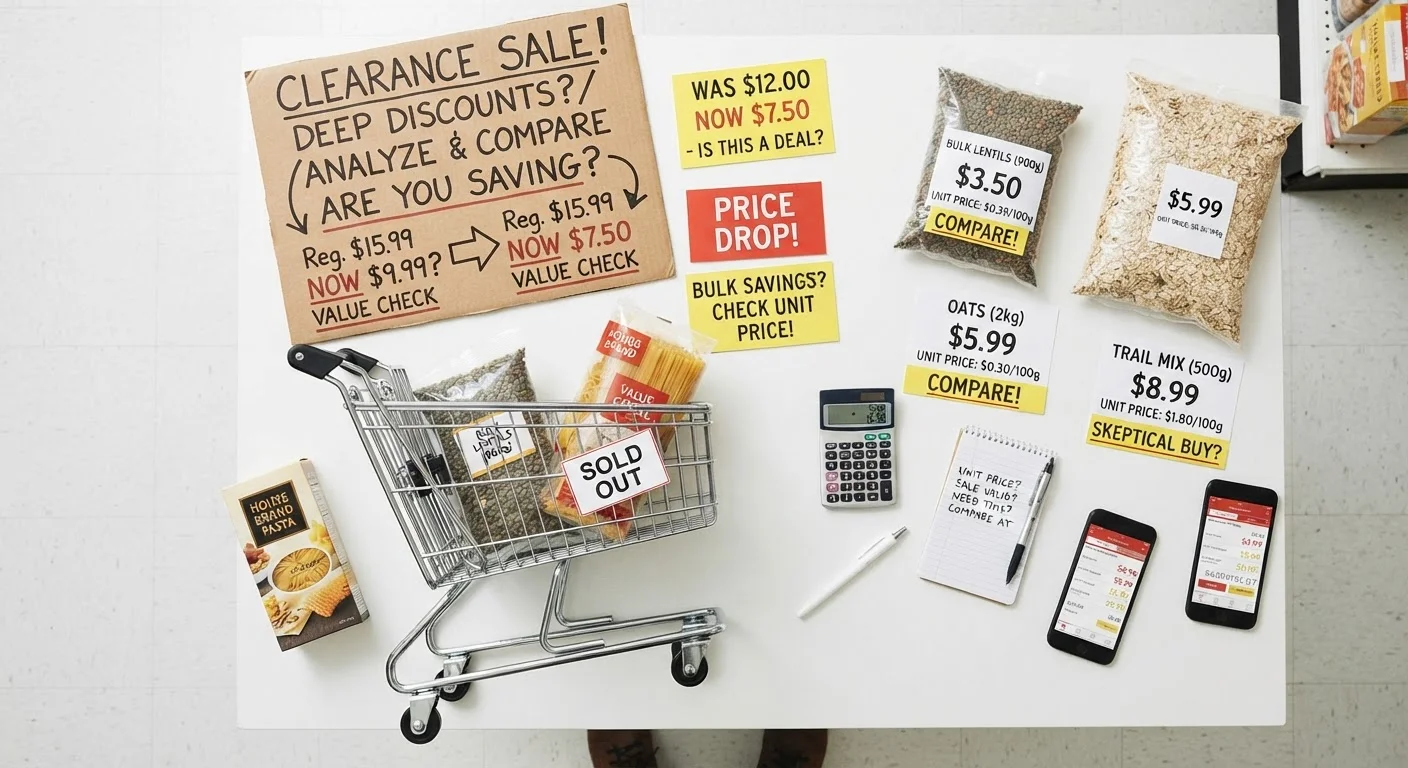
- Clearance and sale prices are often set against inflated 'original' prices that were rarely charged.
- Loyalty programs and store cards can encourage overspending that outweighs any rewards earned.
- Price-matching and coupon stacking sound powerful but come with enough restrictions to limit real savings.
- The cheapest unit price isn't always the most economical choice when quality and longevity are factored in.
Why Savings Myths Are So Sticky
Retail marketing is designed to make shoppers feel smart for spending. When a deal looks logical on its surface - buy more, pay less per unit - most people don't stop to question it. These assumptions get passed down as conventional wisdom, repeated in personal finance communities and checkout-line conversations alike.
The problem is that many widely believed savings strategies don't hold up under scrutiny. They work some of the time, for some shoppers, under specific conditions. But as blanket rules, they can quietly erode your budget. Understanding where these myths break down puts you back in control.
For a broader look at retail tactics that affect your wallet, see our guide to consumer rights myths and overview of hidden purchase costs.
Myth
Buying in bulk always saves money.
Fact
Bulk buying only saves money when you use the entire quantity before it spoils, expires, or becomes obsolete.
Per-unit math looks compelling in a warehouse store aisle, but it ignores the full picture. Perishable food bought in bulk that gets thrown away costs more than a smaller quantity at a higher unit price. Non-perishables that take up significant storage space carry an indirect cost too. Bulk purchases also tie up cash that could be used elsewhere. The savings are real only when demand, usage rate, and storage all align - which isn't as often as the price tags suggest.
Myth
Clearance prices are always a great deal.
Fact
Clearance items are discounted from a reference price that may have been inflated or rarely charged at full value.
Retailers routinely mark items up before marking them down. A clearance tag showing 60% off is only meaningful if the original price was a real market price that items actually sold at. Regulatory frameworks in the U.S. address deceptive reference pricing, but enforcement is inconsistent. Beyond price legitimacy, clearance items may also be discontinued, have limited return options, or lack manufacturer support - factors worth weighing before assuming you've found a bargain.
Myth
Loyalty programs and store cards always pay off.
Fact
Loyalty programs are designed to increase visit frequency and spending - benefits to the shopper are secondary to that goal.
Points programs work well for shoppers who would buy those products anyway and who redeem rewards before they expire. In practice, a significant portion of loyalty points go unredeemed. Store credit cards that offer sign-up bonuses often carry high interest rates; carrying a balance for even one month can erase months of accumulated rewards. Before enrolling, it's worth calculating how much you'd realistically spend and redeem, not just the headline earn rate.
Myth
The cheapest option always costs less in the long run.
Fact
Low purchase price can mean higher total cost when durability, maintenance, and replacement frequency are factored in.
This myth is especially common with tools, appliances, and footwear. A product priced significantly below similar alternatives may require replacement in a fraction of the time, ultimately costing more than a mid-range option. This doesn't mean expensive is always better - price alone is a poor quality signal. But evaluating expected lifespan and running costs alongside sticker price gives a more accurate picture of value. Product research resources can help you evaluate what to look for before buying.
Myth
Coupons always reduce what you spend.
Fact
Coupons frequently lead shoppers to buy products they wouldn't have purchased otherwise, increasing total spend.
Consumer behavior research has consistently found that coupon use is associated with higher basket sizes, not lower totals. The discount on one item often comes alongside purchases of complementary products, or triggers a shopping trip that wouldn't have happened. Coupons are a marketing tool first. They're genuinely useful when applied to items already on your shopping list - but treating them as a savings strategy in themselves tends to work in the retailer's favor.
What Actually Saves Money at Retail
Genuine savings come from understanding how pricing works, not from following heuristics that retailers have learned to exploit. A few habits consistently hold up:
- Track prices over time. Many retailers cycle through predictable discount windows. Knowing a product's actual price history - not just its listed 'was' price - lets you judge whether a sale is real.
- Calculate total cost, not unit cost. A lower price per ounce means nothing if you discard half the product. Factor in usage rate, shelf life, and storage requirements before buying larger quantities.
- Read loyalty program terms before enrolling. Points that expire quickly, redemption minimums, and data-sharing policies can change the value equation significantly.
- Treat coupons as bonuses, not reasons to buy. If a product wasn't already in your plan, a coupon is an incentive to spend, not a savings tool.
Store Cards Can Offset Every Reward You Earn
Store-branded credit cards often carry interest rates well above the national average. If you carry a balance - even occasionally - interest charges can erase months of accumulated rewards. These cards are typically most advantageous for shoppers who pay the full balance every billing cycle without exception. Read the full terms, including the APR and reward expiration rules, before applying.
For habits that consistently pay off across different retail seasons, see our smart shopping habits guide. And if you're evaluating electronics or gadgets specifically, the same critical thinking applies - gadget myths that cost people money is a useful companion read.