

Key Takeaways
- The U.S. has chronically underbuilt housing since the 2008 financial crisis, leaving a multi-million-unit deficit.
- Restrictive zoning laws are one of the most significant barriers to building more homes in high-demand areas.
- Rising construction costs - driven by materials, labor, and permitting - make it harder to build affordable housing profitably.
- The supply shortage affects both the for-sale and rental markets, pushing costs up across the board.
- Local conditions vary widely; your zip code often tells a more accurate story than national headlines.
Housing Supply Shortage
A housing supply shortage occurs when the number of available homes - both for sale and for rent - falls significantly short of the number of households seeking housing. This imbalance drives up prices and rents, making it harder for people to find affordable places to live. In the U.S., this gap has been building for decades and is driven by a combination of zoning restrictions, construction slowdowns, and rising development costs.
Economists often quantify the shortage in terms of 'housing units deficit' - the cumulative gap between household formation and new housing completions over time. Estimates from research organizations vary, but most place the U.S. shortfall in the range of several million units.
A Shortage Decades in the Making
The U.S. housing supply problem didn't emerge overnight. It is the result of structural forces that have been compounding for more than two decades. After the 2008 housing crash, homebuilding collapsed - and it never fully recovered. For years, new construction lagged well behind the rate of household formation, meaning more families were seeking housing than the market was producing. That cumulative gap, measured in millions of units, is what many economists call the housing deficit.
To understand why this matters, it helps to start with the basics of how housing markets work. As explained in our guide to what a housing market really is, supply and demand are the core forces shaping home prices and rental costs. When supply falls short of demand persistently, prices climb - and they have.
3.8M+
Estimated U.S. housing unit deficit
Research from Freddie Mac and other housing economists has estimated the U.S. housing shortfall at several million units, reflecting cumulative underbuilding since the 2008 financial crisis.
~50%
Drop in homebuilding after 2008 crash
Annual housing starts fell by roughly half following the 2008 financial crisis and took many years to recover, contributing significantly to today's supply gap.
75%+
U.S. residential land zoned single-family only
Studies of major U.S. cities have found that a substantial majority of residential land is restricted to single-family housing, limiting density and constraining supply in high-demand areas.
Zoning Laws: The Invisible Wall
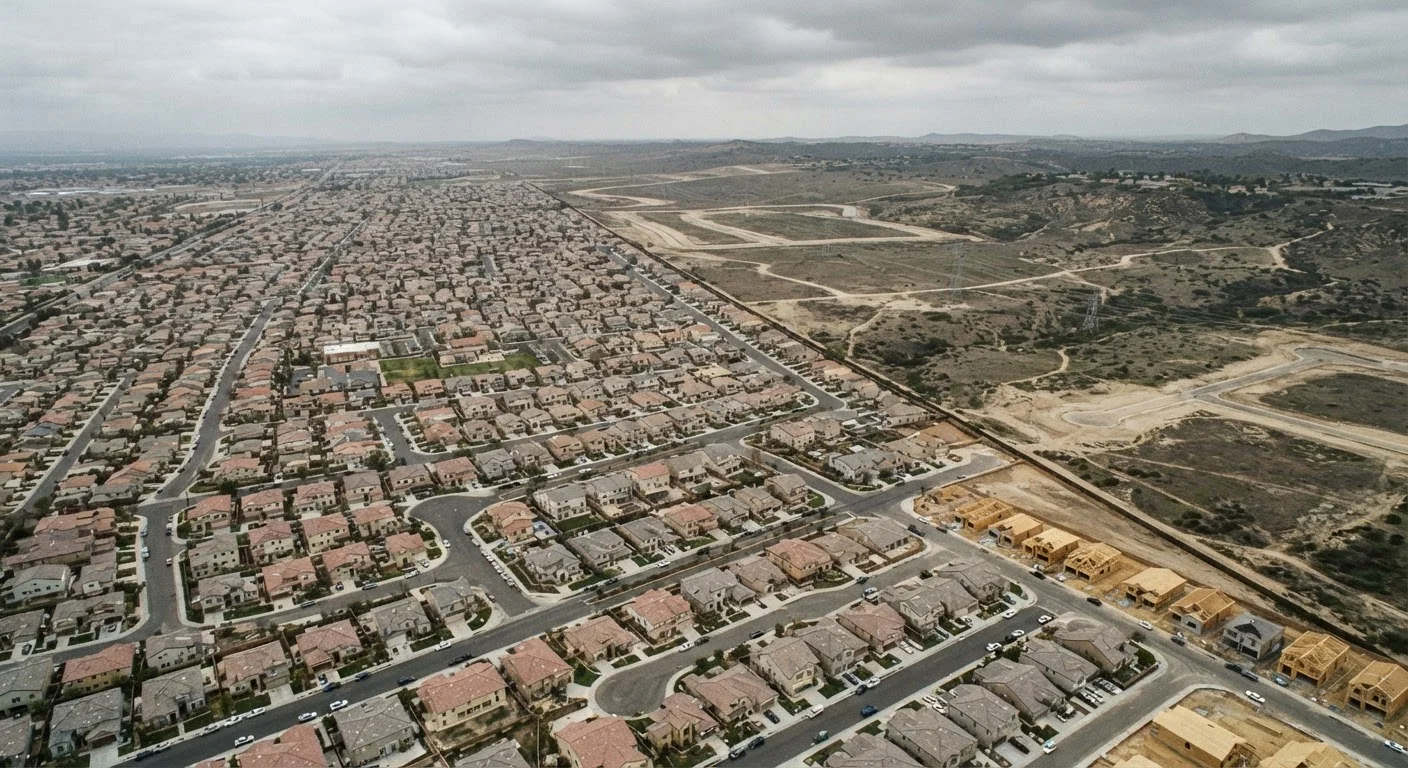
Local zoning codes are among the most powerful - and least visible - forces constraining housing supply. Many municipalities across the country restrict large swaths of residential land to single-family homes only, a practice sometimes called exclusionary zoning. This makes it legally impossible to build apartment buildings, townhomes, or even duplexes in those zones, regardless of how much demand exists.
The consequences are significant. In high-cost metropolitan areas, where jobs and opportunity concentrate, the inability to build denser housing means supply cannot respond to demand. People who want to live near work are effectively priced out. Reform efforts - including changes to state-level zoning laws in states like California, Oregon, and Minnesota - have shown some promise, but the pace of change is slow and uneven across the country.
Check Local Zoning Policies Before You Plan
If you're considering buying land or evaluating a neighborhood's potential for growth, local zoning maps - often available through your city or county's planning department - can show what types of housing are permitted in a given area. Understanding these rules helps set realistic expectations about neighborhood density and long-term development trends.
Construction Costs and the Labor Gap
Even where zoning allows construction, the economics of building don't always pencil out - particularly for more affordable housing. The cost of construction materials, skilled labor, land acquisition, and permitting has risen substantially. When the total cost of building a home is high, developers focus on higher-priced units where profit margins are sufficient to justify the risk.
The construction workforce has also contracted. The 2008 crash pushed many skilled tradespeople out of the industry permanently, and the sector has struggled to rebuild that capacity. Fewer workers means slower construction timelines and higher labor costs - a dynamic that further limits how quickly supply can respond to demand.
What the Shortage Means for Renters and Buyers
The ripple effects of constrained supply touch both sides of the housing market. Buyers face limited inventory, bidding wars, and prices that outpace income growth in many regions. Renters face rising rents as more households compete for fewer available units - particularly in fast-growing cities. The shortage doesn't hit everyone equally; lower-income households and first-time buyers tend to face the steepest barriers.
This supply squeeze is a central driver of the broader affordability crisis. Our article on housing affordability in America explores how economists measure affordability and why the numbers have been moving in the wrong direction for many Americans. And because conditions vary so sharply by region, national statistics can be misleading - as detailed in our piece on why your zip code matters more than the headlines.
If you're currently renting and navigating these pressures, our renting a home hub provides practical guidance on finding and leasing housing in a competitive market.
This article is intended for general informational purposes only and does not constitute financial, legal, or real estate advice. Housing market conditions vary significantly by location. Readers should consult a licensed real estate professional for guidance specific to their situation.