

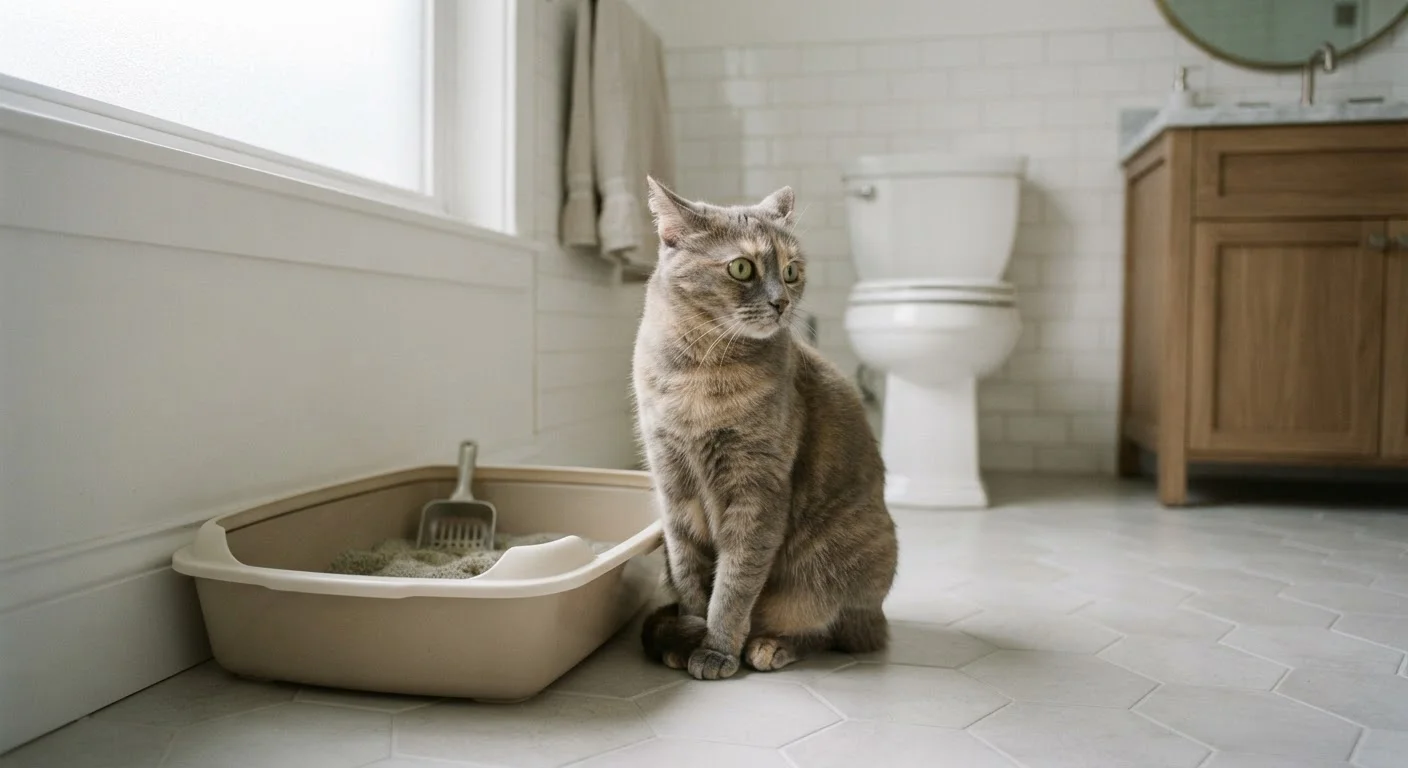
Key Takeaways
- Litter box avoidance almost always signals a medical, environmental, or behavioral issue worth investigating.
- A dirty box, wrong location, or unsuitable litter type are among the most fixable root causes.
- Sudden changes in elimination habits should prompt a veterinary visit to rule out health problems.
- The general rule is one litter box per cat, plus one extra, placed in low-traffic areas.
- Stress from household changes or territorial conflict can trigger elimination outside the box.
Why the Litter Box Is a Communication Tool
When a cat stops using the litter box reliably, many owners interpret it as spite or stubbornness. In reality, it is almost always a signal - one pointing to a medical issue, an environment that feels wrong, or a level of stress the cat cannot express any other way.
Understanding this shift in framing changes everything about how you respond. Instead of looking for ways to correct the cat, you start looking for what the cat is reacting to. That distinction leads to faster, more lasting solutions.
If you are setting up litter boxes for the first time, our overview on bringing your first cat home covers foundational setup considerations. For cats that have developed sudden or dramatic changes in elimination habits, a veterinary visit should be the first step - not the last resort.
See a Vet Before Assuming It's Behavioral
Urinating outside the litter box - especially in small amounts or with visible straining - can indicate a urinary tract infection, bladder stones, or feline idiopathic cystitis. These conditions require veterinary diagnosis and treatment. Do not attempt to manage them with behavioral interventions alone; a delay in care can be dangerous, particularly in male cats who are prone to urinary blockages.
The Most Common Litter Box Mistakes - and What to Do Instead
Most litter box problems trace back to a small set of correctable errors. The mistakes below represent the issues veterinarians and feline behaviorists encounter most often, along with why they occur and how to address them effectively.
Not cleaning the litter box frequently enough.
Why it happens: Owners often underestimate how sensitive cats are to odor, especially since humans may not notice a box that smells acceptable to them but offensive to a cat.
Using a litter box that is too small for the cat.
Why it happens: Many commercially available boxes are sized for an average-sized cat, but larger breeds or overweight cats may find standard boxes too cramped to turn around comfortably.
Placing the litter box in a noisy, high-traffic, or inconvenient location.
Why it happens: Owners often want the box tucked away out of sight, leading to placements near washing machines, furnace rooms, or busy hallways where cats feel exposed or startled.
Switching litter types abruptly or using heavily scented products.
Why it happens: Owners assume cats share their preference for fresh, perfumed scents - but most cats strongly prefer unscented, fine-grained clumping litter that resembles natural soil.
Not having enough litter boxes for the number of cats in the household.
Why it happens: Multi-cat households often underestimate territorial competition, and one cat may guard or block access to a shared box - leaving other cats with no acceptable option.
Ignoring stress or environmental change as a contributing factor.
Why it happens: Elimination problems that appear suddenly - after a move, new pet arrival, or household disruption - are often misread as defiance rather than stress responses.
Punishment Makes Litter Box Problems Worse
Scolding, startling, or physically moving a cat to the litter box after an accident does not teach the desired behavior - it increases anxiety and can create a lasting negative association with the box itself. Cats do not connect after-the-fact correction with their earlier actions. Focus on identifying and removing the underlying cause rather than correcting the symptom.
Stress-related elimination deserves special attention. Changes like a new baby, a renovation, or a new pet can destabilize a cat's sense of safety in ways that aren't always obvious. If your cat's avoidance began around a specific household event, the behavioral dimension is likely significant. Cats that live exclusively indoors may be more sensitive to internal environmental changes - a topic explored further in our article on indoor versus outdoor cat considerations.
~10%
Cats affected by elimination behavior problems
Elimination behavior issues are among the most commonly reported feline behavioral problems seen in veterinary practice, affecting roughly one in ten cats at some point.
1.5×
Minimum box length relative to cat size
Veterinary behaviorists generally recommend a litter box at least one and a half times the length of the cat to allow comfortable posturing and movement.
This article is for general informational purposes only and does not constitute veterinary advice. If your cat is showing signs of pain, straining to urinate, or producing little to no urine, contact a veterinarian immediately.